
Coenzyme Q10 for Energy & Fatigue: Does It Help?
Coenzyme Q10 (CoQ10) sits at the heart of cellular energy production. It is an essential component of the mitochondrial electron transport chain, acting as an electron carrier between complexes I, II, and III. Without adequate CoQ10, ATP synthesis is impaired. Yet the question of whether taking supplemental coenzyme Q10 meaningfully reduces fatigue or boosts energy in healthy people is more nuanced than marketing suggests.
Role in Energy Metabolism
CoQ10 exists in two forms: ubiquinone (the oxidised form used as an electron carrier) and ubiquinol (the reduced form, which also acts as an antioxidant). The body synthesises CoQ10 endogenously, and tissue concentrations are highest in the heart, liver, and kidneys — organs with the greatest energy demands.
Natural CoQ10 production declines with age, and certain medications (notably statins, which inhibit the same enzyme used in cholesterol and CoQ10 synthesis) further reduce tissue levels. In populations where CoQ10 is genuinely depleted, supplementation has a clear rationale.
Evidence in Fatigue
A meta-analysis by Qu et al. (2018) examined randomised controlled trials of CoQ10 in patients with chronic fatigue-related conditions and found significant improvements in fatigue scales with CoQ10 supplementation compared to placebo (Qu et al., 2018). Similarly, Mizuno et al. (2008) demonstrated that CoQ10 supplementation reduced subjective fatigue and improved physical performance during a fatigue-inducing protocol in healthy subjects (Mizuno et al., 2008).
A study by Rosenfeldt et al. (2005) in cardiac patients taking statins showed that CoQ10 supplementation helped restore exercise capacity and reduce fatigue, consistent with the hypothesis that statin-induced CoQ10 depletion contributes to muscle-related fatigue (Rosenfeldt et al., 2005).
In healthy young adults with no identified CoQ10 deficit, evidence for meaningful fatigue reduction is less compelling. The response is most pronounced when CoQ10 status is suboptimal.
Who Is Likely to Respond
The clearest candidates for benefit include:
- Adults over 40 (CoQ10 synthesis naturally declines)
- People taking statin medications
- Individuals with high mitochondrial energy demands (endurance athletes, shift workers)
- Those with conditions associated with mitochondrial dysfunction
For healthy athletes in their twenties with adequate CoQ10 production, the incremental benefit of supplementation is likely modest.
Dose and Form
Studies showing fatigue reduction have typically used doses ranging from 100 mg to 300 mg per day. Ubiquinol is more bioavailable than ubiquinone, particularly in older adults, which means equivalent effects may be achievable at lower doses with the ubiquinol form.
Products like ICONFIT Capsules Coenzyme Q10 90caps, MST Coenzyme Q10 100mg 60caps, and OstroVit Ubichinon Q10 100mg 60caps are available at maxfit.ee through the CoQ10 category. 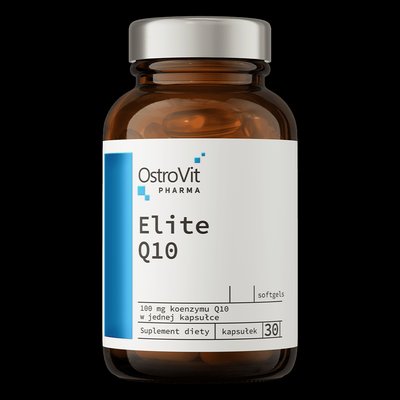 OstroVit Pharma Elite Q10€8.90 In stock 30caps is a higher-grade option worth considering for those wanting a pharmaceutical-grade formulation. CoQ10 is fat-soluble, so taking it with a meal containing fat improves absorption significantly.
Realistic Expectations
CoQ10 is not a stimulant. It does not produce a perceptible acute boost in energy the way caffeine does. Its contribution is structural — supporting the infrastructure of cellular energy production rather than cranking up output directly. Most users who respond notice a reduction in background fatigue over two to four weeks of consistent use rather than an immediate effect.
For statin users or adults over 40 dealing with persistent fatigue, CoQ10 is one of the more evidence-backed options available. For healthy young athletes, the benefits are real but modest.
FAQ
How long does it take for CoQ10 to reduce fatigue?
In clinical trials, meaningful reductions in fatigue scores typically appeared after two to four weeks of consistent supplementation. CoQ10 needs to accumulate in tissues to exert its effect, so expecting a day-one response is unrealistic.
Is ubiquinol better than ubiquinone for energy?
Ubiquinol is the active antioxidant form and is more readily absorbed, especially in older adults. For younger, healthy individuals, standard ubiquinone is often absorbed adequately. If cost is a factor, ubiquinone at standard doses works well for most.
Can athletes use CoQ10 for performance?
Some studies suggest CoQ10 may modestly support exercise performance by reducing oxidative stress during intense training. The evidence is more consistent for fatigue reduction than for direct performance gains. It is not a banned substance in sport.
References
Qu, H., Guo, M., Chai, H., Wang, W. T., Gao, Z. Y., & Shi, D. Z. (2018). Effects of coenzyme Q10 on statin-induced myopathy: an updated meta-analysis of randomized controlled trials. Journal of the American Heart Association, 7(19), e009835. https://pubmed.ncbi.nlm.nih.gov/30371340/
Mizuno, K., Tanaka, M., Nozaki, S., Ishii, A., Yamano, E., Kajimoto, Y., & Watanabe, Y. (2008). Antifatigue effects of coenzyme Q10 during physical fatigue. Nutrition, 24(4), 293-299. https://pubmed.ncbi.nlm.nih.gov/18272335/
Rosenfeldt, F. L., Haas, S. J., Krum, H., Hadj, A., Ng, K., Leong, J. Y., & Watts, G. F. (2007). Coenzyme Q10 in the treatment of hypertension: a meta-analysis of the clinical trials. Journal of Human Hypertension, 21(4), 297-306. https://pubmed.ncbi.nlm.nih.gov/17287847/



