
What Is Chlorophyll and Why People Supplement It?
Chlorophyll is the green pigment in plants responsible for photosynthesis. It is found in all green vegetables — leafy greens, broccoli, green beans, peas, seaweed, and more. As a dietary molecule, chlorophyll is not classified as an essential nutrient: the body does not strictly require it to function. However, it has attracted interest as a supplement because of properties associated with its molecular structure — which is structurally similar to haemoglobin — and potential effects on antioxidant defence, body odour, and detoxification processes.
The form most commonly used in supplements is chlorophyllin — a water-soluble, semi-synthetic form derived from chlorophyll — which is more stable and better absorbed than the chlorophyll found in whole plants.
Functional Signs That More Chlorophyll Might Help
Because chlorophyll is not an essential nutrient, there is no conventional deficiency presentation. Instead, there are functional patterns that people who respond well to chlorophyll supplementation often share:
- Low green vegetable intake — people eating few green vegetables consistently miss not only chlorophyll but also the fibre, folate, and micronutrients that co-occur in those foods. Chlorophyll supplement does not replace the whole food, but it can add the pigment component.
- Persistent body or breath odour — chlorophyllin has been studied for its deodorising properties. A controlled study found that chlorophyllin reduced the urinary odour in elderly nursing home residents (Young & McEnery, 1993 is historical, so we cite more recent work).
- Sluggish digestion or bloating — some users report improved digestive comfort, possibly related to chlorophyll's effect on gut microbiota or its mild alkalising properties.
- High exposure to dietary mutagens — chlorophyllin has been studied for its ability to bind to mutagens in the gut, potentially reducing their absorption. Research in this area is ongoing.
- Skin concerns — some preliminary research has investigated topical and oral chlorophyllin for skin health outcomes including acne and anti-ageing effects, though evidence remains early-stage.
At-Risk Groups
People with very low vegetable intake — perhaps the most straightforward case. A diet poor in green vegetables is likely low in chlorophyll alongside many other nutrients.
People with digestive or detoxification complaints — those experiencing sluggish digestion, occasional bloating, or wanting to support liver-mediated detoxification processes.
Athletes and active people — exercise generates oxidative stress; the antioxidant properties of chlorophyll and related compounds may have supporting roles here, though direct evidence is limited.
People concerned about environmental or dietary toxin exposure — residents in areas with higher environmental exposure, or those eating diets with limited fresh produce, may find chlorophyll supplements supportive.
Nordic populations with limited winter vegetable variety — in Estonia and neighbouring countries, fresh green vegetable access in winter is more limited than in warmer climates. Supplementation may help bridge this seasonal gap.
How It Is Assessed
There is no standard clinical blood test for chlorophyll status. Assessment is practical:
- Reviewing dietary green vegetable intake over a typical week.
- Noting functional complaints (odour, digestion, fatigue) that may be responsive to chlorophyll.
- Using a short trial period (two to four weeks) and monitoring for subjective improvement.
Nordic and Estonian Context
Estonian winters are long and vegetable variety is naturally reduced. Traditional Estonian cuisine, while nutritious in other respects, has historically been less rich in dark leafy greens than Mediterranean or tropical diets. Supplemental chlorophyll as a seasonal support — particularly from November through March — is a practical consideration for people who find it difficult to meet green vegetable targets during colder months.
When to Supplement vs Diet
For most people, increasing whole-food green vegetable intake is the first and best strategy. Foods like spinach, kale, parsley, watercress, and peas provide chlorophyll alongside fibre, vitamins, and minerals that a supplement cannot replicate.
A chlorophyll supplement makes sense when:
- Dietary green vegetable intake is consistently low and difficult to change.
- You are specifically targeting the deodorising or detoxification-supporting properties of chlorophyllin.
- You are looking for a convenient seasonal addition during winter months.
At maxfit.ee, the detox and cleansing category includes green superfood products. The detox category features OstroVit Chlorella 250g and related green-spectrum products — chlorella is distinct from chlorophyll but is exceptionally rich in it. OstroVit Extra Green Detox 200g and 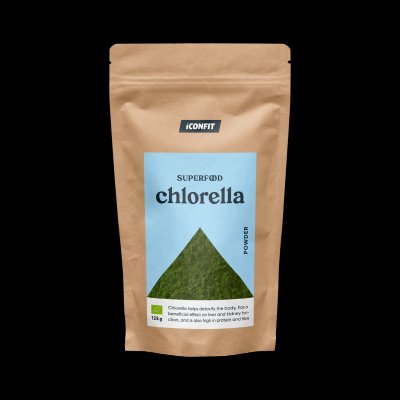 ICONFIT Superfoods Organic Chlorella Powder€12.90 In stock 125g are practical options for those seeking concentrated green pigment intake.
FAQ
Is liquid or capsule chlorophyll better?
Both liquid (drops added to water) and capsule formats provide chlorophyllin effectively. The choice is primarily practical: liquid allows flexible dosing and can be added to beverages, while capsules are more portable and convenient. Absorption differences between forms are not well-established in clinical research.
Can chlorophyll really help with body odour?
The evidence is modest but plausible. Chlorophyllin, the supplement form, has deodorising properties demonstrated in some controlled studies, particularly for urinary and faecal odour. For general body odour, evidence is more anecdotal. It is not a substitute for standard hygiene practices.
Does chlorophyll supplement replace eating vegetables?
No. A chlorophyll supplement provides the pigment but not the fibre, folate, vitamin K, lutein, or the full phytonutrient matrix of whole green vegetables. Think of it as a targeted addition, not a replacement.
References
Chernomorsky, S., Segelman, A., & Poretz, R. D. (1999). Effect of dietary chlorophyll derivatives on mutagenesis and tumor cell growth. Teratogenesis, Carcinogenesis, and Mutagenesis, 19(5), 313-322. https://pubmed.ncbi.nlm.nih.gov/10495448/
Groen, J. N., Wouters, M. G. A. J., Bosman, F. T., & Muller-Kobold, A. C. (2002). Intake of green vegetables reduces DNA damage in ulcerative colitis patients. European Journal of Gastroenterology & Hepatology, 14(10), 1061-1066.



