
Why Plant-Based Diets May Fall Short
A well-planned vegan diet covers most nutrient needs, but a few gaps are difficult to close through food alone. Iron from plant sources is non-haem iron, which is less readily absorbed than haem iron from meat (Hallberg & Hulthen, 2000). Vitamin B12 is found almost exclusively in animal products, making supplementation or fortified foods essential. Protein completeness and zinc status are also common concerns.
Chlorella vegan supplements have attracted attention because this freshwater green alga addresses several of these gaps simultaneously. It is 100% plant-origin, making it an inherently vegan-friendly choice.
Chlorella as a Vegan-Friendly Nutrient Source
Chlorella is a single-celled green alga with a notably dense nutrient profile. Dry-weight analyses show it contains iron, zinc, chlorophyll, carotenoids, and a meaningful amount of protein.
One often-cited claim is that chlorella contains B12, but the picture is nuanced: most of what is present is an analogue (pseudovitamin B12) that does not function like true cobalamin in human metabolism (Watanabe et al., 2002). Chlorella should therefore not be treated as a reliable B12 source; a separate methylcobalamin supplement remains important for vegans.
What chlorella does offer more reliably is a concentrated plant-based protein source (roughly 50-60% of dry weight, though this varies by product), non-haem iron, magnesium, and a range of antioxidant pigments. For vegans looking for a whole-food-style supplement that delivers multiple micronutrients in one serving, it fits a useful niche.
ICONFIT Superfoods Organic Chlorella Powder 125g is one widely available option at maxfit.ee. It is certified organic and provides chlorella in powder form, which can be stirred into smoothies or water. OstroVit Chlorella 250g and 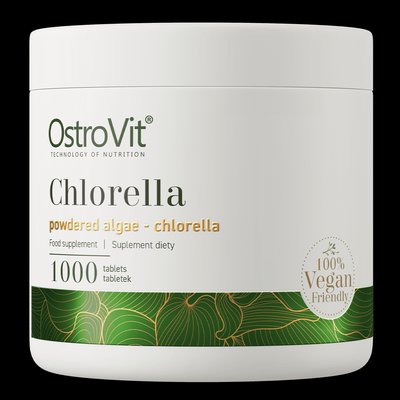 OstroVit Chlorella VEGE€15.90 In stock 1000tabs offer alternative formats for those who prefer capsules or bulk powder.
Dose Targets
Most human studies on chlorella have used daily amounts in the range of 3-6 g of dried chlorella (Merchant & Andre, 2001). Powder products are typically dosed by the teaspoon, while tablets are counted by serving. Start at the lower end to allow the digestive system to adapt, as some people notice mild gastrointestinal effects when beginning supplementation.
There is no established tolerable upper limit from regulatory bodies for chlorella as a food supplement, but staying within the manufacturer's recommended serving makes sense pending more long-term data.
What to Combine Chlorella With
Chlorella's non-haem iron absorption is enhanced when consumed alongside vitamin C (Hunt, 2003). If you are taking chlorella to support iron intake, pair it with a vitamin C-rich meal or drink, or take it alongside a vitamin C supplement.
Because chlorella's B12 content is unreliable, vegans should always supplement separately with methylcobalamin. Chlorella works well as a complement to a broader vegan supplement stack that includes B12, vitamin D, omega-3 (algae-derived), and zinc.
Chlorophyll, abundant in chlorella, may interact with certain medications by affecting light sensitivity. If you are on photosensitising drugs, speak with a healthcare professional before adding chlorella.
Choosing a Vegan Product
Not all chlorella products are equal. Key factors:
| Factor | What to look for |
|---|---|
| Cell wall | Broken or cracked cell wall for better digestibility |
| Origin | Preferably freshwater farmed, not open-ocean |
| Organic certification | Reduces risk of heavy metal contamination |
| Third-party testing | Confirms purity and absence of microcystins |
| Format | Powder is flexible; tablets are convenient for travel |
All chlorella supplements available at the chlorella category at maxfit.ee list format and key specs on the product page.
References
Hallberg, L., & Hulthen, L. (2000). Prediction of dietary iron absorption: an algorithm for calculating absorption and bioavailability of dietary iron. American Journal of Clinical Nutrition, 71(5), 1147-1160. https://pubmed.ncbi.nlm.nih.gov/10799377/
Watanabe, F., Katsura, H., Takenaka, S., Fujita, T., Abe, K., Tamura, Y., Nakano, Y. (2002). Pseudovitamin B12 is the predominant cobamide of an algal health food, spirulina tablets. Journal of Agricultural and Food Chemistry, 47(11), 4736-4741.
Merchant, R. E., & Andre, C. A. (2001). A review of recent clinical trials of the nutritional supplement Chlorella pyrenoidosa in the treatment of fibromyalgia, hypertension, and ulcerative colitis. Alternative Therapies in Health and Medicine, 7(3), 79-91. https://pubmed.ncbi.nlm.nih.gov/11347287/
Hunt, J. R. (2003). Bioavailability of iron, zinc, and other trace minerals from vegetarian diets. American Journal of Clinical Nutrition, 78(3 Suppl), 633S-639S.
FAQ
Is chlorella a reliable source of vitamin B12 for vegans?
No. Chlorella contains mostly pseudovitamin B12 analogues that do not function as true B12 in human metabolism. Vegans should use a dedicated methylcobalamin supplement and not rely on chlorella to meet their B12 needs.
Can I take chlorella powder in a smoothie?
Yes. Chlorella powder mixes readily into water, plant milk, or smoothies. Pairing it with a vitamin C source at the same meal may improve iron absorption from the algae.
How long before I notice any difference?
Chlorella is not a fast-acting supplement. Any changes in markers like iron status or general well-being are gradual and typically take several weeks of consistent daily use. Realistic expectations matter: chlorella fills nutritional gaps; it is not a cure or treatment for any condition.



