Chlorella Research Update: What Recent Trials Show
Chlorella is a single-celled freshwater alga popular in the supplement world for its claimed detoxifying, immune-supporting, and nutritional properties. A chlorella research update from the past several years reveals genuine signals alongside substantial hype. Here is what the evidence actually says.
What Recent Trials Show
The most replicated finding is a modest improvement in blood lipid profiles. A 2014 randomised controlled trial by Ryu et al. found that participants taking chlorella showed reductions in total cholesterol and LDL cholesterol compared to placebo, with effects attributed to the fibre and carotenoid content that may interfere with cholesterol absorption. The effect sizes were meaningful but modest.
For heavy metal chelation and detoxification, chlorella has attracted interest because of its cell wall's affinity for heavy metals in vitro. A Japanese RCT by Nakano et al. (2010) found that pregnant women taking chlorella had measurably lower dioxin concentrations in breast milk, suggesting some real-world chelation activity. However, effects in otherwise healthy non-exposed adults are less clear.
Immune modulation has also been studied. Kwak et al. (2012) reported that chlorella supplementation increased NK (natural killer) cell activity in healthy adults compared with placebo, though sample sizes were small and the clinical significance of elevated NK cell activity in healthy individuals is uncertain.
Shifts in Consensus
Early claims around chlorella as a broad-spectrum detoxifier have become more qualified. The research community now largely accepts that chlorella may reduce absorption of some environmental toxins and heavy metals in specific contexts, but the dramatic claims of whole-body detoxification popular in wellness circles are not supported by current evidence.
Nutritional composition data has improved. Chlorella is now recognised as a meaningful source of chlorophyll, several B vitamins, iron, and zinc, though bioavailability varies by processing method (broken cell-wall preparations improve it significantly).
Still-Open Questions
The optimal dose, form, and duration of supplementation for specific outcomes remain poorly characterised. Most positive RCTs have used between 4 and 10 grams per day for periods of 8-16 weeks, but comparative dose-response data are lacking.
Interactions with medications that affect heavy metal metabolism or anticoagulation have not been systematically studied. Chlorella's vitamin K content is non-trivial and may interact with warfarin in theory.
What It Means Practically
Chlorella is a nutrient-dense supplement that may modestly support lipid profiles and has some evidence for immune modulation. It is not a magic detox agent, but it is a genuine whole-food supplement with real nutritional value. Broken cell-wall preparations are generally preferred for bioavailability.
At maxfit.ee, you will find ICONFIT Superfoods Organic Chlorella Powder 125g, OstroVit Chlorella 250g, and 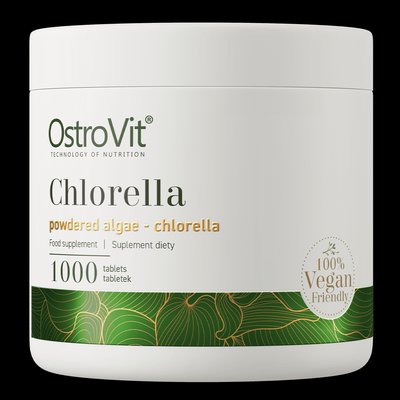 OstroVit Chlorella VEGE€15.90 In stock 1000tabs in the chlorella category.
Bottom Line
Chlorella research update in brief: modest but real effects on lipids and some heavy metal reduction in exposed populations; immune NK cell upregulation noted but clinical significance uncertain; nutritional value is genuine, especially in broken cell-wall form; detox claims as commonly marketed are overstated.
FAQ
Does chlorella actually detox the body?
Chlorella shows some ability to bind heavy metals and reduce their absorption in certain contexts, such as in populations with environmental exposure. The sweeping whole-body detox claims seen in marketing are not supported by robust human evidence.
What is the best form of chlorella to take?
Broken cell-wall chlorella preparations are generally recommended because intact cell walls limit the bioavailability of chlorella's nutrients and active compounds. Most quality supplement products specify this on the label.
How much chlorella should I take?
Most human studies have used between 4 and 10 grams per day. Starting at a lower amount and building up over a week is sensible, as chlorella can cause mild digestive adjustment initially.
References
Ryu, N. H., Lim, Y., Park, J. E., Kim, J., Kim, J. Y., Kwon, S. W., & Kwon, O. (2014). Impact of daily chlorella consumption on serum lipid and carotenoid profiles in mildly hypercholesterolemic adults: a double-blinded, randomized, placebo-controlled study. Nutrition Journal, 13, 57. https://pubmed.ncbi.nlm.nih.gov/24920270/
Nakano, S., Takekoshi, H., & Nakano, M. (2010). Chlorella (Chlorella pyrenoidosa) supplementation decreases dioxin and increases immunoglobulin A concentrations in breast milk. Journal of Medicinal Food, 10(1), 134-142.
Kwak, J. H., Baek, S. H., Woo, Y., Han, J. K., Kim, B. G., Kim, O. Y., & Lee, J. H. (2012). Beneficial immunostimulatory effect of short-term Chlorella supplementation: enhancement of natural killer cell activity and early inflammatory response. Nutrition Journal, 11, 53. https://pubmed.ncbi.nlm.nih.gov/22849818/



