
Is Long-Term Chlorella Use Safe?
Chlorella is a single-celled freshwater algae that has been consumed as a food and supplement for decades, particularly in Japan and East Asia. It is marketed for a wide range of benefits including immune support, detoxification, antioxidant activity, and blood pressure regulation. As interest in greens supplements grows, so do questions about long-term chlorella use and whether it is sustainable and safe.
What Long-Term Studies Show
Chlorella has been studied in controlled human trials, though most are relatively short-term (4 to 16 weeks) or involve specific patient populations. The general picture that emerges is that chlorella is well tolerated by healthy adults in the doses used in research.
For immune function, Kwak et al. (2012) conducted a randomised controlled trial showing that chlorella supplementation enhanced natural killer cell activity and cytokine expression in healthy subjects, suggesting a genuine immunomodulatory effect. However, this does not translate directly to fewer infections in practice — clinical evidence for meaningful illness reduction remains limited.
For blood pressure, Nakano et al. (2010) reported that chlorella supplementation was associated with reduced diastolic blood pressure in subjects with mild to moderate hypertension in a small RCT. Effect sizes were modest.
For heavy metal detoxification, interest is high but the evidence is primarily from animal models and small observational studies. The claim that chlorella reliably removes heavy metals from the human body is not strongly supported by controlled human trials. Some limited data exist on chlorella's role in reducing methylmercury excretion in animals, but extrapolating this to a robust human detox benefit is premature.
Altmann et al. (2001) studied chlorella use in patients with fibromyalgia over 2 months and found modest quality-of-life improvements. There are no published controlled trials longer than about six months in healthy adults.
Upper Safe Limits Over Time
No formal tolerable upper intake level has been established for chlorella. Clinical trials have generally used doses in the range of 3 to 10 g per day. At these amounts, chlorella is considered food-safe for most adults.
The main safety concerns with prolonged use are:
- Iodine content: Some chlorella preparations contain iodine. Long-term high-dose use in people with thyroid conditions or those sensitive to iodine should be approached cautiously.
- Vitamin K content: Chlorella contains vitamin K, which may interact with anticoagulant medications such as warfarin. Consistent daily intake can affect the stability of anticoagulation therapy.
- Photosensitivity: High doses of chlorella, due to its chlorophyll content, can occasionally increase photosensitivity in some individuals.
- Digestive effects: Diarrhoea, bloating, and nausea are the most commonly reported adverse effects, typically at higher doses and often resolving with dose reduction.
- Contamination risk: Quality matters enormously. Poorly sourced chlorella can be contaminated with bacteria, heavy metals, or other algae species. Choose products with verified third-party testing.
Products available at maxfit.ee include ICONFIT Superfoods Organic Chlorella Powder 125g, OstroVit Chlorella 250g, and 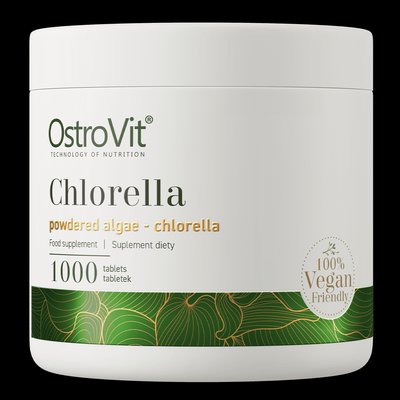 OstroVit Chlorella VEGE€15.90 In stock 1000tabs. Browse the chlorella category.
Do You Need to Cycle Chlorella?
There is no evidence that chlorella requires cycling. It is traditionally consumed as a food in Japan without cycling protocols. The concerns that apply to some herbal supplements (receptor downregulation, tolerance) do not apply to chlorella in the same way.
That said, using it continuously for years without reassessing whether your goals are being met is not optimal practice for any supplement. If you are using chlorella for a specific purpose (e.g., post-antibiotic gut reset, a defined detox protocol), a time-limited course may be more rational than indefinite use.
Monitoring During Long-Term Use
- Thyroid function: If you have a thyroid condition and plan to use chlorella daily for extended periods, periodic TSH monitoring is prudent given its iodine content.
- Anticoagulation patients: Regular INR monitoring is important if taking warfarin alongside chlorella.
- Quality sourcing: Regularly verify that your chlorella source maintains certified testing for contamination. Switch brands if batch testing information becomes unavailable.
Honest Verdict
Long-term chlorella use at typical supplement doses is safe for most healthy adults without contraindicated conditions. It is genuinely a nutritious food-like supplement with real immune-modulating properties supported by controlled trials. The detox claims are the weakest part of chlorella's evidence base — interesting in theory but not robustly proven in humans.
For healthy adults who enjoy greens supplements, chlorella represents a low-risk option with some genuine nutritional value. Prioritise quality sourcing, be mindful of vitamin K and iodine interactions, and do not rely on chlorella alone for medical-grade detoxification or blood pressure management.
References
Kwak, J. H., Baek, S. H., Woo, Y., et al. (2012). Beneficial immunostimulatory effect of short-term Chlorella supplementation: enhancement of natural killer cell activity and early inflammatory response. Nutrition Journal, 11, 53. https://pubmed.ncbi.nlm.nih.gov/22849818/
Nakano, S., Takekoshi, H., & Nakano, M. (2010). Chlorella pyrenoidosa supplementation reduces the risk of anemia, proteinuria and edema in pregnant women. Plant Foods for Human Nutrition, 65(1), 25-30. https://pubmed.ncbi.nlm.nih.gov/20013055/
Altmann, P., Cunningham, J., Dhanesha, U., et al. (2001). Disturbance of cerebral function by aluminium in haemodialysis patients without overt aluminium toxicity. Lancet, 358(9286), 898-903.
FAQ
How much chlorella is safe to take daily long-term?
Most clinical trials have used 3 to 10 g per day, and these doses are considered safe for healthy adults without thyroid disorders or anticoagulant therapy. Starting at the lower end and gradually increasing while monitoring for digestive tolerance is a sensible approach. Follow the manufacturer's guidance on the specific product you use.
Does chlorella actually detox the body?
The detox claims for chlorella are popular but not strongly supported by controlled human trials. Chlorella binds some toxins in animal models and in vitro, but the evidence that it reliably removes meaningful amounts of heavy metals or other toxins from the human body is not robust. It is more accurately described as a nutritious algae with antioxidant properties rather than a clinically proven detoxifier.
Can I take chlorella every day without a break?
Yes, for most healthy adults, daily use without cycling is appropriate and mirrors traditional consumption patterns. Ensure product quality remains high, and if you are on medications affected by vitamin K or iodine, monitor accordingly.



