
Best Form of Chlorella: How to Choose
Chlorella is a single-celled green freshwater algae that has gained popularity as a whole-food supplement. It is marketed for detoxification support, immune function, and as a plant-based source of protein, chlorophyll, and B vitamins. But chlorella forms vary in how effectively the body can access these nutrients — making the choice of product more important than many shoppers realise.
Forms Compared
| Form | Cell Wall Status | Nutrient Accessibility | Practical Notes |
|---|---|---|---|
| Powder (broken cell wall) | Disrupted | High | Versatile, can add to smoothies |
| Tablets (broken cell wall) | Disrupted | High | Convenient; standardised dosing |
| Tablets (whole cell) | Intact | Lower | Less bioavailable; older processing |
| Capsules (broken cell wall) | Disrupted | High | Convenient, no taste |
| Liquid extract | Processed | Variable | Less common; assess standardisation |
The cell wall is the critical factor. Chlorella's tough cellulose cell wall is not digested by the human gut. If the cell wall is intact, the nutrients inside — chlorophyll, protein, vitamins — are largely inaccessible. Disrupted-cell-wall (also called "broken cell wall") chlorella processes the algae mechanically or thermally to crack open the cells, dramatically improving nutrient release and absorption.
Bioavailability Differences
A study comparing protein digestibility of chlorella with and without cell wall disruption found significantly higher nitrogen digestibility in the broken-cell-wall form (Merchant et al., 2001). The difference is particularly relevant for those consuming chlorella as a protein contribution.
For chlorophyll and carotenoid access, the same principle applies: disrupted cell wall forms release substantially more of these phytonutrients into the digestive tract where they can be absorbed.
Cost per Effective Dose
ICONFIT Superfoods Organic Chlorella Powder 125g, OstroVit Chlorella 250g, and 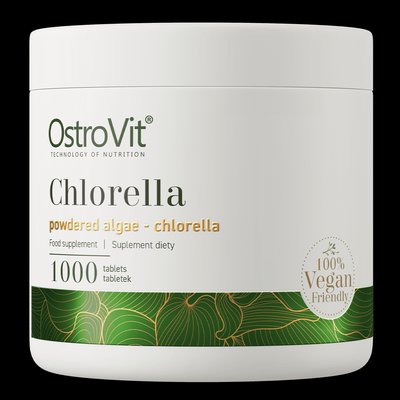 OstroVit Chlorella VEGE€15.90 In stock 1000tabs are the chlorella options available at maxfit.ee. All are broken-cell-wall products, meaning nutrient accessibility is not a concern.
Powder forms typically offer the best price per gram, while tablets offer the convenience of a fixed dose without weighing. Capsules are similar to tablets but with a slightly higher cost due to the casing. For daily users who consume chlorella in smoothies or drinks, powder is the practical and economical choice.
Which Form for Which Goal?
General greens and micronutrient top-up: Any broken-cell-wall form is suitable. Choose based on how you prefer to take it — powder in a shake or tablets with water.
Detoxification support: Most chlorella detox claims in the popular press relate to its chlorophyll content and the binding of certain compounds in the gut. A small clinical trial found that chlorella supplementation was associated with reduced blood levels of dioxins in lactating women (Nakano et al., 2005). Broken-cell-wall powder or tablets are both appropriate here.
Protein contribution: Chlorella is approximately 50–60% protein by dry weight. Broken-cell-wall forms improve protein accessibility. However, the serving sizes found in typical supplements are modest — chlorella supplements are not a primary protein source but a micronutrient-dense addition.
Athletes: Chlorella's B-vitamin and iron content make it of interest to endurance athletes, particularly vegans and vegetarians who may have limited dietary sources. Tablets are convenient pre- or post-training.
What to Look for on the Label
- Broken cell wall confirmation: This should be explicitly stated on the label. Do not assume it — older and cheaper products may use whole-cell processing.
- Organic certification: Chlorella accumulates environmental contaminants from water. Organic or third-party certified products are tested for heavy metals and pesticides.
- Origin transparency: Japanese and Taiwanese grown chlorella tends to have the most rigorous quality controls. Check whether the producer discloses the cultivation origin.
- No additives: Quality chlorella supplements should list only chlorella and minimal flowing agents. Avoid products with long additive lists.
FAQ
Is chlorella powder better than tablets?
Both are effective if they use broken-cell-wall processing. Powder is more versatile and often more economical. Tablets are more convenient for travel and for people who dislike the strong taste of chlorella. The effect is comparable between the two.
Can chlorella be taken every day?
Daily use is common in the research literature. Start with a small amount and increase gradually to allow your digestive system to adjust — some people experience temporary digestive changes in the first week. Green stools are normal and indicate chlorophyll absorption.
Does chlorella interact with any medications?
Chlorella is high in vitamin K, which can interact with anticoagulant medications such as warfarin. If you take any prescription medications, particularly blood thinners, discuss chlorella supplementation with your doctor before starting.
References
Merchant, R. E., & Andre, C. A. (2001). A review of recent clinical trials of the nutritional supplement Chlorella pyrenoidosa in the treatment of fibromyalgia, hypertension, and ulcerative colitis. Alternative Therapies in Health and Medicine, 7(3), 79-91. https://pubmed.ncbi.nlm.nih.gov/11347287/
Nakano, S., Takekoshi, H., & Nakano, M. (2007). Chlorella (Chlorella pyrenoidosa) supplementation decreases dioxin and increases immunoglobulin A concentrations in breast milk. Journal of Medicinal Food, 10(1), 134-142. https://pubmed.ncbi.nlm.nih.gov/17472477/
Becker, W. (2004). Microalgae in human and animal nutrition. Handbook of Microalgal Culture, Blackwell, 312-351.



