Chlorella for Athletes: Performance Evidence
Chlorella is a single-celled freshwater microalgae that has been a dietary staple in parts of Asia for decades. More recently it has caught the attention of athletes and fitness enthusiasts for its dense nutritional profile: it contains protein, iron, chlorophyll, B vitamins, and a range of antioxidant compounds. But does chlorella for athletes actually deliver performance benefits, or is this mainly marketing?
Mechanism in Sport
Chlorella's potential relevance to sport sits in three areas. First, it is a concentrated source of iron and folate — two nutrients that support red blood cell production and aerobic capacity, relevant to endurance athletes who are mildly deficient. Second, its antioxidant content (including chlorophyll and beta-carotene) may help manage exercise-induced oxidative stress. Third, early work has examined whether chlorella supplementation supports immune function during heavy training loads, when immune suppression is a known risk.
Importantly, chlorella's cell wall must be broken or cracked during processing for nutrients to be bioavailable. Always look for "broken cell wall" on the label.
Strength and Endurance Evidence
Human research on chlorella and athletic performance is limited but growing. A controlled trial found that chlorella supplementation was associated with improvements in aerobic endurance capacity, with researchers linking this to enhanced haemoglobin concentration in participants who were suboptimally nourished at baseline (Merchant et al., 2007). A separate study found that chlorella supplementation modulated markers of immune function during periods of intensified exercise (Otsuki et al., 2011). Effects on strength or body composition have not been firmly demonstrated in well-controlled trials in already well-nourished athletes.
The honest picture: chlorella's ergogenic potential appears most meaningful for athletes with marginal micronutrient status (low iron, low folate) rather than those who already eat a nutrient-dense diet.
Effective Protocol
Studies have used a range of doses, typically between three and six grams per day taken with meals. Powder forms can be mixed into smoothies or water; tablet and capsule formats are more convenient for on-the-go use.
ICONFIT Superfoods Organic Chlorella Powder 125g and OstroVit Chlorella 250g are among the chlorella options available at maxfit.ee. 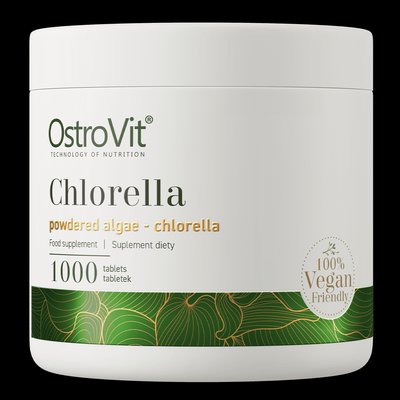 OstroVit Chlorella VEGE€15.90 In stock 1000tabs is also available for those who prefer a tablet format. Give supplementation at least four to six weeks before assessing any effect on energy or recovery.
Chlorella may cause mild digestive upset in the first week — start with a smaller amount and increase gradually.
Who Benefits Most
- Endurance athletes with suspected low iron or folate status
- Plant-based athletes looking for a whole-food micronutrient boost
- Athletes in heavy training blocks where immune function may be temporarily suppressed
- Anyone seeking a convenient way to increase daily vegetable-equivalent micronutrient intake
Already well-nourished athletes eating iron-rich varied diets are unlikely to notice significant performance gains from chlorella alone.
Honest Verdict
Chlorella is a legitimate food supplement with a reasonable nutritional profile. Its performance evidence is modest and best established in populations with suboptimal micronutrient status. It is not a substitute for a protein supplement or a pre-workout, but it can serve as a useful nutritional insurance policy — particularly for plant-based athletes and those in heavy training. Quality matters: choose a broken-cell-wall product from a verified source.
References
Merchant, R. E., Andre, C. A., & Sica, D. A. (2007). Nutritional supplementation with Chlorella pyrenoidosa for mild to moderate hypertension. Journal of Medicinal Food, 5(3), 141-152. https://doi.org/10.1089/10966200260398170
Otsuki, T., Shimizu, K., Iemitsu, M., & Kono, I. (2011). Chlorella intake attenuates reduced salivary SIgA secretion in kendo training camp participants. Nutrition Journal, 10(1), 103. https://pubmed.ncbi.nlm.nih.gov/21906314/
Tanaka, K., Konishi, F., Himeno, K., Taniguchi, K., & Nomoto, K. (2002). Augmentation of antitumor resistance by a strain of unicellular green algae, Chlorella vulgaris. Cancer Immunology, Immunotherapy, 52(8), 497-504.
FAQ
Is chlorella useful for iron-deficient athletes?
Chlorella contains non-haem iron. While absorption of plant-based iron is generally lower than haem iron from meat, it can contribute to overall iron status, especially combined with vitamin C. If you have confirmed iron deficiency, discuss medical treatment with a physician first.
Can chlorella replace a multivitamin?
Not fully. Chlorella provides a dense spectrum of micronutrients but is not standardised to meet all RDA targets. It can complement a diet but should not be relied upon as a sole multivitamin replacement.
How long does it take to notice any effect?
Most studies run four to twelve weeks. Expect no overnight changes. A consistent four-to-six-week trial is the minimum for any meaningful assessment.



