
Natural Food Sources of Chlorella
Chlorella is a single-celled freshwater green alga that has attracted interest as a nutrient-dense food. Unlike most supplement topics, where the nutrient in question exists in a range of everyday foods, chlorella itself is the food source — it does not occur naturally in a range of other common dietary items. Understanding what chlorella food sources are (and are not) helps frame when supplementation makes practical sense.
What Chlorella Is and Where It Occurs
Chlorella belongs to the genus Chlorella, most commonly Chlorella vulgaris and Chlorella pyrenoidosa. It grows in freshwater environments worldwide, including ponds, lakes, and cultivated photobioreactor systems used for commercial production.
In its natural state, chlorella is microscopic and not an ingredient in conventional diets in most countries. It does not appear in familiar plant foods, grains, meats, or dairy. The primary way humans consume chlorella is through deliberately added food products:
- Chlorella powder and tablets: The most common commercial form. Dried, broken-cell-wall chlorella is widely available as a supplement.
- Functional foods and green blends: Some manufacturers add chlorella powder to green superfood blends, smoothie mixes, and health bars.
- Traditional food use: In parts of Japan and Taiwan, chlorella has a longer history as a food supplement alongside spirulina and other microalgae.
No common fruit, vegetable, grain, or animal food contains chlorella — it is not synthesized or concentrated by other organisms in the food chain in ways that would make it available through typical dietary patterns.
Nutritional Profile
Chlorella is notable for its concentration of nutrients per gram:
- Protein: Chlorella dry matter is roughly 50–60% protein by mass, including all essential amino acids
- Chlorophyll: One of the richest known plant sources
- Vitamins: Contains B vitamins, including B12 precursors, vitamin C, and vitamin K
- Minerals: Iron, zinc, magnesium, phosphorus
- Carotenoids: Beta-carotene, lutein, zeaxanthin
Because of this dense nutritional profile, chlorella is sometimes described as a whole food rather than a single-nutrient supplement.
Bioavailability: Whole Cell vs Broken Cell
The outer cell wall of chlorella is largely indigestible by humans, which significantly limits the bioavailability of its nutrients. Raw or untreated chlorella passes largely intact through the digestive tract. This is why commercial chlorella products use mechanical cell-wall disruption (broken cell wall chlorella) to make nutrients accessible.
A clinical study found that broken-cell-wall chlorella supplementation led to measurable increases in blood carotenoid levels, while intact-cell preparations had substantially lower effects (Nakano et al., 2010). This bioavailability difference is central to choosing a quality chlorella product — look for products specifying broken or cracked cell wall.
Daily Targets from Diet
There is no established recommended dietary allowance for chlorella, as it is not a conventional food component in most health authority frameworks. Typical doses used in research range from 3–10 g per day of dried chlorella powder.
For those incorporating chlorella into their diet for its nutrient density, consistent daily use at modest amounts (3–5 g) is more relevant than trying to achieve a threshold through sporadic consumption.
Preparation and Storage
Chlorella powder is heat-stable and can be added to smoothies, juices, or foods without significant nutrient degradation. It has a characteristic green color and mild, slightly earthy taste. Tablets offer convenience for those who find the taste off-putting.
Storage away from heat, light, and moisture preserves chlorella quality. Opened packages should be resealed and stored in a cool, dark place.
When Food Is Not Enough
Since chlorella does not occur in conventional foods, anyone interested in its nutritional benefits — including its chlorophyll content, protein, and micronutrient density — must use a commercial chlorella product.
Chlorella supplementation has been studied for effects on immune function and antioxidant status. A randomized controlled trial found that regular chlorella supplementation was associated with improved natural killer cell activity, a marker of immune competence (Kwak et al., 2012). These effects cannot be obtained from general dietary sources.
At maxfit.ee: ICONFIT Superfoods Organic Chlorella Powder 125g is an organic chlorella powder suitable for smoothies and functional foods. OstroVit Chlorella 250g and 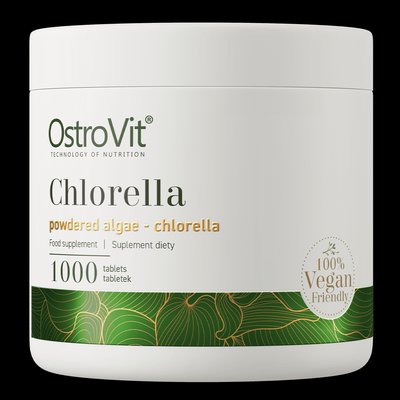 OstroVit Chlorella VEGE€15.90 In stock 1000tabs offer bulk and tablet options respectively. Browse the full chlorella category to find the right format.
FAQ
Can I get chlorella from regular foods?
No. Chlorella is a microalga that does not naturally occur in conventional foods such as vegetables, grains, meat, or dairy. The only way to obtain chlorella is through deliberately added products — chlorella powder, tablets, or functional food products that include chlorella as an ingredient.
Does cooking destroy chlorella nutrients?
Chlorella nutrients are relatively heat-stable. Adding chlorella powder to warm (not boiling) smoothies or foods is generally fine. However, very high heat cooking (frying, baking at high temperatures) may degrade some heat-sensitive vitamins. For maximum nutrient retention, add chlorella to cold or room-temperature preparations.
What does broken cell wall mean for chlorella quality?
Chlorella's tough outer cell wall is not digestible by the human gut. Broken or cracked cell wall processing uses mechanical pressure or other methods to rupture the wall, releasing the nutrients inside and making them available for absorption. Studies confirm meaningfully higher nutrient bioavailability from broken-cell-wall preparations compared to intact-cell chlorella.
References
Nakano, S., Takekoshi, H., & Nakano, M. (2010). Chlorella pyrenoidosa supplementation reduces the risk of anemia, proteinuria and edema in pregnant women. Plant Foods for Human Nutrition, 65(1), 25-30. https://pubmed.ncbi.nlm.nih.gov/20013055/
Kwak, J. H., Baek, S. H., Woo, Y., Han, J. K., Kim, B. G., Kim, O. Y., & Lee, J. H. (2012). Beneficial immunostimulatory effect of short-term Chlorella supplementation: enhancement of natural killer cell activity and early inflammatory response. Nutrition Journal, 11, 53. https://pubmed.ncbi.nlm.nih.gov/22849818/
Safi, C., Charton, M., Pignolet, O., Silvestre, F., Vaca-Garcia, C., & Pontalier, P. Y. (2013). Influence of microalgae cell wall characteristics on protein extractability and determination of nitrogen-to-protein conversion factors. Journal of Applied Phycology, 25(2), 523-529. https://doi.org/10.1007/s10811-012-9886-1



