What Is Chlorella and Why Does Dosage Matter?
Chlorella is a single-celled green freshwater algae packed with chlorophyll, protein, vitamins, and minerals. It has gained popularity as a whole-food supplement for detoxification support, immune function, and general nutrition. Because its cellular wall must be broken to make nutrients bioavailable, dosage and product quality both matter significantly.
Most clinical research uses doses of 3–10 g per day. Choosing the right chlorella dosage for your goal — and understanding safe upper limits — keeps results predictable and avoids the gastrointestinal side effects that can occur at excessive intakes.
Studied Effective Dose Ranges
A randomised controlled trial found that supplementation with 6 g of broken-cell-wall chlorella daily over eight weeks was associated with improvements in immune cell activity markers (Kwak et al., 2012). Separate work in healthy adults observed that 5–6 g per day supported reductions in blood lipid oxidation markers over a comparable period (Nakano et al., 2010).
For general nutritional support, doses in the 3–5 g range are the most common starting point in research and practice.
ICONFIT Superfoods Organic Chlorella Powder 125g is a convenient powdered option available at maxfit.ee, allowing flexible dosing from 2–6 g per day. OstroVit Chlorella 250g and 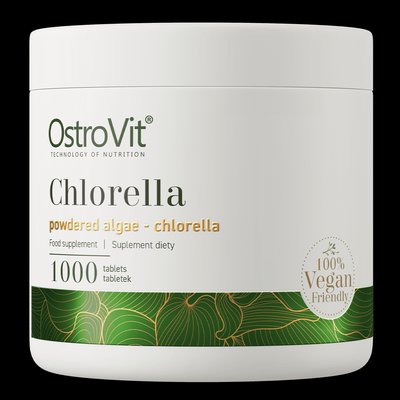 OstroVit Chlorella VEGE€15.90 In stock 1000tabs are tablet alternatives for those who prefer a fixed-dose form.
Dose by Goal
| Goal | Typical Research Dose |
|---|---|
| General nutrition top-up | 3 g/day |
| Immune / antioxidant support | 5–6 g/day |
| Heavy metal detox support | 5–10 g/day (supervised) |
Note: heavier detox protocols should be supervised, as high chlorella doses may interact with immunosuppressants and anticoagulants.
Upper Limits
No formal tolerable upper intake level (UL) has been established for chlorella. The doses used in clinical trials — up to 10 g per day — appear well tolerated in healthy adults over periods of several weeks to months. Gastrointestinal discomfort (nausea, loose stools, green-coloured stools) is the most commonly reported side effect at the higher end.
Individuals with autoimmune conditions or taking warfarin should consult a healthcare provider before supplementing, as chlorella's high vitamin K content may influence anticoagulation.
Timing Relative to Dose
Chlorella is commonly taken with water before meals. Some users find it easier on the stomach when split across two or three daily servings rather than taken as a single large dose. There is no strong evidence that a specific time of day (morning vs. evening) significantly changes outcomes.
If you are taking chlorella for detoxification support, consistency across the day may be more important than precise timing.
Practical Protocol
- Start low. Begin with 2–3 g per day for the first week to allow your gastrointestinal tract to adjust to the high chlorophyll content.
- Progress gradually. Increase to your target dose (5–6 g for most goals) over two to four weeks.
- Take with water, before meals. This is the most common protocol in clinical studies.
- Choose broken-cell-wall products. Intact chlorella cell walls are largely indigestible; look for labelling indicating the cell wall has been processed (cracked or broken).
- Cycle if desired. Some practitioners suggest cycling on for eight to twelve weeks and off for a few weeks, though the evidence base for cycling is limited.
FAQ
How much chlorella should I take per day?
Most research uses 3–6 g per day for health and immune support. Start at a lower dose and build up over one to two weeks to minimise gastrointestinal side effects. Doses above 10 g per day are rarely studied and not generally recommended without supervision.
Can I take chlorella and spirulina together?
Yes. Both are microalgae with complementary nutrient profiles. Many users combine them at reduced individual doses — for example, 3 g chlorella plus 3 g spirulina per day. There is no evidence of adverse interactions between the two.
How long before I notice results from chlorella?
Most clinical trials observe changes in biomarkers after four to eight weeks of consistent daily use. Visible benefits such as improved energy or skin appearance are subjective and may take longer to notice.
References
Kwak, J. H., Baek, S. H., Woo, Y., Han, J. K., Kim, B. G., Kim, O. Y., & Lee, J. H. (2012). Beneficial immunostimulatory effect of short-term Chlorella supplementation: enhancement of natural killer cell activity and early inflammatory response. Nutrition Journal, 11, 53. https://pubmed.ncbi.nlm.nih.gov/22849818/
Nakano, S., Takekoshi, H., & Nakano, M. (2010). Chlorella pyrenoidosa supplementation reduces the risk of anemia, proteinuria and edema in pregnant women. Plant Foods for Human Nutrition, 65(1), 25–30. https://pubmed.ncbi.nlm.nih.gov/20013055/
Sears, M. E. (2013). Chelation: harnessing and enhancing heavy metal detoxification — a review. Scientific World Journal, 2013, 219840.



