Chaga: Latest Research and Evidence Update
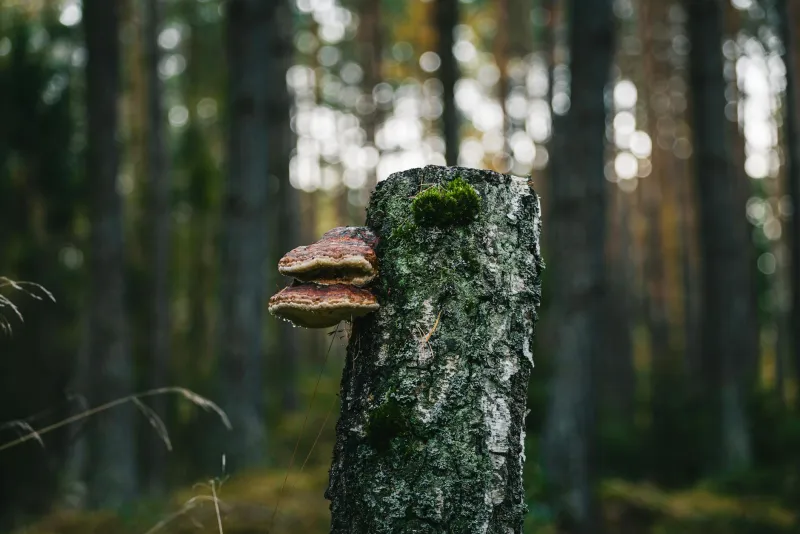
Chaga (Inonotus obliquus) is a parasitic fungus that grows primarily on birch trees in cold northern climates. It has a long history of use in Siberian and Northern European folk medicine, and it has attracted substantial research interest over the past decade. This article reviews where the research currently stands, how thinking has evolved, and what open questions remain.
What Recent Trials Show
Chaga research falls into a few primary areas: immune modulation, antioxidant activity, and anti-tumour effects. The research base is dominated by preclinical studies (cell lines and animal models), with very limited human clinical trial data.
Antioxidant and anti-inflammatory properties: Chaga is extraordinarily rich in melanin-based pigments and polyphenols, giving it one of the highest ORAC (oxygen radical absorbance capacity) values measured in any natural material. Several studies have confirmed this antioxidant capacity in vitro. An important caveat: ORAC values measured outside the body do not reliably predict antioxidant effects in living humans after oral ingestion, due to absorption, bioavailability, and metabolism factors. This is a common misreading in the mushroom supplement market.
Beta-glucan content: Chaga contains beta-glucans, polysaccharides with immunomodulatory properties. Beta-glucans from mushrooms (particularly beta-1,3/1,6-glucans) have shown ability to stimulate immune cell activity — notably macrophages and natural killer cells — in preclinical and some early clinical studies. A study by Youn et al. (2009) examined the immunostimulatory effects of water-soluble chaga polysaccharides and found enhanced cytokine production in cell models (Youn et al., 2009). However, the leap from cell studies to meaningful immune support in healthy humans requires clinical trial evidence that is largely lacking.
Anti-tumour research: This is the area most discussed in chaga literature. Multiple cell culture and animal studies have shown that chaga extracts inhibit tumour cell growth and induce apoptosis in cancer cell lines. A notable preclinical study by Arata et al. (2016) found that chaga polysaccharide extract inhibited tumour growth in a mouse model (Arata et al., 2016). These findings are promising from a drug discovery perspective but cannot be interpreted as evidence that chaga supplementation prevents or treats cancer in humans. This distinction is critical and often blurred in popular media.
Shifts in Scientific Consensus
The trajectory of chaga research over the past decade has been one of increasing scientific interest alongside increasing scientific caution.
Early enthusiasm was driven primarily by in vitro studies showing dramatic antioxidant and cytotoxic effects. The current scientific position is more measured: while these properties are well-documented at the laboratory level, no adequately powered human RCT has demonstrated clinical benefit for any specific health outcome. The gap between preclinical data and human clinical evidence remains wide.
One shift worth noting: there is growing interest in chaga's potential as an adjunct in integrative oncology, given its preclinical anti-tumour data. Several research groups are pursuing early-phase clinical studies. This is a legitimate area of inquiry but does not justify current commercial health claims.
A second development is increasing research into the bioavailability of chaga's active compounds. Hot water extraction (producing a tea) efficiently extracts beta-glucans, while alcohol extraction targets terpenoids. Dual extraction products claim to capture both fractions. The science on which extraction method best preserves bioavailable compounds is still evolving.
Still-Open Questions
Several important questions remain unanswered in the chaga research literature:
- Human bioavailability: How much of chaga's in vitro-active compounds reach target tissues in meaningful concentrations after oral consumption?
- Effective dose: No consensus exists on the dose required to achieve the effects seen in preclinical studies, if they translate at all to humans.
- Long-term safety: Chaga has relatively few documented safety concerns at typical doses, but sustained high-dose use carries theoretical risks. Chaga is high in oxalates, and case reports have documented oxalate nephropathy with very high consumption (Kikuchi et al., 2014).
- Standardisation: Commercial products vary enormously in beta-glucan content, extraction method, and purity. No regulatory standard exists for what constitutes a meaningful dose.
What It Means Practically
For someone interested in chaga supplementation, the practical picture is:
- Chaga is unlikely to cause harm at typical supplement doses from quality products.
- It has a plausible immunomodulatory mechanism through beta-glucans, and this is among the better-supported aspects of its biology.
- Anti-tumour, anti-cancer, or disease-treatment claims are not supported by human clinical evidence — these are preclinical signals, not established benefits.
- The antioxidant claims, while technically measurable in test tubes, do not translate reliably to meaningful benefits in the human body.
- If you are using chaga for general wellness and enjoy it, the risk is low. If you are using it with specific therapeutic expectations, lower those expectations until human RCT data exists.
OstroVit Chaga Extract 240mg 50g and OstroVit Chaga 240mg 60caps, available at maxfit.ee under the chaga category, are standardised extract options for those exploring chaga supplementation.
Bottom Line
Chaga is a scientifically interesting fungus with documented preclinical activity across several relevant biological pathways. The research community's interest is real and growing. However, the human clinical trial evidence needed to confirm any of these preclinical effects remains sparse. Cautious optimism is warranted; overclaiming is not.
FAQ
Does chaga boost the immune system?
Chaga contains beta-glucans with immunomodulatory properties in preclinical research. The honest answer for humans is: possibly, but this has not been confirmed in properly controlled human clinical trials. The mechanistic basis is plausible and beta-glucans from other mushrooms (like shiitake and maitake) have somewhat more human evidence, which increases the biological plausibility.
Can chaga fight cancer?
Chaga extracts have shown cytotoxic effects against cancer cell lines in laboratory studies. This makes it a legitimate target for drug discovery research. However, this does not mean that taking a chaga supplement prevents or treats cancer in humans. In vitro cytotoxicity is a common property of many natural and synthetic compounds and does not reliably predict clinical anticancer activity.
Is daily chaga supplementation safe?
At typical supplement doses, chaga appears safe for most adults based on traditional use and limited human data. The primary documented risk is oxalate accumulation with very high intake. People with kidney disease or a history of kidney stones should use caution. Anyone with a serious health condition should consult a healthcare provider before supplementing.
References
Youn, M. J., Kim, J. K., Park, S. Y., Kim, Y., Kim, S. J., Lee, J. S., ... & So, H. S. (2009). Chaga mushroom (Inonotus obliquus) induces G0/G1 arrest and apoptosis in human hepatoma HepG2 cells. World Journal of Gastroenterology, 15(33), 4138-4144.
Arata, S., Watanabe, J., Maeda, M., Yamamoto, M., Nakata, H., Witarto, A. B., ... & Kaminishi, H. (2016). Continuous intake of the Chaga mushroom (Inonotus obliquus) aqueous extract suppresses cancer progression and maintains body temperature in mice. Heliyon, 2(5), e00111. https://pubmed.ncbi.nlm.nih.gov/27441282/
Kikuchi, Y., Seta, K., Ogawa, Y., Takayama, T., Nagata, M., Taguchi, T., & Yahata, K. (2014). Chaga mushroom-induced oxalate nephropathy. Clinical Nephrology, 81(6), 440-444. https://pubmed.ncbi.nlm.nih.gov/23149251/



