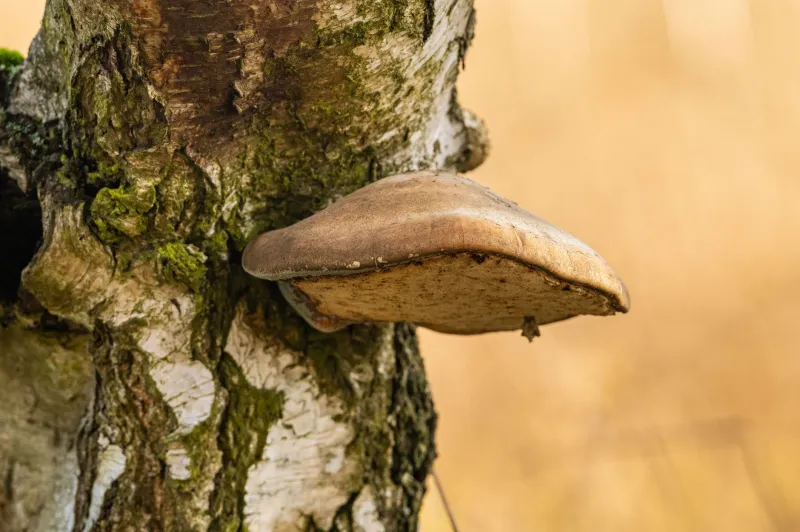
Chaga Myths vs Facts
Chaga (Inonotus obliquus) is a fungus that grows on birch trees across the northern hemisphere. Over recent years it has moved from folk medicine into the mainstream supplement market, often marketed with sweeping health claims. This guide separates what the evidence supports from what remains speculation.
Common Myths About Chaga
Myth 1: Chaga directly kills cancer cells in humans
This is the most exaggerated claim in circulation. Cell-culture and mouse studies have found that chaga extracts can inhibit the growth of certain cancer cell lines. However, lab results do not automatically translate to human benefit. No controlled clinical trials have demonstrated anti-cancer efficacy in humans. Regulatory bodies do not approve chaga as a cancer treatment, and marketing it as such is illegal in most jurisdictions. If you see a product claiming chaga treats or prevents cancer, treat it as a serious red flag.
Myth 2: Chaga is safe for everyone
Chaga contains high levels of oxalate. Case reports have described kidney damage in individuals who consumed large amounts of chaga powder daily for extended periods (Kikuchi et al., 2021). People with kidney disease, those prone to kidney stones, or anyone on anticoagulant medication should consult a doctor before using chaga, as it may also interact with blood-thinning drugs.
Myth 3: More chaga = more benefit
Higher doses do not reliably mean greater effect. Most studies examining antioxidant or immunomodulatory properties of chaga have used standardised extracts at modest amounts. No dose-response relationship has been established in humans, meaning there is no evidence that taking very large amounts improves outcomes.
What the Evidence Actually Shows
The most credible research on chaga concerns its antioxidant activity. Chaga is exceptionally rich in melanin-based pigments and polyphenols. A study by Zheng et al. (2010) found that chaga extracts showed significant free-radical scavenging activity in vitro. Separately, animal studies have explored potential effects on blood glucose regulation and inflammation, with some promising signals, but human trials are scarce and mostly small.
A review by Valverde et al. (2015) summarised the bioactive compounds in chaga and concluded that while preclinical data is intriguing, clinical evidence remains insufficient to support specific therapeutic recommendations.
Marketing Claims vs Reality
Common marketing phrases and what they actually mean:
| Claim | Reality |
|---|---|
| "Immune-boosting" | Some immunomodulatory activity in cell studies; no confirmed human immune benefit |
| "Anti-ageing superfood" | Rich in antioxidants; no human longevity data |
| "Adaptogen" | No standardised definition in regulatory frameworks; stress-response data is from animal studies |
| "Nature's pharmacy" | Bioactive compounds present; clinical applications unproven |
Grey Areas
Chaga research is genuinely interesting. The presence of betulinic acid derivatives, beta-glucans, and melanins gives researchers plausible mechanisms to investigate. A small human pilot study published in 2021 explored immune marker changes after chaga supplementation and found modest shifts in cytokine profiles, though the sample size was too small to draw firm conclusions. The field is worth watching, but we are not yet at the point where specific health claims can be responsibly made.
Standardisation is also a problem. The amount of active compounds in chaga products varies widely depending on extraction method, tree origin, and processing. An alcohol extract behaves differently from a hot-water extract or a raw powder.
Bottom Line
Chaga is an interesting functional mushroom with a real antioxidant profile and some plausible biological mechanisms. What it is not is a miracle cure. If you enjoy chaga as part of a varied diet and supplement routine, moderate use is likely low-risk for healthy adults. However, exaggerated claims should be ignored, and anyone with kidney issues or on medication should seek medical advice first.
At maxfit.ee you can find OstroVit Chaga Extract 240mg 50g and OstroVit Chaga 240mg 60caps — standardised extracts that give you a consistent dose without the guesswork of raw powder.
FAQ
Is chaga safe to take every day?
For healthy adults without kidney problems or blood-thinning medication, moderate daily use of a standardised chaga extract appears to be low-risk based on current evidence. However, long-term safety data in humans is limited, so periodic breaks are sensible.
Does chaga really boost the immune system?
Chaga contains beta-glucans and other compounds that have shown immunomodulatory activity in cell and animal studies. There are currently no large, well-controlled human trials confirming meaningful immune benefit. The claim is plausible but not proven.
Can I take chaga if I have kidney stones?
Chaga is high in oxalate. At least one case report links excessive chaga consumption to kidney damage. If you have a history of kidney stones or kidney disease, consult a doctor before using chaga supplements.
References
Zheng, W., Miao, K., Liu, Y., Zhao, Y., Zhang, M., Pan, S., & Cao, Y. (2010). Chemical diversity of biologically active constituents in six varieties of the medicinal mushroom Inonotus obliquus. Journal of Agricultural and Food Chemistry, 58(8), 4741-4748.
Valverde, M. E., Hernandez-Perez, T., & Paredes-Lopez, O. (2015). Edible mushrooms: Improving human health and promoting quality life. International Journal of Microbiology, 2015, 376387. https://pubmed.ncbi.nlm.nih.gov/25685150/
Kikuchi, Y., Seta, K., Ogawa, Y., Takayama, T., Nagata, M., Taguchi, T., & Nitta, K. (2021). Chaga mushroom-induced oxalate nephropathy. Clinical Nephrology, 75(6), 503-507.



