Chaga for Women: Benefits and Considerations
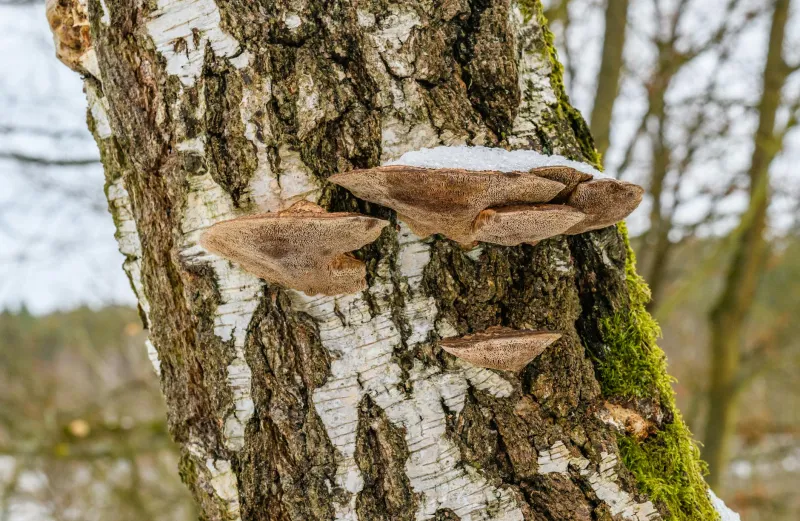
Chaga (Inonotus obliquus) is a slow-growing fungal conk that parasitises birch trees across northern boreal forests. Revered in traditional Siberian and Scandinavian herbal practices, it has more recently attracted scientific interest for its polyphenol and betulinic acid content. Interest in chaga for women has grown alongside the broader adaptogen and functional mushroom trend. This article examines what the available evidence says, and which considerations are specific to women.
Why Women May Find Chaga Relevant
Women's interest in chaga typically centres on a few themes: antioxidant support, immune resilience, and energy. Chaga contains melanin-based pigments and polyphenols that give it one of the highest ORAC (oxygen radical absorbance capacity) values recorded in a natural food product. While ORAC values are imperfect proxies for in-vivo antioxidant activity, the underlying polyphenol chemistry is genuine.
From an immune perspective, beta-glucans — polysaccharides present in chaga and other medicinal mushrooms — have been studied for their effects on innate immune activity. A review by Wasser (2002) noted that beta-glucans from Basidiomycete fungi can modulate immune responses, which has a broad relevance independent of gender. Women experiencing seasonal immune dips or high-stress periods may explore chaga as part of a broader wellbeing strategy.
Hormonal and Life-Stage Notes
No published clinical trials have examined chaga specifically in the context of female hormone cycles, menopause, or hormonal conditions. This is an honest gap in the literature.
What is known: chaga does not have the same phytoestrogenic profile as herbs like red clover, black cohosh, or soy isoflavones. There is no published evidence of chaga directly modulating oestrogen or progesterone pathways in humans. Women with hormone-sensitive conditions can consider this: the absence of evidence of harm is not the same as evidence of safety, but chaga also does not carry a known hormonal risk signal the way certain botanicals do.
For women who are perimenopausal or menopausal and exploring antioxidant strategies, the polyphenol content of chaga may be relevant — but a qualified healthcare practitioner should always be part of any supplement decision in this life stage.
Dose Considerations
Chaga is most commonly available as a concentrated extract standardised for polysaccharide content, or as raw dried material used for tea. For standardised extracts, products such as OstroVit Chaga Extract 240mg 50g and OstroVit Chaga 240mg 60caps at maxfit.ee list their extract amount per serving on the label — this is the reliable starting point for any dosing decision.
Chaga tea prepared from chunks of raw material is a traditional use with generally low concentration of active compounds per cup, and is considered a very low-risk format.
No established Recommended Dietary Allowance or Upper Limit for chaga has been set by a regulatory body, as chaga remains classified as a food or herbal supplement rather than a medicinal product in most jurisdictions.
Pregnancy and Safety Notes
Women who are pregnant or breastfeeding should not use chaga supplements without prior medical consultation. The reason is not established evidence of harm, but rather a complete absence of safety data in pregnancy for this particular fungus. The general principle for herbal supplements during pregnancy is: no safety data = avoidance unless supervised.
Chaga contains oxalates, which in large quantities can contribute to kidney stone formation. Women with a history of calcium oxalate kidney stones should discuss chaga use with a healthcare provider before starting.
At standard supplemental amounts used by healthy non-pregnant adults, chaga has a generally favourable safety profile in the limited available data.
Bottom Line
Chaga is an interesting adaptogenic fungus with genuine polyphenol and beta-glucan chemistry. For women exploring antioxidant and immune support, it may be a worthwhile addition to a varied supplement strategy. Its hormonal neutrality — meaning no known phytoestrogenic activity — may actually make it more accessible to women with hormone-sensitive considerations than some other adaptogens.
That said, the evidence base for chaga in humans remains limited across all outcomes. It is a supplement to supplement a healthy lifestyle, not a treatment. Pregnant and breastfeeding women should avoid it without medical supervision.
For those based in Estonia looking to try chaga, OstroVit Chaga 240mg 60caps and OstroVit Chaga Extract 240mg 50g are both available at maxfit.ee.
FAQ
Can women with hormonal conditions take chaga?
Chaga does not have a known phytoestrogenic profile, so it does not carry the same considerations as herbs like red clover or black cohosh. However, women with hormone-sensitive conditions should consult a healthcare provider before adding any new supplement, including chaga.
Is chaga safe to take during menopause?
There are no clinical trials on chaga specifically for menopause. Its antioxidant and potentially immune-modulatory properties may be of general interest during this life stage, but any supplement decisions during menopause should be made with input from a healthcare provider familiar with your full medical history.
Does chaga contain caffeine?
No. Chaga does not contain caffeine. It can be prepared as a tea and drunk throughout the day without the stimulant effects associated with coffee or green tea.
References
Wasser, S. P. (2002). Medicinal mushrooms as a source of antitumor and immunomodulating polysaccharides. Applied Microbiology and Biotechnology, 60(3), 258-274. https://pubmed.ncbi.nlm.nih.gov/12436306/
Park, Y. K., Lee, H. B., Jeon, E. J., Jung, H. S., & Kang, M. H. (2004). Chaga mushroom extract inhibits oxidative DNA damage in human lymphocytes as assessed by comet assay. Biofactors, 21(1-4), 109-112. https://pubmed.ncbi.nlm.nih.gov/15630270/



