Chaga for Athletes: Performance Evidence
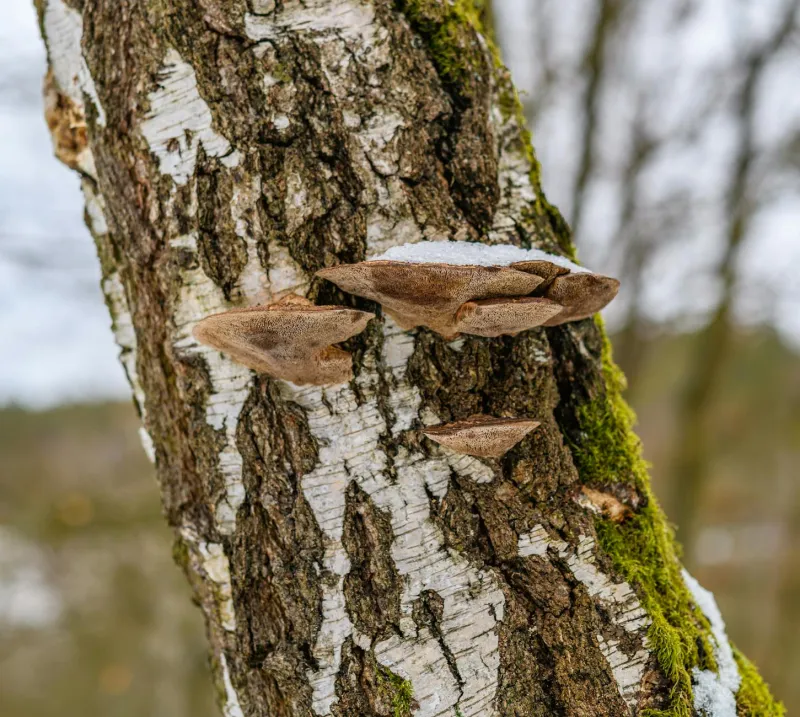
Chaga (Inonotus obliquus) is a parasitic fungus that grows on birch trees and has attracted growing interest in sports nutrition. Unlike culinary mushrooms, chaga is not eaten as food — it is consumed as an extract or powder, prized primarily for its exceptional concentration of betulinic acid, polysaccharides, and melanin-derived antioxidants. For athletes, the question is straightforward: does chaga for athletes translate into meaningful performance or recovery benefits?
Mechanism in Sport
Chaga's most documented property is its high antioxidant capacity. Intense exercise generates reactive oxygen species (ROS) that can damage muscle tissue and prolong recovery. Antioxidant compounds in chaga — particularly polyphenols and melanins — may help buffer this oxidative load.
Chaga also contains beta-glucans, a class of polysaccharides with well-documented immune-modulating properties. High training volumes suppress immune function transiently, and beta-glucans are studied as a means of mitigating this effect (Akramiene et al., 2007).
Additionally, animal studies have shown that chaga extracts modulate inflammatory cytokine profiles, suggesting a potential role in reducing exercise-induced inflammation, though controlled human trials in athletes are limited.
Strength and Endurance Evidence
Direct human performance research on chaga is sparse. A controlled mouse study found that chaga polysaccharide extract supplementation over three weeks was associated with improved forced swimming endurance and reduced blood lactic acid levels at exhaustion compared to controls. While animal-to-human extrapolation requires caution, the mechanism — reduced acidosis and oxidative stress at high intensity — is relevant to human endurance sport.
No well-controlled human RCT has yet demonstrated a statistically significant improvement in strength or aerobic capacity directly attributable to chaga. At this stage, chaga is best characterised as a recovery and adaptation support tool rather than an acute performance enhancer.
Effective Protocol
Most commercially available chaga extracts are standardised to polysaccharide content. Products like OstroVit Chaga 240mg 60caps and OstroVit Chaga Extract 240mg 50g (available at maxfit.ee) provide convenient dosing options. Powder extracts allow flexible dosing in shakes or tea, while capsules offer convenience for daily use.
A typical protocol used in research involves a standardised extract taken once or twice daily, consistently for at least four to eight weeks to allow immune and antioxidant adaptations to accumulate. Taking it in the morning or post-training is common practice; there is no strong evidence favouring a specific timing relative to exercise in human studies.
Hot water extraction is necessary to break down the chitin cell walls of chaga and liberate the polysaccharides. This is why raw chaga powder has lower bioavailability of the polysaccharide fraction than a hot-water or dual extract.
Who Benefits
Athletes most likely to notice a meaningful effect from chaga are those with high training volumes who experience frequent post-exercise fatigue, recurrent upper respiratory infections during heavy training blocks, or slow inflammatory recovery between sessions. The beta-glucan content is particularly relevant for those managing immune suppression under load.
For those doing light recreational exercise with adequate rest and nutrition, the marginal benefit of chaga is likely to be small.
Honest Verdict
Chaga is genuinely interesting from a biochemistry standpoint — its antioxidant profile is among the highest measured in any natural food substance, and its beta-glucan content has credible mechanistic support for immune modulation. However, the human performance literature is thin, and claims of dramatic athletic improvement should be viewed sceptically.
For athletes seeking a well-tolerated, low-risk adaptogenic supplement to complement solid training and nutrition fundamentals, chaga is a reasonable addition. It should not be expected to replace recovery sleep, adequate protein intake, or periodised training. Browse chaga options at maxfit.ee.
References
Akramiene, D., Kondrotas, A., Didziapetriene, J., & Kevelaitis, E. (2007). Effects of beta-glucans on the immune system. Medicina (Kaunas), 43(8), 597–606. https://pubmed.ncbi.nlm.nih.gov/17895634/### Does chaga improve athletic performance directly?
Direct human performance evidence is limited. Animal studies suggest potential endurance support via reduced oxidative stress and lactic acid accumulation, but well-controlled human RCTs in athletes are lacking. Chaga is better supported as a recovery and immune adaptation tool.
How long should athletes take chaga before expecting any effect?
Most mechanistic adaptations — antioxidant buffering capacity, immune modulation — are cumulative. A minimum of four to eight weeks of consistent daily use is generally recommended before evaluating results.
Is chaga extract better than raw chaga powder for athletes?
Yes. Raw chaga powder requires hot water extraction to break down chitin cell walls and release polysaccharides. A standardised hot-water or dual extract ensures the key bioactive compounds are already liberated and more reliably delivered.



