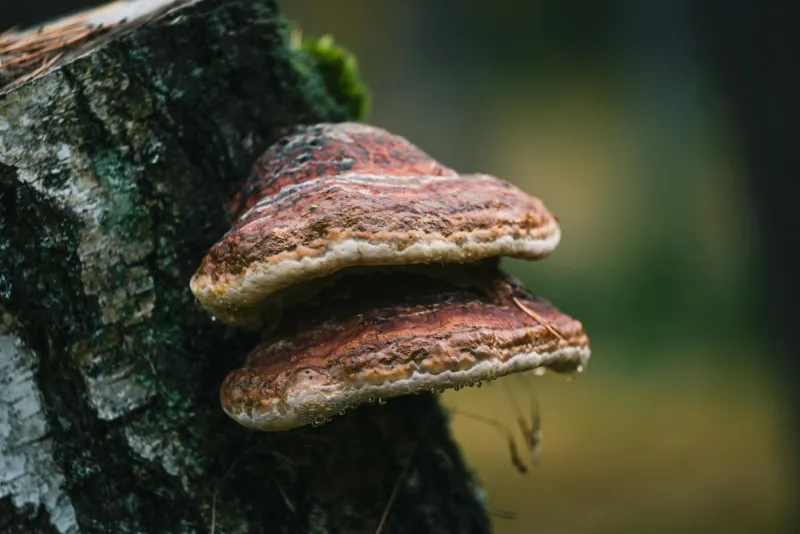
What Is Chaga and Why Does It Matter?
Chaga (Inonotus obliquus) is a parasitic fungus that grows predominantly on birch trees across the boreal forests of Northern Europe, Russia, and Canada. Prized in Nordic and Siberian folk medicine for centuries, it has attracted modern research interest for its unusually high concentration of betulinic acid derivatives, melanin-type pigments, and polysaccharide beta-glucans.
Unlike essential vitamins and minerals, chaga does not cause a classical biochemical deficiency. Instead, the question is whether certain groups of people are missing out on the immune-modulating and antioxidant effects that chaga may provide — and whether diet alone can supply those effects.
Deficiency Symptoms — A Functional Perspective
Since chaga is not an essential nutrient, the concept of "chaga deficiency" refers to a functional gap: a state where oxidative stress is elevated, immune resilience is low, and the diet lacks the specific polysaccharides and antioxidant compounds found in chaga.
Functional signs that may indicate you would benefit from adding chaga:
- Frequent respiratory tract infections, especially in autumn and winter
- Persistent low-grade fatigue not explained by sleep deprivation
- Elevated inflammatory markers (CRP, noted incidentally on blood panels)
- Diet low in medicinal mushrooms, berries, and dark-coloured plant pigments
- High cumulative oxidative load from training, smoking, or environmental pollution
None of these signs are specific to chaga. They signal a broader need for antioxidant and immune support, which chaga is one approach to addressing.
At-Risk Groups
Athletes With High Training Volume
Intense endurance exercise transiently increases reactive oxygen species (ROS) production. Chaga's beta-glucans have been studied for their capacity to support immune function during periods of immune suppression that follow very intense bouts (Park et al., 2004). Athletes logging heavy training blocks without adequate recovery may benefit from additional immune support.
People With Chronically Low Antioxidant Intake
Those whose diets are poor in colourful vegetables, berries, and whole mushrooms have less dietary exposure to polyphenols, carotenoids, and beta-glucans. In the Baltic and Nordic regions, autumn and winter diets can be particularly low in fresh produce, making supplemental antioxidants more relevant.
Individuals With High Occupational or Environmental Stress
People exposed to high levels of environmental oxidants (urban pollution, shift work, high-stress occupations) may have elevated baseline oxidative stress. Chaga's melanin complex and polyphenols may provide some buffering capacity.
Older Adults
Immune function naturally declines with age (immunosenescence). Beta-glucan-rich supplements have been associated with modestly improved immune outcomes in older adults in several trials, though direct chaga-specific data in this population remain limited.
How Chaga Is Assessed
There is no clinical blood test for "chaga status." Assessment is qualitative and indirect:
- Oxidative stress markers: Malondialdehyde (MDA) or 8-isoprostane in urine or plasma give a rough index of oxidative load.
- Immune function panels: White blood cell differential, natural killer cell activity, or salivary IgA can reflect immune resilience.
- Dietary analysis: A registered dietitian can flag low intake of polyphenols and beta-glucans using food frequency questionnaires.
Self-assessment is simpler: if you experience frequent winter infections and eat a diet low in mushrooms and dark berries, chaga supplementation is a reasonable and low-risk addition.
Nordic and Estonian Context
Estonia's boreal forests are natural chaga habitat. The fungus has historically been harvested from wild birch trees and brewed as a tea — a practice still alive in rural regions. From a public health standpoint, Estonians who consume traditional forest foods may already obtain some chaga exposure, but urban populations with processed-food-dominant diets typically do not.
Long winters with limited sunlight also depress immune function through vitamin D depletion and reduced time outdoors. Chaga supplementation, combined with vitamin D, represents a sensible autumn-winter immune protocol for people in the Baltic region.
When to Supplement vs. Dietary Sources
Dietary Chaga
Traditional chaga tea requires simmering dried, crushed chaga chunks for several hours. The process extracts water-soluble beta-glucans and some polyphenols. The main limitations are access (wild-harvested chaga is seasonal and geographically restricted) and standardisation (polysaccharide content varies widely between samples).
Supplemental Chaga
Standardised extract capsules or powders offer consistent beta-glucan and polyphenol content, which wild tea cannot guarantee. OstroVit Chaga Extract 240mg 50g and OstroVit Chaga 240mg 60caps are available at maxfit.ee and provide a standardised daily dose of chaga extract that is more convenient and reproducible than home-brewed tea.
Supplement forms are preferred when:
- You cannot reliably source wild chaga
- You want a consistent, measured dose
- You are supplementing for a specific protocol (e.g., seasonal immune support)
Practical Dosing Notes
Most commercially available chaga supplements provide a daily dose in the range of 200–500 mg of extract. Higher polysaccharide standardisation (expressed as a percentage of beta-glucans) is generally more predictive of biological activity than raw mushroom powder.
Always check if the product uses a hot-water or dual extract — beta-glucans require water extraction, while other bioactives may need alcohol extraction. Dual-extracted products cover both fractions.
FAQ
Can everyone take chaga?
Chaga is generally well tolerated. However, it contains high levels of oxalates, which can contribute to kidney stone formation in susceptible individuals. People with a history of kidney stones or oxalate-sensitive conditions should consult a doctor first. Chaga also has mild anticoagulant properties — those on blood-thinning medication should seek medical advice.
How long does it take for chaga to work?
Immune and antioxidant effects are not immediate. Most individuals notice changes over a four-to-twelve-week period. Consistent daily use is more effective than intermittent high doses.
Is chaga safe long-term?
Long-term human safety data are limited. The existing evidence suggests good tolerability at typical doses, but extended use (beyond six months continuous) without a break is not well studied.
References
Park, Y. M., Kim, I. T., Park, H. J., Choi, J. W., Park, K. Y., Lee, J. D., & Kwon, Y. K. (2004). Anti-inflammatory and anti-nociceptive effects of the methanol extract of Inonotus obliquus. Journal of Ethnopharmacology, 93(1), 141–146.
Shashkina, M. Y., Shashkin, P. N., & Sergeev, A. V. (2006). Chemical and medicobiological properties of chaga (review). Pharmaceutical Chemistry Journal, 40(10), 560–568. https://doi.org/10.1007/s11094-006-0194-4
Zheng, W., Miao, K., Liu, Y., Zhao, Y., Zhang, M., Pan, S., & Dai, Y. (2010). Chemical diversity of biologically active constituents from the sclerotia of Inonotus obliquus. Natural Product Communications, 5(7), 1097–1102.



