How to Maximize Chaga Absorption
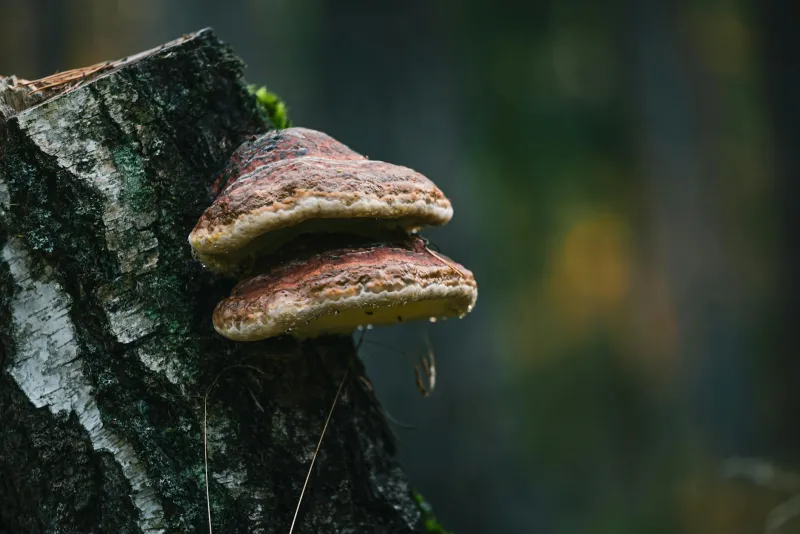
Chaga (Inonotus obliquus) is a parasitic fungus that grows primarily on birch trees in cold northern climates. It has been used in folk medicine across Siberia and Eastern Europe for centuries, valued for its dense concentration of bioactive compounds: betulinic acid, betulin, polysaccharides (beta-glucans), melanin, and various antioxidant polyphenols. Maximizing chaga absorption requires understanding what limits bioavailability and which approaches can enhance delivery of its key compounds.
What Limits Chaga Absorption
The Cell Wall Problem
Chaga's bioactive compounds are locked within the chitin cell wall of fungal tissue. Chitin is a tough polysaccharide that the human digestive system cannot break down efficiently. This structural barrier is the primary limitation on chaga absorption from raw or poorly processed chaga. Hot-water extraction or dual extraction (hot water + alcohol) is essential to liberate beta-glucans and other polysaccharides from the chitin matrix before consumption.
Compound-Specific Bioavailability
Not all chaga compounds behave the same way:
- Beta-glucans: water-soluble and relatively well-absorbed when extracted; these are the primary immune-modulating compounds.
- Betulinic acid and betulin: fat-soluble triterpenoids that require alcohol extraction to be released from the chitin matrix and may benefit from consumption with dietary fat.
- Melanin: water-insoluble; its systemic bioavailability after oral consumption is not well-characterized.
- Polyphenols: partially absorbed in the upper gut, with some metabolized by gut microbiota into active secondary metabolites.
Cofactors That Help
Dietary Fat for Triterpenoids
Because betulinic acid and related triterpenoids are fat-soluble, consuming chaga extract alongside a meal containing healthy fats may improve their absorption. This mirrors the principle used with fat-soluble vitamins such as D and K — the presence of dietary fat in the gut stimulates bile secretion and creates a micellar environment that aids fat-soluble compound absorption.
Vitamin C
Vitamin C's antioxidant properties may help preserve the activity of polyphenols in chaga as they transit through the acidic stomach environment. Pairing chaga with a vitamin C source (or taking a vitamin C supplement) is a simple way to protect phenolic compounds from oxidative degradation before they reach the intestinal absorption sites.
Black Pepper (Piperine)
Piperine from black pepper is well-documented to inhibit certain drug-metabolising enzymes and P-glycoprotein efflux pumps, thereby increasing the bioavailability of numerous phytochemicals. While specific studies on piperine and chaga compounds are lacking, the general mechanism provides a biologically plausible rationale for adding a small amount of black pepper when consuming chaga in food form.
Form and Timing Effects
Extract vs. Raw Powder
This distinction is critical for chaga absorption. Raw chaga powder (ground dried fungus) delivers far fewer bioactive compounds than a properly extracted product because the chitin cell wall remains largely intact. Look for products specifying:
- Hot-water extract: ensures beta-glucan release
- Dual extract (hot water + ethanol): maximises both polysaccharide and triterpenoid content
OstroVit Chaga Extract 240mg 50g and OstroVit Chaga 240mg 60caps (available at maxfit.ee) are extracted products that deliver bioactive compounds in a more bioavailable form compared to raw powder.
Timing
Chaga does not have the stimulant profile of coffee or adaptogen compounds like caffeine, so it does not need to be avoided in the evening. However, taking it with meals — particularly fat-containing meals — is likely to benefit the absorption of fat-soluble triterpenoids. Morning or mid-day timing is common in traditional use.
Consistency matters more than perfect timing: the immune-modulating beta-glucan effects accrue over weeks of regular use, not from single doses.
Food Pairings
Practical food pairings that may enhance chaga absorption:
| Pairing | Rationale |
|---|---|
| Coconut oil or butter in chaga tea | Enhances fat-soluble triterpenoid absorption |
| Citrus juice alongside capsules | Vitamin C protects polyphenols from oxidation |
| Black pepper in food preparations | Piperine may extend polyphenol bioavailability |
| Probiotic foods (yogurt, kefir) | Gut microbiota help activate polyphenol metabolites |
Practical Tips
- Always choose an extracted product over raw chaga powder — extraction is the single biggest factor for bioavailability.
- Take with food, especially a fat-containing meal, to support triterpenoid absorption.
- Add a vitamin C source (citrus, or a supplement) when taking chaga capsules to protect polyphenols.
- Use consistently for at least 4–8 weeks to allow cumulative immune-modulating effects to manifest.
- Check for dual extraction on the product label if you want both beta-glucan and triterpenoid benefits.
- Store correctly: heat and light degrade polyphenols — keep chaga products cool, dry, and away from direct sunlight.
Browse the full chaga category at MaxFit for currently available products.
References
- Zheng, W., Miao, K., Liu, Y., Zhao, Y., Zhang, M., Pan, S., & Dai, Y. (2010). Chemical diversity of biologically active metabolites in the sclerotia of Inonotus obliquus and submerged culture strategies for up-regulating their production. Applied Microbiology and Biotechnology, 87(4), 1237-1254. https://pubmed.ncbi.nlm.nih.gov/20532760/
- Lee, I. K., Kim, Y. S., Jang, Y. W., Jung, J. Y., & Yun, B. S. (2007). New antioxidant polyphenols from the medicinal mushroom Inonotus obliquus. Bioorganic and Medicinal Chemistry Letters, 17(24), 6678-6681. https://pubmed.ncbi.nlm.nih.gov/17980585/
- Duru, K. C., Kovaleva, E. G., Danilova, I. G., & van der Bijl, P. (2019). The pharmacological potential and possible molecular mechanisms of action of Inonotus obliquus from preclinical studies. Phytotherapy Research, 33(8), 1966-1980. https://pubmed.ncbi.nlm.nih.gov/31209936/
FAQ
Does it matter whether I take chaga as a powder or extract?
Yes, significantly. Chaga's bioactive compounds are trapped behind chitin cell walls that the human gut cannot break down. Extracted forms (hot-water or dual-extract) have already broken through this barrier, delivering far more bioavailable beta-glucans and triterpenoids than raw ground chaga powder.
Should I take chaga with food or on an empty stomach?
With food is generally better for chaga absorption, particularly a fat-containing meal. Fat-soluble triterpenoids (including betulinic acid) absorb better in the presence of dietary fat and bile acids. An empty stomach may be acceptable for water-soluble beta-glucans, but there is no benefit to skipping food.
How long before I notice benefits from chaga?
Immune-modulating beta-glucan effects from mushrooms are cumulative and typically require consistent daily use over several weeks. Most traditional protocols recommend at least 4–8 weeks of regular supplementation before evaluating any changes.



