
Why the Form of Calcium Matters
Calcium is the body's most abundant mineral — about 99% of it is stored in bones and teeth. But the remaining 1% circulating in blood and cell fluid governs muscle contraction, blood clotting, nerve transmission, and hormone secretion. To maintain this level, the body will draw calcium from bone if dietary intake is insufficient, making the skeleton a dynamic reserve (Heaney & Weaver, 2003).
When dietary calcium is chronically low, this mobilisation happens continuously — at the cost of bone density and increasing fracture risk. This is why both the form and the total amount of supplemental calcium matter.
The Main Forms of Calcium
1. Calcium Carbonate
The most widely available and affordable form. Contains ~40% elemental calcium (the highest concentration of any form), but requires stomach acid for absorption — so it must be taken with food.
Pros: Low cost, high elemental calcium per tablet, widely available. Cons: Poor absorption on an empty stomach; not suitable for those on proton pump inhibitors (PPIs) or with low stomach acid (common in older adults).
2. Calcium Citrate
Contains ~21% elemental calcium but absorbs independently of gastric acid — making it suitable for fasted consumption and preferable for older adults and those on acid-reducing medications.
Pros: Best bioavailability on an empty stomach; suitable for those on PPIs. Cons: Larger tablets needed per dose; higher cost per milligram of elemental calcium.
3. Coral Calcium
Derived from fossilised marine coral (typically from Okinawa). Primarily calcium carbonate, but naturally contains magnesium and trace minerals. Bioavailability is comparable to standard calcium carbonate — claims of exceptional superiority are not well-supported, but the mineral co-profile is a genuine advantage.
4. Calcium Lactate / Gluconate
Used in clinical IV preparations. As supplements, bioavailability is reasonable but elemental calcium content is low, requiring large doses.
Calcium Forms Comparison Table
| Form | Elemental Ca% | Bioavailability | Empty Stomach |
|---|---|---|---|
| Calcium carbonate | ~40% | Good (with food) | Not recommended |
| Calcium citrate | ~21% | Good (acid-independent) | Yes |
| Coral calcium | ~36% | Similar to carbonate | Preferably not |
| Calcium lactate | ~13% | Good | Yes |
Calcium With D3 and K2: The Trio That Actually Works
Calcium supplementation alone is not sufficient for bone health. It requires key companions:
- Vitamin D3 — regulates intestinal calcium absorption. Without adequate D3, absorption drops by up to two-thirds (Holick, 2007). In Estonia's northern latitude, D3 deficiency is extremely common throughout winter.
- Vitamin K2 (MK-7) — directs calcium into bones and away from arterial walls. K2 activates osteocalcin, a protein that anchors calcium into bone matrix. Without K2, supplemental calcium may deposit in arteries rather than bone, potentially increasing cardiovascular risk.
For those at risk of osteoporosis, the D3 + K2 + calcium triad represents the most evidence-backed approach.
Best Dietary Sources
- Dairy: milk (~120 mg/100 ml), cheese (700–1200 mg/100 g), yoghurt (~150 mg/100 g)
- Canned fish with bones: sardines (~350 mg/100 g), salmon with bones
- Green vegetables: kale, broccoli, bok choy
- Fortified plant milks: oat, soy, almond milk (varies by brand)
Recommended Daily Intakes
| Group | Daily Target |
|---|---|
| Adults 19–50 | 1000 mg |
| Women over 50 (post-menopause) | 1200 mg |
| Men over 70 | 1200 mg |
| Pregnant / breastfeeding | 1000 mg |
Split doses across the day — the body absorbs calcium most efficiently at amounts up to ~500 mg per dose.
At maxfit.ee, NOW Coral Calcium 1000mg 100 veg. caps. provides a full gram of coral-sourced calcium in a convenient vegan capsule. OstroVit Vitamin D3 + K2 + Calcium 90 tabs combines all three bone-health pillars in a single tablet. 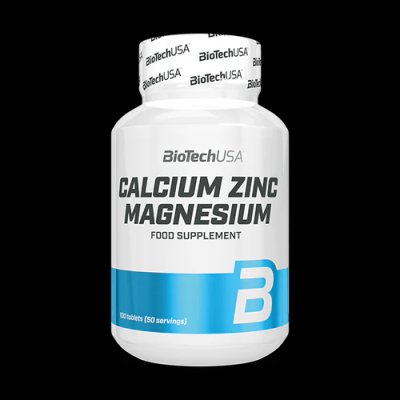 BIOTECHUSA Calcium Zinc Magnesium€13.90 In stock 100tab adds zinc and magnesium for a broad mineral profile.
FAQ
Is calcium citrate better than carbonate?
It depends on your situation. Taken without food or for those with reduced stomach acid or on PPIs, citrate has a clear advantage. Taken with meals, carbonate's bioavailability is comparable and it's more economical. Older adults are generally better served by citrate.
Can too much calcium be harmful?
Yes. Intake above 2500 mg/day is associated with hypercalcaemia, kidney stress, and in some studies with increased cardiovascular risk. The tolerable upper limit is 2500 mg/day for adults and 2000 mg/day for those over 50.
Do people with osteoporosis always need calcium supplements?
Not necessarily, if diet provides adequate calcium. However, D3 and K2 status almost always need optimising — without them, calcium cannot reach bone effectively. Weight-bearing exercise is also a critical, non-supplemental factor.
Calcium and Exercise: The Bone Health Equation Beyond Supplements
No calcium supplement fully replaces physical activity for bone health. Bone is living tissue that responds to mechanical stress — this is why regular resistance training increases bone density by stimulating osteoblast (bone-building cell) activity.
Research consistently shows that the combination of adequate calcium intake + vitamin D3 + vitamin K2 + regular weight-bearing exercise is far more effective at preventing osteoporosis than any single factor alone. The most beneficial exercise types include weight training, walking, and jumping movements that create sufficient impact force to stimulate bone remodelling.
For older adults with limited mobility, calcium combined with D3 and K2 becomes even more critical — this group also faces the highest probability of D3 deficiency and reduced dietary calcium intake. In Estonia's climate, monitoring vitamin D levels annually and supplementing throughout autumn and winter is a practical baseline for everyone over 50.
References
- Heaney, R. P., & Weaver, C. M. (2003). Calcium and vitamin D. Endocrinology and Metabolism Clinics of North America, 32(1), 181–194.
- Holick, M. F. (2007). Vitamin D deficiency. New England Journal of Medicine, 357(3), 266–281.
- Bolland, M. J., Leung, W., Tai, V., et al. (2015). Calcium intake and risk of fracture: systematic review. BMJ, 351, h4580.
- Knapen, M. H., Drummen, N. E., Smit, E., Vermeer, C., & Theuwissen, E. (2013). Three-year low-dose menaquinone-7 supplementation helps decrease bone loss in healthy postmenopausal women. Osteoporosis International, 24(9), 2499–2507.



