
Why Calcium Food Sources Matter
Calcium is the most abundant mineral in the human body, playing a structural role in bone and teeth and a functional role in muscle contraction, nerve transmission, and blood clotting. Most adults can meet their needs through food, yet surveys across Northern Europe consistently show sub-optimal intake in women, adolescents, and older adults — groups whose requirements are elevated.
Top Natural Food Sources of Calcium
The richest dietary sources of calcium are dairy products, but several non-dairy options provide meaningful amounts:
| Food | Approximate calcium per 100 g |
|---|---|
| Hard cheese (e.g. Parmesan) | 1,100–1,300 mg |
| Sesame seeds (tahini) | ~670 mg |
| Canned sardines with bones | ~380 mg |
| Plain yogurt | ~120 mg |
| Whole milk | ~120 mg |
| Cooked kale | ~72 mg |
| Cooked white beans | ~64 mg |
| Tofu (calcium-set) | ~105–350 mg |
| Fortified oat milk | ~120 mg |
Dairy foods collectively remain the most practical concentrated source for most people in Estonia.
Bioavailability from Food vs Supplement
Absorption rate matters as much as raw content. Dairy calcium is absorbed at roughly 30–32% across a standard serving (Weaver et al., 2016). Calcium from kale and bok choy is absorbed at a comparably high rate because these vegetables are low in oxalates. Spinach, despite its high total calcium, is very high in oxalic acid, which binds calcium and limits absorption to around 5%.
Calcium carbonate supplements provide similar elemental calcium per tablet as dairy but require stomach acid for dissolution, so they are best taken with food. Calcium citrate absorbs reasonably well even without food.
Daily Targets from Diet
Adult daily requirements vary by life stage. The reference nutrient intake for adults aged 19–50 is around 1,000 mg per day; this rises to approximately 1,200 mg for women over 50 and men over 70. A 200 g serving of yogurt plus 30 g of cheese plus a glass of milk can cover the adult requirement without supplementation for most people.
Cooking and Storage Effects
Boiling calcium-rich vegetables in large volumes of water causes some loss into the cooking water. Steaming or stir-frying preserves more mineral content. Fermentation of dairy into yogurt does not substantially change calcium content but may improve gut tolerance by reducing lactose.
When Food Is Not Enough
Some groups may genuinely struggle to meet calcium needs from food alone: those with lactose intolerance or dairy allergy, strict vegans who do not consume fortified foods regularly, postmenopausal women, and individuals with malabsorption conditions. In these cases a supplement becomes a practical tool.
Products available at maxfit.ee include OstroVit Vitamin D3 + K2 + Calcium 90tabs and BIOTECHUSA Calcium Zinc Magnesium 100tab. Note that both vitamin D and vitamin K2 support calcium metabolism — vitamin D enhances intestinal absorption, while K2 helps direct calcium toward bone rather than soft tissue. 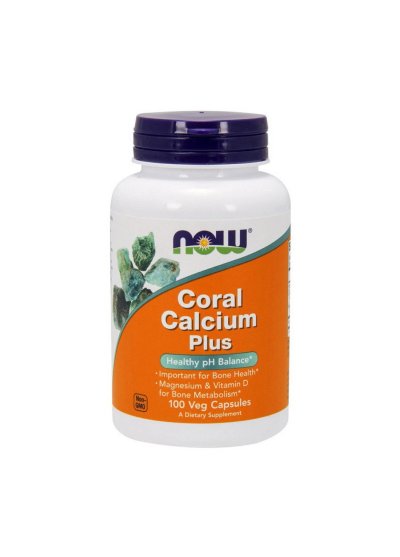 NOW Coral Calcium Plus€15.90 In stock 100 veg. caps. is another option for those preferring a coral-derived form.
References
Weaver, C. M., et al. (2016). Calcium absorption from commonly consumed foods and supplements. Journal of Bone and Mineral Research, 31(10), 1847-1854.
Dawson-Hughes, B., et al. (2010). Calcium and vitamin D supplementation and the aging skeleton. Nutrition Reviews, 68(6), 321-333.
Bolland, M. J., et al. (2015). Calcium intake and risk of fracture: systematic review. BMJ, 351, h4580. https://pubmed.ncbi.nlm.nih.gov/26420387/
FAQ
Is calcium from dairy better than from plants?
Dairy calcium has a well-documented absorption rate of around 30%. Calcium from low-oxalate vegetables like kale absorbs similarly. High-oxalate foods like spinach absorb much less. Fortified plant milks calibrated to dairy levels of calcium are broadly comparable, provided they are shaken before use (the fortification can settle).
Can I take calcium and iron together?
Calcium and iron compete for the same intestinal transporter. Separating them by at least two hours optimises absorption of both. If you use a multi-mineral or take iron separately, spacing them throughout the day is good practice.
Does caffeine affect calcium absorption?
High caffeine intake is associated with slightly increased urinary calcium excretion. For people with adequate calcium intake this effect is small and easily offset by a small increase in dairy or calcium-rich food. It is not a reason to avoid coffee, but habitually very high caffeine intake alongside low dietary calcium is a combination worth monitoring.



