
Calcium for Energy and Fatigue: What the Evidence Shows
Calcium is most widely discussed in the context of bone health and dental strength. Fewer people think of it in relation to energy and fatigue, yet calcium plays a fundamental role in several cellular processes that directly affect how energetic you feel. This guide explores the link between calcium, energy metabolism, and fatigue, and clarifies who is likely to benefit from paying more attention to their calcium status.
Calcium's Role in Energy Metabolism
Calcium is the most abundant mineral in the human body, and while the skeleton holds around ninety-nine percent of it, the remaining one percent in the blood and soft tissues is biologically critical. This circulating calcium participates in:
- Muscle contraction: every skeletal and cardiac muscle contraction requires calcium release from intracellular stores. Without adequate calcium, muscular efficiency is impaired.
- Nerve signal transmission: neurons use calcium to release neurotransmitters across synapses. Suboptimal calcium can affect neurological function and contribute to general fatigue.
- Mitochondrial function: calcium regulates key enzymes in the mitochondria, including those in the citric acid cycle that generate ATP (the cell's energy currency). Research has confirmed that mitochondrial calcium uptake is essential for matching energy production to cellular demand (Rizzuto et al., 2012).
- Hormone secretion: calcium is involved in the secretion of various hormones that regulate energy, including parathyroid hormone, which has downstream effects on vitamin D activation.
Evidence in Fatigue
Clinical hypocalcaemia (severely low blood calcium) is well-established as a cause of neuromuscular symptoms including weakness, fatigue, muscle cramps, and cognitive changes. This occurs in conditions such as hypoparathyroidism or severe vitamin D deficiency.
More relevant to the general population is subclinical or dietary calcium insufficiency. While the direct evidence linking marginal calcium intake specifically to fatigue in otherwise healthy adults is limited, the mechanistic links through muscle function and mitochondrial energetics are credible. Observational data suggest that people with consistently low calcium intakes are more likely to report fatigue and muscle-related symptoms, though establishing causality is difficult in population studies.
In populations with documented deficiency, correcting calcium status alongside vitamin D has been associated with improvements in fatigue ratings and muscle strength (Holick et al., 2011).
Who Is Likely to Respond
The populations most likely to benefit from addressing calcium status are:
- Vegans and vegetarians: those who do not consume dairy must rely on plant sources (kale, broccoli, fortified plant milks, tofu made with calcium salts) that may not always meet needs
- Older adults: calcium absorption declines with age, and combined with reduced sun exposure and vitamin D synthesis, many older adults are at risk
- Athletes: high sweat rates increase calcium losses; female athletes in particular are at risk of the female athlete triad
- People with low vitamin D: vitamin D is required for calcium absorption; a deficiency in one often leads to insufficiency in the other
Dose and Timing
Intake targets for adults vary by age and sex. The key point for supplementation is that calcium is best absorbed in smaller, divided doses rather than one large daily dose. Doses above a certain threshold at a single sitting are absorbed with decreasing efficiency.
Calcium citrate is generally better absorbed than calcium carbonate, particularly for those with lower stomach acid (including older adults and those on proton pump inhibitors). Calcium carbonate should be taken with food; calcium citrate can be taken with or without food.
At maxfit.ee, in the /et/category/kaltsium category, you will find products including OstroVit Vitamin D3 + K2 + Calcium 90tabs, BIOTECHUSA Calcium Zinc Magnesium 100tab, 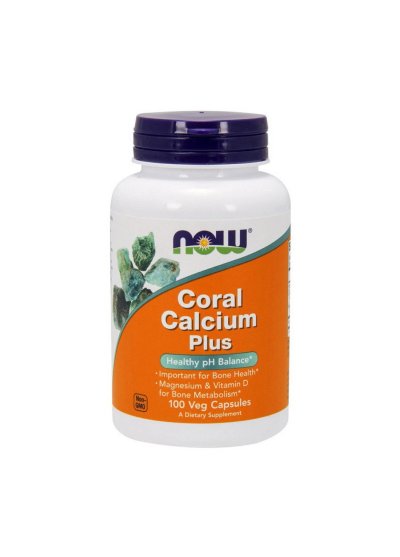 NOW Coral Calcium Plus€15.90 In stock 100 veg. caps., and BIOTECHUSA Ca-D3-K2 90caps. Several of these combine calcium with vitamin D and K2, which is a well-reasoned combination since D3 promotes calcium absorption and K2 directs it to the bones.
Realistic Expectations
Calcium supplementation in people whose levels are already adequate is unlikely to produce a noticeable energy boost. Calcium is not a stimulant. The realistic benefit of improving calcium status is preventing the negative consequences of deficiency — muscular weakness, fatigue, poor recovery — rather than producing a supraphysiological energy effect.
If fatigue is your primary concern, calcium is best addressed as part of a wider mineral audit alongside vitamin D, magnesium, and iron (especially in women). A blood test is the most direct way to identify if a genuine deficiency is present and contributing to your symptoms.
FAQ
Can I get enough calcium without dairy?
Yes. Calcium is present in fortified plant milks, firm tofu (made with calcium sulphate), kale, bok choy, almonds, and white beans. However, meeting intake targets consistently without dairy requires deliberate food choices, and a supplement may be practical for those who find this challenging.
Is it safe to take calcium supplements daily?
At amounts that bring total daily intake to target levels, calcium is safe for most adults. Taking very high supplemental doses — particularly combined with a high dietary calcium intake — over the long term has been studied in relation to cardiovascular effects, so staying within reasonable amounts is advisable.
Should calcium and magnesium be taken together?
Both are important minerals for muscle and nerve function. Some evidence suggests very high calcium intake can compete with magnesium absorption, so extremely large calcium doses alongside magnesium supplementation is worth avoiding. At typical supplement doses, combined mineral products are generally fine.
References
Rizzuto, R., De Stefani, D., Raffaello, A., & Mammucari, C. (2012). Mitochondria as sensors and regulators of calcium signalling. Nature Reviews Molecular Cell Biology, 13(9), 566-578. https://pubmed.ncbi.nlm.nih.gov/22850819/
Holick, M. F., Binkley, N. C., Bischoff-Ferrari, H. A., Gordon, C. M., Hanley, D. A., Heaney, R. P., Murad, M. H., & Weaver, C. M. (2011). Evaluation, treatment, and prevention of vitamin D deficiency: an Endocrine Society clinical practice guideline. Journal of Clinical Endocrinology & Metabolism, 96(7), 1911-1930. https://pubmed.ncbi.nlm.nih.gov/21646368/



