
How to Maximize Calcium Absorption
Calcium is the most abundant mineral in the human body, essential for bone integrity, muscle contraction, nerve signalling, and numerous enzymatic processes. Yet calcium is also one of the more poorly absorbed minerals: typical dietary absorption rates range from around 25% to 35% under ordinary conditions. Understanding what governs this range is the key to getting the most from both food sources and supplements.
What Limits Calcium Absorption
Several factors constrain how much calcium you actually absorb:
Dose per serving. The intestinal calcium absorption pathway saturates at higher single doses. Fractional absorption is higher from smaller, more frequent amounts than from one large bolus. Taking more than 500 mg calcium at once may reduce the percentage actually absorbed.
Vitamin D status. This is the most important physiological regulator of intestinal calcium absorption. Vitamin D activates the expression of calcium transport proteins (calbindins) in the intestinal wall. Without adequate vitamin D, active calcium absorption drops substantially, and the body relies more on passive diffusion — a much less efficient process.
Age. Intestinal calcium absorption efficiency declines progressively after early adulthood. This is partly due to declining vitamin D activation capacity and reduced expression of calcium transport proteins.
Dietary inhibitors. Oxalic acid (found in spinach, rhubarb, beetroot greens) binds calcium in the gut and prevents absorption. Phytic acid (in whole grains and legumes) has a similar but weaker effect. High dietary fibre can also reduce absorption modestly.
Acid-suppressing medication. Proton pump inhibitors and H2 blockers reduce stomach acid, which is needed to ionise calcium carbonate before absorption. Calcium citrate, which does not require stomach acid for ionisation, is a better choice for people on these medications.
Cofactors That Help Absorption
Vitamin D3 is non-negotiable. A 2005 meta-analysis by Heaney et al. examined the dose-response relationship between vitamin D and calcium absorption and confirmed that improving vitamin D status meaningfully increases fractional calcium absorption (Heaney et al., 2005).
Vitamin K2 (MK-7) does not directly increase intestinal calcium absorption but plays a critical role in directing absorbed calcium to bone rather than soft tissues. The combination of D3 and K2 is now widely considered best practice for bone mineral density support.
Magnesium is required for the activation of vitamin D into its active form (calcitriol). Magnesium deficiency impairs vitamin D function, which in turn impairs calcium absorption indirectly. Adequate magnesium intake is therefore a prerequisite for optimal calcium metabolism.
At maxfit.ee you can find OstroVit Vitamin D3 + K2 + Calcium 90tabs, which combines these three key nutrients in one product, and BIOTECHUSA Ca-D3-K2 90caps as another D3+K2+calcium combination. 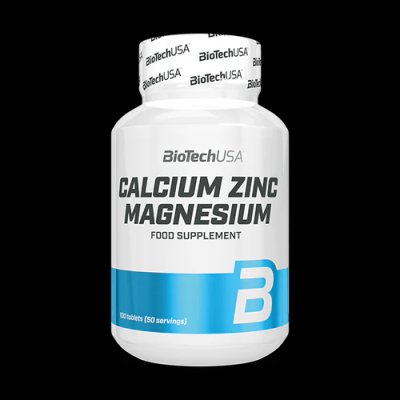 BIOTECHUSA Calcium Zinc Magnesium€13.90 In stock 100tab offers calcium alongside magnesium and zinc. Browse the kaltsium category for the current selection.
Form and Timing Effects
Calcium carbonate requires stomach acid for ionisation and is best taken with meals. It has the highest elemental calcium content per gram, making tablets smaller.
Calcium citrate is absorbed independently of stomach acid and can be taken without food. This makes it preferable for people taking acid-suppressing medications or those with low stomach acid (common in older adults).
A study by Heller et al. (2000) comparing calcium citrate and calcium carbonate found that citrate resulted in significantly higher serum calcium levels post-dose in postmenopausal women, particularly when taken without food (Heller et al., 2000).
Timing relative to vitamin D matters: taking calcium at the same time as vitamin D3 is not essential for absorption, but ensuring both are part of the daily routine is the key variable.
Food Pairings
- Pair with protein — amino acids from protein digestion mildly enhance calcium absorption.
- Include vitamin D-rich foods — fatty fish, eggs, and fortified dairy alongside a calcium supplement maximise the D-calcium synergy.
- Separate from high-oxalate vegetables — while spinach is healthy, consuming calcium at the same meal as large amounts of spinach or beet greens reduces net absorption from that meal.
- Separate from iron supplements — calcium and iron compete for absorption at the same transporters; take them at different meals if both are prescribed.
Practical Tips
- Divide your daily calcium supplement dose across two or more servings rather than one large dose.
- Ensure your vitamin D3 level is adequate — this has a larger impact on calcium absorption than the calcium supplement brand.
- Choose calcium citrate if you take antacids or PPIs, or if you are over 65.
- Adequate magnesium intake (supporting vitamin D activation) is part of the calcium picture, not an afterthought.
References
Heaney, R. P., Dowell, M. S., Hale, C. A., & Bendich, A. (2003). Calcium absorption varies within the reference range for serum 25-hydroxyvitamin D. Journal of the American College of Nutrition, 22(2), 142-146. https://pubmed.ncbi.nlm.nih.gov/12672710/
Heller, H. J., Stewart, A., Haynes, S., & Pak, C. Y. C. (1999). Pharmacokinetics of calcium absorption from two commercial calcium supplements. Journal of Clinical Pharmacology, 39(11), 1151-1154. https://pubmed.ncbi.nlm.nih.gov/10579145/
Holick, M. F. (2007). Vitamin D deficiency. New England Journal of Medicine, 357(3), 266-281. https://pubmed.ncbi.nlm.nih.gov/17634462/
FAQ
How much calcium can you absorb from one supplement dose?
Fractional absorption is meaningfully higher for doses under 500 mg elemental calcium. If your total daily supplemental calcium is above 500 mg, splitting it into two or more doses taken at different meals will improve the overall amount absorbed.
Does calcium citrate or calcium carbonate absorb better?
Calcium citrate is absorbed somewhat better when taken without food and is the preferred form for those on acid-suppressing medications. Calcium carbonate is equally effective when taken with meals and offers a higher calcium density per tablet, making it a reasonable first choice for most healthy adults who take it with food.
Can you get enough calcium from food alone?
Many people can if dairy is a regular part of the diet. However, those who are lactose-intolerant, vegan, or have high calcium needs (adolescents, pregnant women, menopausal women, athletes with high sweat rates) often fall short of the recommended intake and benefit from supplementation.



