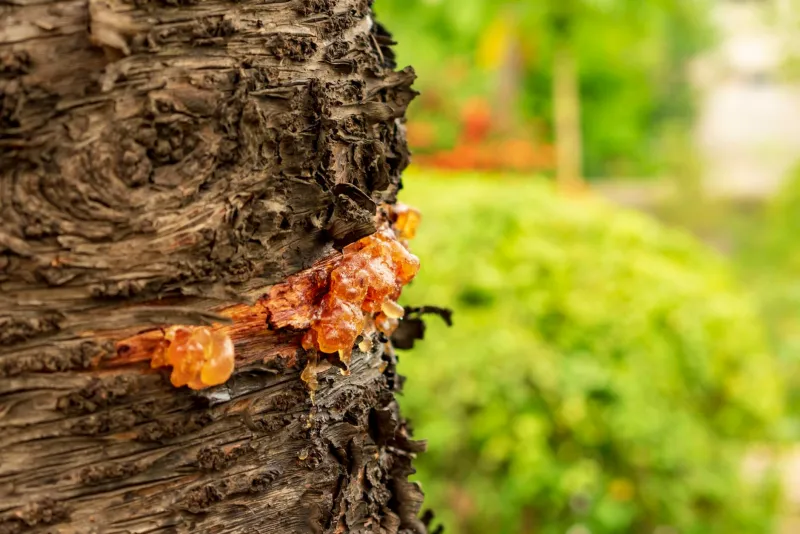
What Is Boswellia Serrata?
Boswellia serrata is a tree native to India, Africa, and the Arabian Peninsula, whose resin has been used in Ayurvedic medicine for thousands of years. Modern science has confirmed multiple anti-inflammatory properties of its active compounds — boswellic acids. Most notable is acetyl-11-keto-β-boswellic acid (AKBA), which has shown specific anti-inflammatory properties relevant to joint disease (Siddiqui, 2011).
How Boswellia Works
5-Lipoxygenase Inhibition
Boswellia's primary mechanism is inhibition of 5-lipoxygenase (5-LOX) — the enzyme that catalyses leukotriene production. Leukotrienes are potent inflammatory mediators central to joint inflammation and pain. Unlike NSAIDs (non-steroidal anti-inflammatory drugs), Boswellia does not block cyclooxygenase (COX) pathways, meaning it does not compromise gastric mucosal protection in the same way (Siddiqui, 2011).
MMP Inhibition
Boswellic acids also inhibit matrix metalloproteinases (MMPs) — enzymes that degrade collagen and cartilage matrix components. This mechanism complements the protective action of glucosamine and chondroitin.
NF-κB Modulation
Similar to MSM, Boswellia also influences the NF-κB signalling pathway, reducing production of pro-inflammatory cytokines (Gupta et al., 2011).
Clinical Evidence
Sengupta et al. (2010) in a trial of knee osteoarthritis patients found that 100 mg of a specialised AKBA-rich Boswellia extract (Aflapin®/5-Loxin®) for 90 days significantly reduced pain and improved physical function — with improvements appearing as early as day 7, remarkable speed for a dietary supplement.
Kimmatkar et al. (2003) in a randomised crossover trial showed that 333 mg Boswellia extract three times daily reduced pain, knee swelling, and walking distance limitations versus placebo.
Gupta et al. (2011) systematic review confirms Boswellia's efficacy in osteoarthritis across multiple trials.
Standardisation Matters
Not all Boswellia products are equal in quality. Look for products standardised to:
- At least 30–65% total boswellic acids
- And/or a specified AKBA content (typically 10–30%)
Higher-AKBA extracts (e.g. Aflapin® at 20% AKBA) have shown stronger results at lower doses in clinical trials.
Dosing
Clinical studies have used 100–333 mg standardised Boswellia extract two to three times daily. The precise dose depends on extract strength:
- 30–65% standardised extract: 300–1,000 mg per day
- High AKBA content (20%+): 100–200 mg per day
Boswellia Combinations
| Combination | Synergistic Effect |
|---|---|
| Boswellia + MSM | Complementary anti-inflammatory pathways (5-LOX + NF-κB) |
| Boswellia + Curcumin | Broad-spectrum anti-inflammatory action |
| Boswellia + Glucosamine | Inflammation reduction + cartilage building |
| Boswellia + UC-II | Dual anti-inflammatory and immune support |
At maxfit.ee, DY Joint Support 90 Tablets and SELF Joint Cartilage 120caps contain plant-based anti-inflammatory extracts in joint-focused formulations.
Boswellia vs NSAIDs
| Feature | Boswellia | NSAIDs |
|---|---|---|
| Inflammatory pathway | 5-LOX | COX-1/COX-2 |
| Gastric impact | Minimal | Potentially harmful |
| Speed of action | 1–4 weeks | Hours |
| Long-term safety | Good | Concerning (kidney, heart) |
| Access | Supplement | Drug (mostly) |
Safety
Boswellia is generally well tolerated. The most common side effects are mild gastrointestinal reactions (nausea, loose stools). Allergic skin reactions occur rarely. Use during pregnancy is not recommended, as it may stimulate uterine contractions.
FAQ
Is Boswellia vegan?
Yes. Boswellia extract is 100% plant-derived and suitable for vegans and vegetarians.
Can Boswellia replace osteoarthritis medications?
Boswellia may complement medical treatment and offer additional relief, but should not replace physician-prescribed medications without consultation. For severe pain, medical advice is essential.
Does Boswellia help with exercise-induced muscle inflammation too?
Yes, 5-LOX inhibition may also ease muscle pain and inflammation following intense training, though the primary research focus is on joint disease.
References
- Siddiqui, M. Z. (2011). Boswellia serrata, a potential antiinflammatory agent: An overview. Indian Journal of Pharmaceutical Sciences, 73(3), 255–261.
- Gupta, I., et al. (2011). Effects of Boswellia serrata gum resin in patients with osteoarthritis of knee. Phytomedicine, 18(6), 489–494.
- Sengupta, K., et al. (2010). A double blind, randomized, placebo controlled study of the efficacy and safety of 5-Loxin for treatment of osteoarthritis of the knee. Arthritis Research & Therapy, 10(4), R85.
- Kimmatkar, N., et al. (2003). Efficacy and tolerability of Boswellia serrata extract in treatment of osteoarthritis of knee. Phytomedicine, 10(1), 3–7.



