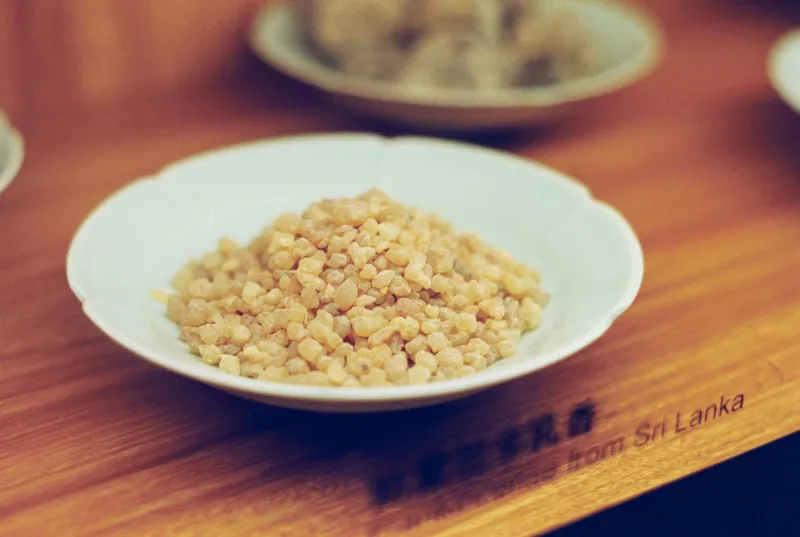
What is Boswellia?
Boswellia is a resin obtained from the Boswellia serrata tree, which grows in the dry, mountainous regions of India, Africa, and the Middle East. This same resin is also known as Indian frankincense and has been used in traditional Ayurvedic medicine for over 3,000 years.
Boswellia resin contains unique bioactive compounds — boswellic acids, with AKBA (3-O-acetyl-11-keto-beta-boswellic acid) considered the most important. This compound is the primary focus of modern research.
In recent decades, Boswellia has become one of the most popular herbal supplements in the context of joint comfort.
How it works
Boswellia's bioactive compounds, particularly boswellic acids, may influence the body's natural inflammatory processes. Research suggests that boswellic acids may affect certain enzymes involved in the inflammatory response — primarily 5-lipoxygenase (5-LOX) (Ammon, 2006).
This mechanism distinguishes Boswellia from many other herbs and makes it a particularly interesting research subject in the field of joint health.
Evidence and benefits
Currently there are no EU-approved specific health claims for Boswellia. However, research suggests several promising areas:
- Joint comfort: Multiple clinical studies suggest that Boswellia extract may support joint comfort and mobility, particularly in the knee and hip areas (Sengupta et al., 2008; Kimmatkar et al., 2003).
- Mobility support: Research suggests that Boswellia use may support physical mobility and daily activity.
- Anti-inflammatory action: Laboratory studies confirm the effect of boswellic acids on the 5-LOX enzyme, which is involved in producing inflammatory compounds (Safayhi et al., 1992).
- Digestive tract: Some studies suggest that Boswellia may support digestive tract comfort (Gupta et al., 2001).
Many results are promising, but study quality varies and larger-scale clinical trials are still ongoing.
How to take
Common forms:
- Standardized extract capsules (most common)
- Powder
- Creams and gels (topical use)
Typical dosages:
- Standardized extract (30–65% boswellic acids): 300–500 mg, 2–3 times per day
- AKBA-enriched extract (AprèsFlex/Aflapin): 100–250 mg per day
- Take with food (fat-containing meals improve absorption)
A minimum of 4–8 weeks is recommended to evaluate Boswellia's effects. Some users notice changes within 1–2 weeks.
Who should consider it
- People looking to support joint comfort and mobility
- Athletes experiencing joint stress from intensive training
- Older adults wanting to support joint health
- Physically active individuals seeking natural joint support
- People interested in traditional Ayurvedic supplements
Consult a healthcare professional before starting any new supplement. Boswellia may interact with certain medications, especially anticoagulants and anti-inflammatory drugs.
Frequently asked questions
How quickly does Boswellia work? Some users notice improved comfort within 1–2 weeks. Clinical studies typically observe significant results within 4–8 weeks (Sengupta et al., 2008).
Is Boswellia safe for long-term use? Generally well tolerated. Rarely occurring side effects include digestive discomfort and nausea. Long-term safety data are limited, but existing studies have not shown serious problems.
What is the difference between Boswellia and curcumin? Both are traditional herbal products used in the joint health context, but they have different mechanisms of action. Some people use them together.
Which Boswellia extract is best? Look for standardized extracts with high boswellic acid content. AprèsFlex (Aflapin) and 5-Loxin are clinically studied branded ingredients with high AKBA content.
Can Boswellia be used topically (as a cream)? Some products contain Boswellia in cream or gel form. Topical use is less studied than oral consumption, but some users find it beneficial.
Can vegetarians and vegans take Boswellia? Yes, Boswellia extract is plant-derived. Check that capsule shells are not gelatin-based if you prefer a plant-based option.
References
- Sengupta K, Alluri KV, Satish AR, Mishra S, Golakoti T, Sarma KV, Dey D, Raychaudhuri SP. (2008). A double blind, randomized, placebo controlled study of the efficacy and safety of 5-Loxin for treatment of osteoarthritis of the knee. Arthritis Research & Therapy, 10(4), R85.
- Kimmatkar N, Thawani V, Hingorani L, Khiyani R. (2003). Efficacy and tolerability of Boswellia serrata extract in treatment of osteoarthritis of knee — a randomized double blind placebo controlled trial. Phytomedicine, 10(1), 3–7.
- Ammon HP. (2006). Boswellic acids in chronic inflammatory diseases. Planta Medica, 72(12), 1100–1116.
- Safayhi H, Mack T, Sabieraj J, Anazodo MI, Subramanian LR, Ammon HP. (1992). Boswellic acids: novel, specific, nonredox inhibitors of 5-lipoxygenase. Journal of Pharmacology and Experimental Therapeutics, 261(3), 1143–1146.
- Gupta I, Parihar A, Malhotra P, Gupta S, Lüdtke R, Safayhi H, Ammon HP. (2001). Effects of gum resin of Boswellia serrata in patients with chronic colitis. Planta Medica, 67(5), 391–395.
See also:
Browse plant-based supplements at MaxFit →
Disclaimer
A food supplement is not a substitute for a varied and balanced diet and a healthy lifestyle.



