Black Walnut Hull for Vegans and Vegetarians
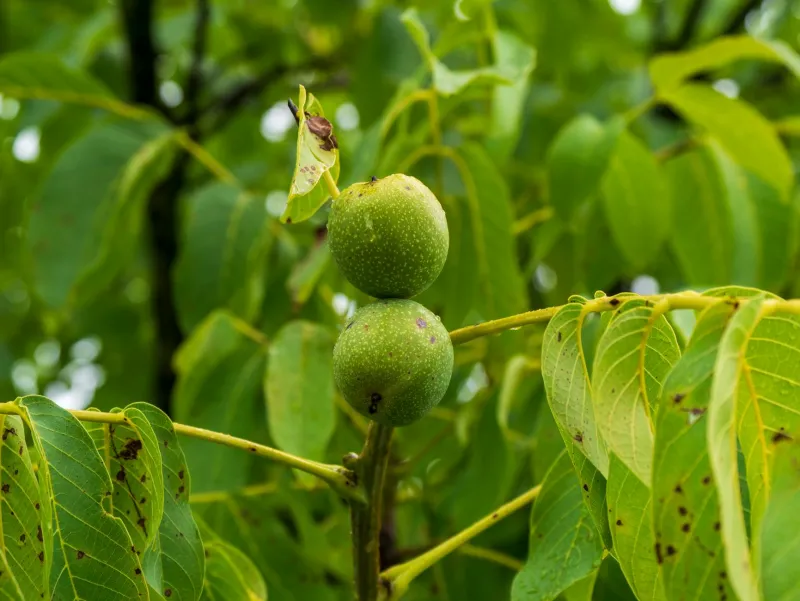
Black walnut hull — the green outer husk of Juglans nigra — is a traditional herbal supplement that has attracted interest for its naturally occurring compounds, particularly juglone and tannins. Because the entire preparation is derived from the fruit hull of a tree, black walnut hull vegan compatibility is inherent at the raw material level. As with other herbal capsule supplements, the full vegan status depends on the formulation choices (capsule material, excipients).
Why Plant-Based Diets May Fall Short in Relevant Areas
Vegans and vegetarians who explore gut health and microbiome-focused supplementation are among the typical users of black walnut hull. Fibre-rich plant diets generally support a diverse gut microbiome, but the specific polyphenolic compounds in black walnut hull — particularly ellagitannins and juglone — are not reliably obtained from standard plant-based diets, as they are specific to Juglans species.
The tannin content of black walnut hull has been studied for antifungal and antiparasitic properties in in vitro settings (Pereira et al., 2007), though human clinical trial evidence is limited. Vegans who prioritise gut ecology and digestive resilience sometimes include black walnut hull as part of a broader herbal approach.
Vegan-Friendly Sources
Black walnut hull supplements are produced exclusively from the hull of Juglans nigra fruit — entirely plant-derived. Key vegan considerations for the formulation include:
- Capsule material: HPMC or pullulan capsules are vegan; gelatin is not. Look for products labelled "vegetarian capsule" or with a certified vegan mark.
- Excipients: Avoid products listing stearic acid without specifying "vegetable source."
- Liquid extract tinctures: If alcohol-based, they are typically vegan by default (check for any honey or glycerin source if relevant to your standard).
Dose Targets
Black walnut hull supplements vary in extract concentration, making direct dose comparisons across products difficult. Most commercial products specify a standardised extract or a set milligram amount of hull powder per capsule. Following the manufacturer's recommended serving and starting at the lower end of the range is prudent, particularly because juglone is cytotoxic at high concentrations in in vitro models and the safety margin for concentrated extracts over the long term is not well-established in human trials.
Short-term use (a few weeks), rather than continuous supplementation, is the conservative approach for most users.
What to Combine
Black walnut hull is sometimes used alongside other digestive herbs. Probiotic supplementation is an adjacent approach in gut-focused protocols. Because juglone has antimicrobial properties in laboratory settings, combining black walnut hull with probiotic strains at the same time has been questioned by some practitioners — spacing their administration may be a sensible precaution, though this is not formally studied in human trials.
For vegans particularly interested in digestive support, products like NOW Black Walnut Hulls 500mg 100 caps at maxfit.ee offer a clearly labelled, standard hull-powder approach without complex proprietary blends.
Choosing a Vegan Product
When evaluating any black walnut hull supplement:
- Confirm the capsule type — HPMC or pullulan for vegan compatibility.
- Check whether the product specifies hull (outer green husk) versus the inner nut meat, as they have different phytochemical profiles.
- Look for a standardised extract or a clearly stated mg amount per serving.
- Choose brands that provide lot-specific certificates of analysis to verify heavy metal levels, as walnut hulls can accumulate environmental contaminants.
NOW Black Walnut Hulls 500mg 100 caps is available at maxfit.ee and represents a straightforward, clearly-labelled option for those beginning to explore this herb.
FAQ
Is black walnut hull safe for long-term use by vegans?
Human clinical safety data for long-term black walnut hull supplementation is limited. The juglone content means that conservative, intermittent use is the usual recommendation. Those with nut allergies should be aware that cross-reactivity is possible, though black walnut hull allergies are not the same as tree-nut allergies — consult a doctor if you have nut allergy history.
Can black walnut hull interact with plant-based iron or zinc supplements common in vegan diets?
The tannin content of black walnut hull may theoretically bind dietary minerals, similar to other tannin-rich foods. Spacing supplement intake (black walnut hull away from mineral supplements) is a reasonable precaution.
What is the difference between black walnut hull and regular walnut?
The hull refers specifically to the outer green husk of Juglans nigra (black walnut), not the inner nut commonly eaten. They have different phytochemical compositions. The hull is particularly high in juglone and ellagitannins, compounds not present in meaningful amounts in the edible nut.
References
Pereira, J. A., Oliveira, I., Sousa, A., Valentao, P., Andrade, P. B., Ferreira, I. C., Ferreres, F., Bento, A., Seabra, R., & Estevinho, L. (2007). Walnut (Juglans regia L.) leaves: phenolic compounds, antibacterial activity and antioxidant potential of different cultivars. Food and Chemical Toxicology, 45(11), 2287-2295. https://doi.org/10.1016/j.fct.2007.06.004
Ferreira, I. C., Baptista, P., Vilas-Boas, M., & Barros, L. (2007). Free-radical scavenging capacity and reducing power of wild edible mushrooms from northeast Portugal: individual cap and stipe activity. Food Chemistry, 100(4), 1511-1516. https://doi.org/10.1016/j.foodchem.2005.11.043
Moyer, R. A., Hummer, K. E., Finn, C. E., Frei, B., & Wrolstad, R. E. (2002). Anthocyanins, phenolics, and antioxidant capacity in diverse small fruits: Vaccinium, Rubus, and Ribes. Journal of Agricultural and Food Chemistry, 50(3), 519-525. https://pubmed.ncbi.nlm.nih.gov/11804523/



