Biotin: What the Latest Research Actually Shows
Biotin (vitamin B7) remains one of the most purchased beauty and wellness supplements globally. The narrative around biotin research has evolved considerably over the past decade: from almost universal enthusiasm to a more nuanced understanding of who genuinely benefits. This update reviews where the evidence stands, what has shifted, and what still remains unclear.
What Recent Trials Show
The most frequently cited basis for biotin supplementation in hair loss is a series of case reports and small open-label trials in individuals with clinical biotin deficiency or rare metabolic disorders. For people with confirmed deficiency, biotin corrects the deficit and hair regrowth is typically observed. This is clinically real and well-documented.
For people without deficiency - which describes the majority of supplement users - the evidence base for hair or nail benefit is considerably weaker. A systematic review by Patel et al. (2017) examined published trials and found that while case reports suggest benefit in specific deficiency scenarios, there are no large, well-controlled randomized trials demonstrating benefit from biotin supplementation in people with normal biotin status and hair loss not caused by deficiency.
For brittle nails, there is slightly more trial-level data. Floersheim (1989) and Hochman et al. (1993) reported improvements in nail firmness with biotin supplementation in patients with brittle nails, though these were small, older trials without placebo controls in all cases.
Shifts in Consensus
The main shift in biotin consensus over the past decade has been driven by two factors:
-
High-dose biotin interferes with laboratory tests. This is now a significant clinical concern. Biotin at doses of 5000 mcg (5 mg) and above - common in hair supplement doses - can falsely elevate or falsely lower results in immunoassays used for thyroid hormones, troponin (a cardiac marker), and vitamin D. The interference is not a biotin toxicity issue, but it has caused misdiagnosis and inappropriate treatment decisions in documented cases. This is why clinicians now routinely ask patients to stop biotin supplements before blood draws.
-
True biotin deficiency is rare in people eating a varied diet, as biotin is found in eggs, liver, nuts, and other common foods, and the gut microbiome also synthesizes it. The enthusiastic claims about biotin for hair growth were partly built on extrapolating from deficiency data to the general population, which is not well-supported.
Still-Open Questions
Whether biotin supplementation provides measurable benefit for hair density or growth rate in non-deficient individuals with androgenetic alopecia or telogen effluvium remains genuinely unresolved. Adequately powered randomized controlled trials with biotin status screening at baseline are still lacking.
The role of biotin in nerve function and energy metabolism is established biochemically, but whether supplementation above sufficiency improves these outcomes in healthy people is not demonstrated.
What It Means Practically
For most users, biotin at modest doses (around 300-1000 mcg per day) is unlikely to cause harm and may correct subtle insufficiency that contributes to hair or nail quality. OstroVit Biotin Plus 100tabs provides a practical daily option. MST Beauty Biotin 5000mcg offers higher-dose support for those who have confirmed deficiency or follow medical advice - but at that dose, stopping at least one week before any blood test is important.
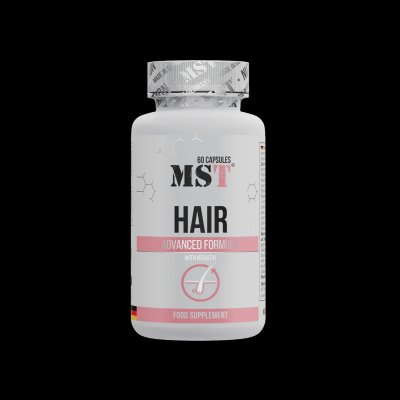 MST Hair Advanced Formula with Keratin€19.90 In stock 60caps combines biotin with keratin and other nutrients for a multi-pathway approach to hair support. All are available in the biotiin category at maxfit.ee.
If you are currently experiencing significant hair loss, a dermatologist or physician can test your serum biotin and ferritin levels - ferritin deficiency is actually a more common and evidence-backed driver of hair loss than biotin deficiency.
Bottom Line
Biotin is well-studied in deficiency and poorly studied in healthy populations. It is safe at typical doses, but high-dose formulations carry a real lab interference risk. For cosmetic use in non-deficient individuals, the evidence is modest; the strongest benefit is in those with documented deficiency or very low intake. Biotin is not a treatment for hereditary or hormonal hair loss.
FAQ
Does biotin really help hair growth?
For people with confirmed biotin deficiency, yes - the evidence is strong. For people with normal biotin status and other causes of hair loss, the evidence is much weaker. Consider testing ferritin and thyroid hormones first, as deficiencies in these are more commonly linked to hair loss in otherwise healthy adults.
Why does high-dose biotin interfere with blood tests?
Many modern lab immunoassays use biotin-streptavidin chemistry. Excess circulating biotin from supplements competes with the test reagents, producing falsely high or falsely low readings depending on the assay design. Stopping biotin at least 3-7 days before testing is generally sufficient to clear it.
What is the right daily dose of biotin?
For general nutritional adequacy, requirements are measured in micrograms - not the milligram doses in many beauty supplements. Standard multivitamins contain 30-300 mcg, which meets normal needs. Doses of 2500-10000 mcg are used in some hair/nail products with limited trial data supporting those levels over lower doses in non-deficient people.
References
Patel, D. P., Swink, S. M., & Castelo-Soccio, L. (2017). A review of the use of biotin for hair loss. Skin Appendage Disorders, 3(3), 166-169. https://pubmed.ncbi.nlm.nih.gov/28879195/
Hochman, L. G., Scher, R. K., & Meyerson, M. S. (1993). Brittle nails: response to daily biotin supplementation. Cutis, 51(4), 303-305. https://pubmed.ncbi.nlm.nih.gov/8477615/



