
Is Long-Term Biotin Use Safe?
Biotin (vitamin B7) has become one of the most widely taken supplements for hair, skin, and nail health. If you have been using a biotin supplement for months or are thinking about doing so for years, a natural question arises: is long-term biotin use actually safe?
The short answer is yes — for most healthy adults, biotin at commonly sold doses is well tolerated over extended periods. But the longer answer involves understanding the science, recognising a critical lab-test interference issue, and knowing when monitoring matters.
What Long-Term Studies Show
Biotin is a water-soluble B-vitamin, which means the body does not store large amounts and excretes excess through urine. Toxicity from dietary biotin has not been reported in humans even at very high intakes (Mock, 2017). Clinical trials using biotin for conditions such as multiple sclerosis have administered doses many times higher than typical supplement doses for up to two years without serious adverse events (Tourbah et al., 2016).
For healthy adults taking standard commercial doses for hair and nail support, the evidence does not suggest cumulative harm. That said, most available studies are short-to-medium in duration, so absolute certainty about decade-long daily use remains limited by the research base.
Upper Safe Limits Over Time
No official tolerable upper intake level has been established for biotin in Europe or the United States because no adverse effects from excess oral biotin have been identified at levels tested in humans. EFSA's guidance notes the absence of observed adverse effects even at pharmacological intakes; regulators do not set a numeric upper limit for this reason.
Products like OstroVit Biotin Plus 100tabs and MST Beauty Biotin 5000mcg deliver doses well within ranges used in clinical research. 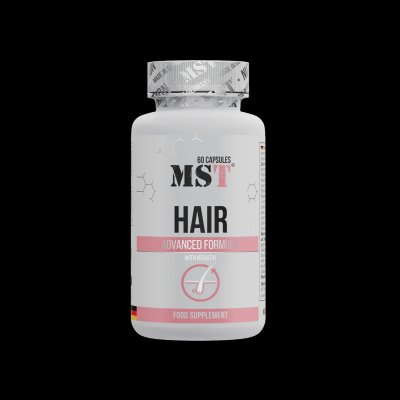 MST Hair Advanced Formula with Keratin€19.90 In stock 60caps combines biotin with keratin-supporting nutrients for a broader approach to hair health. These are available at maxfit.ee.
Do You Need to Cycle Biotin?
There is no established physiological need to cycle biotin. Unlike stimulants or hormonal compounds, biotin does not downregulate endogenous production of itself — the body synthesises some biotin via gut bacteria, but supplemental biotin does not suppress this pathway in ways that would necessitate breaks.
Personal choices about cycling are fine, but are driven by preference rather than safety necessity. If you stop supplementing, any hair or nail benefit may gradually diminish as tissue levels normalise over weeks.
The Lab Interference Issue — Critical
One genuine concern with high-dose biotin is interference with certain laboratory immunoassays. Several thyroid, cardiac troponin, hormone, and vitamin D tests use biotin-streptavidin chemistry. High circulating biotin can produce falsely elevated or falsely low results, potentially leading to misdiagnosis (Wijeratne et al., 2012).
This is not a direct toxicity risk to your body, but it is a clinically important safety issue. The standard precaution is to stop biotin supplementation for at least 48 hours before blood tests. Inform your doctor or lab that you take a biotin supplement.
Monitoring
For healthy adults taking standard commercial doses, routine monitoring is not required. The main watchpoints are:
- Blood tests: pause biotin 48 hours before any immunoassay-based lab panel.
- Skin reactions: rare cases of acne-like breakouts have been reported anecdotally; reduce dose or stop if this occurs.
- Medication interactions: biotin does not have known pharmacokinetic interactions with common medications, but inform your prescriber.
Honest Verdict
Long-term biotin use at typical supplement doses is considered safe for healthy adults based on available evidence. The main caveat is lab-test interference at higher doses — this is a practical concern, not a toxicity one. There is no compelling reason to cycle biotin, and no established upper limit has been set. As with any supplement, use the lowest dose that meets your goals and check with a healthcare provider if you have underlying conditions.
References
Mock, D. M. (2017). Biotin: from nutrition to therapeutics. Journal of Nutrition, 147(8), 1487-1492. https://pubmed.ncbi.nlm.nih.gov/28701385/
Tourbah, A., Lebrun-Frenay, C., Edan, G., Clanet, M., Papeix, C., Vukusic, S., et al. (2016). MD1003 (high-dose biotin) for the treatment of progressive multiple sclerosis: A randomised, double-blind, placebo-controlled study. Multiple Sclerosis Journal, 22(13), 1719-1731. https://pubmed.ncbi.nlm.nih.gov/27589059/
Wijeratne, N. G., Doery, J. C., & Lu, Z. X. (2012). Positive and negative interference in immunoassays following biotin ingestion: a pharmacokinetic study. Pathology, 44(7), 674-675. https://pubmed.ncbi.nlm.nih.gov/23089740/
FAQ
Can I take biotin every day for years without stopping?
Based on current evidence, daily biotin use over extended periods appears safe for healthy adults. No upper tolerable limit has been set and no cumulative toxicity has been observed. The most important practical precaution is pausing supplementation before blood tests.
Does long-term biotin use cause acne?
There are anecdotal reports linking high-dose biotin to acne-like breakouts, but this has not been confirmed in controlled studies. If you notice skin changes, reducing your dose is a reasonable first step.
How much biotin is in typical supplements?
Commercial supplements vary widely. Many standard formulations provide between 1,000 and 10,000 mcg per serving. Clinical research on hair and nail outcomes has used a range of doses — choose a product that fits your goals and read the label for the per-serving amount.



