Biotin and Energy: What Is the Connection?
Biotin (vitamin B7) is a water-soluble vitamin that plays an important role in energy metabolism. It is often marketed as an energy and hair-nail support supplement, but what does science actually say about biotin and fatigue? We give an honest answer.
Biotin's Role in Energy Metabolism
Biotin is a cofactor for several key enzymes involved in energy production:
- Acetyl-CoA carboxylase -- required for fatty acid synthesis
- Pyruvate carboxylase -- required for gluconeogenesis (glucose production from non-carbohydrates)
- Propionyl-CoA carboxylase -- involved in amino acid and fatty acid metabolism
These enzymes are essential for the efficient use of glucose and fatty acids as fuel. Biotin's biochemical role in energy metabolism is therefore well documented.
But an important nuance: once biotin levels are sufficient, additional biotin does not increase enzyme activity. In healthy people without biotin deficiency, extra biotin does not provide extra energy.
Evidence on Fatigue
Clinical studies directly targeting fatigue reduction are scarce.
In cases of biotin deficiency -- rare, but possible with prolonged raw egg white consumption, after bariatric surgery, or with certain medications (e.g., long-term valproate use) -- fatigue and weakness are documented symptoms that resolve when the deficiency is corrected.
One observational study associated lower biotin levels with greater subjective fatigue and lower energy (Mock, 2014). However, there are no large-scale RCTs showing that biotin supplementation reduces fatigue in people without deficiency.
Who Is Likely to Benefit
People most likely to benefit from biotin supplementation include:
- Those with biotin deficiency -- rare but a real risk for users of certain medications and those who have undergone bariatric surgery
- Pregnant women -- biotin requirements increase during pregnancy
- People who consume large amounts of avidin from raw eggs -- avidin binds biotin and reduces its absorption
- People who eat few biotin-rich foods (liver, eggs, nuts, seeds)
For energy loss that has another cause -- iron deficiency, hypothyroidism, sleep deprivation, generally inadequate diet -- biotin supplementation will not help.
OstroVit Biotin Plus 100tabs, MST Hair Advanced Formula with Keratin 60caps, and 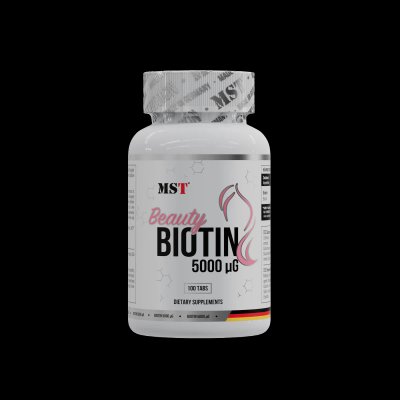 MST Beauty Biotin 5000mcg€16.90 In stock are available at maxfit.ee.
Explore biotin products in the biotin category at maxfit.ee.
Dose
The recommended daily intake of biotin for adults is 30 to 40 micrograms. Supplements often use much larger doses (1000 to 10000 mcg), but there is no convincing evidence of additional benefits for energy metabolism in healthy people at such high doses.
High biotin doses (above 1000 mcg per day) may interfere with certain laboratory test results, including thyroid hormone and troponin tests. Inform your doctor if you are taking high-dose biotin.
Realistic Expectations
Biotin is not an energy drink or universal fatigue remedy. If you are healthy and eating a balanced diet, additional biotin is unlikely to produce a noticeable energy boost. Its primary use case is support for hair, nails, and skin, and the evidence base there is somewhat stronger than for energy effects.
References
- Mock, D.M. (2014). Adequate intake of biotin in pregnancy: why bother? Journal of Nutrition, 144(12), 1885-1886. https://pubmed.ncbi.nlm.nih.gov/25320191/
- Zempleni, J., et al. (2009). Biotin and biotinidase deficiency. Expert Review of Endocrinology and Metabolism, 4(4), 385-392.
- Fiume, M.Z. (2001). Final report on the safety assessment of biotin. International Journal of Toxicology, 20(Suppl 4), 1-12. https://pubmed.ncbi.nlm.nih.gov/11800048/
FAQ
Does biotin actually give energy?
Biotin supports energy metabolism, but only when its levels are deficient. In healthy people without biotin deficiency, extra biotin does not provide a noticeable energy boost.
Can you take too much biotin?
Biotin is water-soluble and the body excretes the excess in urine. Toxicity has not been observed even at high doses, but interference with laboratory test results is a realistic risk.
Should biotin be taken with food?
Biotin is well tolerated both with food and on an empty stomach, but some people prefer taking it with food to avoid digestive discomfort.



