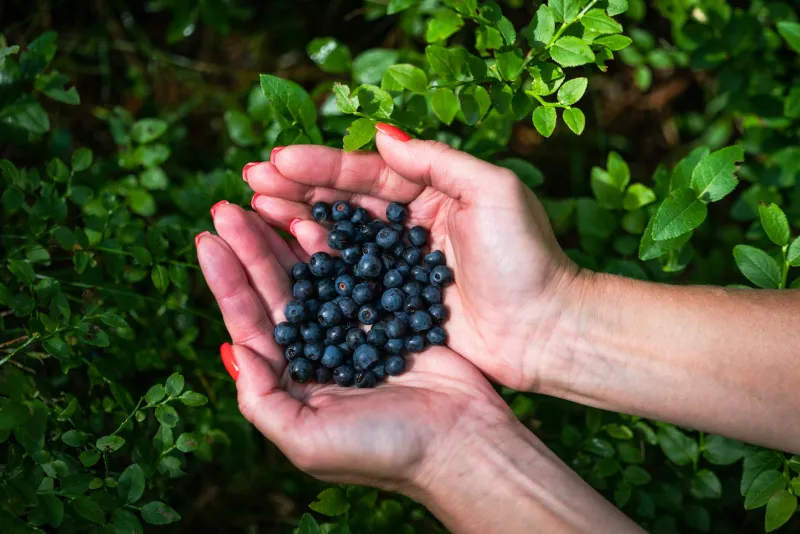
When to Take Bilberry: Optimal Timing
Bilberry timing is a practical question for anyone using bilberry (Vaccinium myrtillus) extract for eye health, antioxidant support, or vascular wellbeing. Bilberries are rich in anthocyanins — a class of polyphenol pigments with well-characterised antioxidant and vasoprotective properties. How you time your supplement can influence how these compounds are absorbed and how consistently they act.
With Food or Without?
Bilberry extract is generally recommended to be taken with food rather than on an empty stomach. The main reasons are practical:
- Fat-soluble co-transport: while anthocyanins are water-soluble, some research suggests that concurrent fat intake may enhance the absorption of certain polyphenols by slowing gastric transit and promoting micelle formation in the gut.
- Gastrointestinal tolerance: concentrated berry extracts can cause mild nausea or stomach discomfort if taken on a completely empty stomach, particularly at higher doses.
A pharmacokinetic review of anthocyanin absorption found that plasma levels peaked approximately 1–2 hours after ingestion, with food modestly slowing but not substantially reducing overall bioavailability (Cravotto et al., 2010). Taking bilberry with a main meal is the most practical and comfortable approach for most users.
Time of Day and Training
For general antioxidant and eye health support, the time of day is flexible. Consistency across days matters more than the precise clock time. Many users find morning or evening supplementation with a meal to be the easiest to maintain as a habit.
For those using bilberry in a sports context — for example, for vascular support during high-intensity training — there is no evidence of an acute training-window benefit. Bilberry's effects on microcirculation and antioxidant capacity build over days to weeks of regular use, not within a single session.
That said, evening supplementation may have a minor rationale for those prioritising visual function: one of the traditionally studied benefits of bilberry is adaptation of vision in low-light conditions, and this may be relevant for evening athletes or screen workers.
Split vs Single Dose
Most research on bilberry and anthocyanins uses once- or twice-daily dosing. Splitting the total daily amount across two doses — for example, morning and evening with meals — spreads plasma anthocyanin levels more evenly and may provide more consistent antioxidant coverage across the day. A single dose is still effective and more convenient for most people.
Interactions Affecting Timing
- Anticoagulants (e.g., warfarin): bilberry may have mild antiplatelet effects. Those on blood-thinning medication should consult a doctor before use and not adjust doses without guidance.
- Diabetes medication: anthocyanins from bilberry may influence glucose metabolism. Those managing blood glucose with medication should monitor responses.
- Iron: the polyphenols in bilberry can reduce non-haeme iron absorption. Those managing iron deficiency should take bilberry away from iron-rich meals or iron supplements.
Practical Schedule
| Goal | Suggested timing |
|---|---|
| Eye and antioxidant support | Once daily with main meal, any time |
| Consistent antioxidant coverage | Twice daily: with breakfast and dinner |
| Evening visual adaptation | With dinner or evening snack |
Browse the mustikad category at maxfit.ee for available bilberry products.
References
Cravotto, G., Boffa, L., Genzini, L., & Garella, D. (2010). Phytotherapeutics: an evaluation of the potential of 1000 plants. Journal of Clinical Pharmacy and Therapeutics, 35(1), 11–48. https://pubmed.ncbi.nlm.nih.gov/20175810/
Abdou, A. M., Higashiguchi, S., Horie, K., Kim, M., Hatta, H., & Yokogoshi, H. (2006). Relaxation and immunity enhancement effects of gamma-aminobutyric acid (GABA) administration in humans. BioFactors, 26(3), 201–208. https://pubmed.ncbi.nlm.nih.gov/16971751/
FAQ
Can I take bilberry extract on an empty stomach?
It is possible but may cause mild stomach discomfort in some individuals. Taking it with a meal is more comfortable and does not significantly reduce absorption for most people.
How long does it take for bilberry to have an effect?
Most research protocols run for 4–12 weeks. Antioxidant markers may improve over this period with regular daily use, but short-term visual effects, if any, are subtle and individual.
Is fresh or freeze-dried bilberry better than extract?
Standardised extract concentrates anthocyanins to a known level, making dosing more precise. Fresh or dried bilberries provide the same compounds along with fibre and other berry nutrients, but the dose of active anthocyanins is less controlled.



