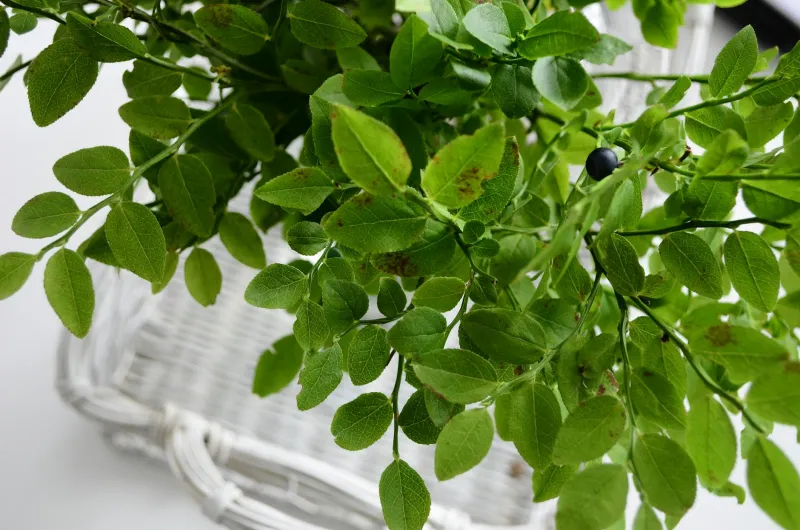
Bilberry Myths vs Facts
Bilberry (Vaccinium myrtillus) is a wild relative of the blueberry found across Europe, including Estonia's forests. Extracts from bilberry fruit have been used in traditional medicine for centuries, and the supplement form has become popular for vision support, vascular health, and antioxidant effects. The marketing around bilberry sometimes outpaces the science, so this guide examines the myths and the real evidence.
Common Myths About Bilberry
Myth 1: Bilberry dramatically improves night vision
This is perhaps the most persistent bilberry myth. It originated partly from a popular story about Second World War RAF pilots consuming bilberry jam before night missions. The story is likely apocryphal. Controlled trials examining bilberry's effect on night vision have produced inconsistent results. A systematic review by Canter and Ernst (2004) concluded that the evidence for bilberry improving night vision in healthy subjects is not convincing. Bilberry may have modest effects under specific conditions, but claims of dramatic night-vision enhancement are not supported.
Myth 2: Bilberry directly treats eye disease
Bilberry is not approved to treat any eye disease. Research into anthocyanin-rich foods and visual function is active and interesting, but extrapolating from antioxidant activity in cell studies to clinical disease reversal is a significant leap. People with diagnosed eye conditions should seek care from an ophthalmologist and not rely on bilberry supplements.
Myth 3: More anthocyanins always mean better results
Bilberry's bioactive compounds are anthocyanins, a class of polyphenols responsible for the dark pigment of the berry. Higher anthocyanin content in a product does not automatically translate to better clinical outcomes. Bioavailability of anthocyanins is influenced by the matrix, presence of other food components, and individual gut microbiome composition.
What the Evidence Actually Shows
The most credible evidence for bilberry relates to vascular and antioxidant effects. A randomised crossover trial by Karlsen et al. (2010) found that anthocyanin-rich bilberry consumption was associated with reductions in markers of oxidative stress and inflammation compared to control conditions in healthy subjects. The effect was modest but statistically significant.
Separate research has examined bilberry's anthocyanins and cardiovascular markers. Anthocyanins more broadly — not bilberry specifically — are associated in epidemiological research with reduced cardiovascular risk, though causality is not established.
Marketing Claims vs Reality
| Claim | Reality |
|---|---|
| "Improves night vision" | Not supported by controlled trials in healthy subjects |
| "Treats glaucoma or cataracts" | No approved clinical indication; do not substitute for medical care |
| "Antioxidant powerhouse" | Rich in anthocyanins with real antioxidant activity; clinical benefit unclear |
| "Improves circulation" | Some supportive vascular data; effect size modest |
Grey Areas
Bilberry research is ongoing and the picture may become clearer. Anthocyanins as a broader class of compounds are genuinely interesting in nutritional research. Studies examining bilberry's effects on glucose metabolism, cognitive function, and eye fatigue in screen users are emerging. None have yet produced findings strong enough to support therapeutic health claims.
Drying, extraction, and standardisation methods affect anthocyanin content and stability. The concentration of anthocyanins in a supplement depends heavily on processing. Products standardised to a specific anthocyanin percentage are more reliable than those listing only berry weight.
Bottom Line
Bilberry is a nutritious berry with a real antioxidant profile and some supportive vascular research. The dramatic vision claims associated with it are not well supported. It is a reasonable dietary supplement for general antioxidant support, particularly for people who do not regularly consume berries, but expectations should be calibrated to what the evidence actually shows.
Explore vision support products at maxfit.ee's nagemise-vitamiinid category, where you can find OstroVit Lutein + Zeaxanthin 60caps and MST Lutein 40mg + zeaxanthin 60 softgels — the carotenoids with the strongest eye-health evidence base.
FAQ
How does bilberry differ from blueberry?
Bilberry and blueberry are related species. Bilberry (Vaccinium myrtillus) is smaller, grows wild in European forests, and is pigmented throughout the flesh, not just the skin. Bilberry extracts typically have higher anthocyanin concentrations per gram than common blueberry. Both are nutritionally valuable.
What anthocyanin content should a quality bilberry supplement have?
Quality bilberry extracts are typically standardised to a set percentage of anthocyanins, often in the range of 25-36% anthocyanins. Look for this specification on the label rather than simply buying a product that states the berry weight.
Is bilberry safe during pregnancy?
Bilberry consumed as food is generally considered safe. Concentrated extract supplements at high doses during pregnancy have not been adequately studied. Pregnant women should consult a doctor before using high-dose bilberry supplements.
References
Canter, P. H., & Ernst, E. (2004). Anthocyanosides of Vaccinium myrtillus (bilberry) for night vision — a systematic review of placebo-controlled trials. Survey of Ophthalmology, 49(1), 38-50. https://pubmed.ncbi.nlm.nih.gov/14711439/
Karlsen, A., Retterstol, L., Laake, P., Paur, I., Kjolsrud-Bohn, S., Sandvik, L., & Blomhoff, R. (2007). Anthocyanins inhibit nuclear factor-kappaB activation in monocytes and reduce plasma concentrations of pro-inflammatory mediators in healthy adults. Journal of Nutrition, 137(8), 1951-1954. https://pubmed.ncbi.nlm.nih.gov/17634269/



