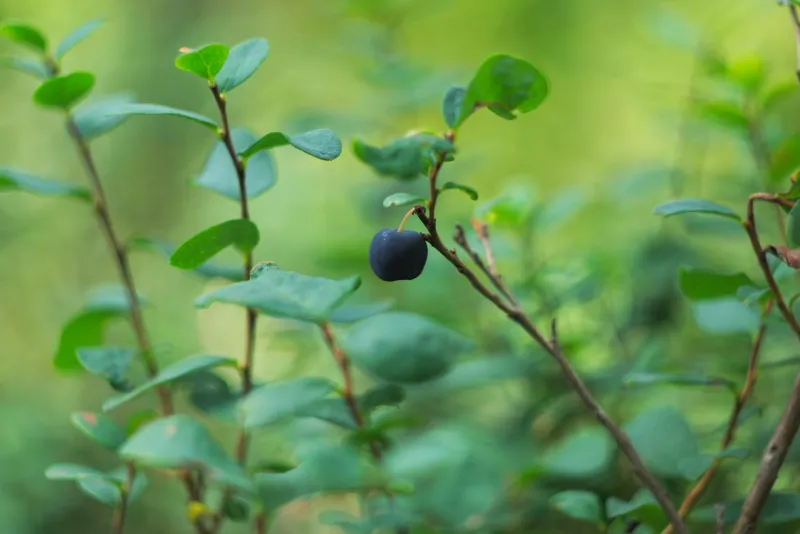
Is Long-Term Bilberry Use Safe?
Bilberry (Vaccinium myrtillus) is a wild European berry closely related to the blueberry, rich in anthocyanins — a class of polyphenol antioxidants that give it its deep blue-purple colour. Bilberry extract has been used in various European countries as a herbal supplement for eye health, vascular support, and antioxidant protection. The question of long-term safety is increasingly relevant as bilberry supplements move from occasional use to daily routine.
What Long-Term Studies Show
Bilberry is generally considered safe, and this is supported by its status as both a commonly eaten food and a long-standing herbal supplement across Europe. Human studies of bilberry extract lasting from four to twelve weeks have generally reported no serious adverse events.
One study examining bilberry anthocyanins in older adults over twelve weeks reported improvements in measures of visual acuity in dim light and found no clinically significant safety signals (Nakaishi et al., 2000). A longer intervention study lasting six months found bilberry extract was well tolerated in a small group of participants with metabolic syndrome, with no concerning changes in liver function tests or blood counts (Kolehmainen et al., 2012).
Beyond six months, human trial data become sparse. There is no evidence of long-term toxicity from food-level bilberry consumption — people who eat bilberries and blueberries regularly as part of their diet do not appear to develop any cumulative harm. Extrapolating to concentrated extracts over years is more cautious territory, but the biological profile of anthocyanins does not suggest a mechanism for long-term toxicity at typical supplemental doses.
Upper Safe Limits Over Time
No formal tolerable upper intake level for bilberry extract has been set by regulatory bodies. The main concern with high-dose, long-term anthocyanin intake would theoretically relate to interference with platelet function — anthocyanins have mild antiplatelet properties. However, at normal supplemental doses from extracts, this effect is unlikely to be clinically significant in otherwise healthy individuals.
For people on anticoagulant therapy (warfarin, newer oral anticoagulants), even theoretical antiplatelet effects from bilberry warrant a conversation with their prescriber before starting.
Do You Need to Cycle Bilberry?
Unlike stimulant supplements, there is no pharmacological argument for cycling bilberry. The benefits of bilberry — antioxidant activity, potential vascular support, visual function — do not rely on receptor sensitisation, and tolerance in the stimulant sense does not develop.
From a practical standpoint, if you are using bilberry for a specific purpose (e.g., during high-screen-time periods, or to support circulation), it is reasonable to assess whether you actually notice benefit every few months and adjust accordingly. But formal cycling is not necessary for safety reasons.
Monitoring
For most healthy adults, no specific monitoring is required for long-term bilberry use at standard supplemental doses. Points of awareness:
- If you are on anticoagulant medication, inform your doctor and have your clotting parameters monitored as usual.
- If you develop any unusual bruising or bleeding tendency, discontinue and consult a doctor.
- People with bleeding disorders should avoid bilberry supplements and stick to dietary consumption.
Honest Verdict
Bilberry is one of the more benign herbal supplements from a long-term safety perspective. Its dietary form has been consumed safely by millions of Europeans for centuries. Concentrated extracts at typical supplemental doses are unlikely to cause harm in healthy adults even over months to years, based on mechanistic reasoning and the available (limited) trial data.
The main honest caveat is that specific long-term human RCT data are sparse — so certainty is limited. Bilberry is not appropriate for people on anticoagulants without medical supervision, and very high doses without a clear reason are not warranted.
For bilberry and related berry supplements, browse the ravimtaimed-ja-adaptageenid category at maxfit.ee.
FAQ
Can I take bilberry every day for years?
Based on its food history and the available safety data from trials up to six months, daily use at standard supplemental doses appears to be well tolerated. Beyond six months, long-term trial data are limited, but mechanistic risk for typical doses is low. Periodic reassessment of whether you are still deriving benefit is a reasonable approach.
Does bilberry improve eyesight?
Bilberry is associated with support for visual function in dim light and general eye antioxidant support, based on several small human studies. It does not correct refractive errors or treat eye disease. Significant vision problems should always be assessed by an eye care professional — supplements are not a substitute for medical evaluation.
Is bilberry safe during pregnancy?
Dietary bilberry consumption (eating the berries) is considered safe. High-dose bilberry extract supplementation during pregnancy has not been adequately studied, and as a precaution, supplemental doses should be discussed with a healthcare provider during pregnancy.
References
Nakaishi, H., Matsumoto, H., Tominaga, S., & Hirayama, M. (2000). Effects of black currant anthocyanoside intake on dark adaptation and VDT work-induced transient refractive alteration in healthy humans. Alternative Therapies in Health and Medicine, 6(4), 69-75.
Kolehmainen, M., Mykkanen, O., Kirjavainen, P. V., Leppanen, T., Moilanen, E., Adriaens, M., Laaksonen, D. E., Hallikainen, M., Puupponen-Pimia, R., Pulkkinen, L., Mykkanen, H., Gylling, H., Poutanen, K., & Torronen, R. (2012). Bilberries reduce low-grade inflammation in individuals with features of metabolic syndrome. Molecular Nutrition & Food Research, 56(10), 1501-1510. https://pubmed.ncbi.nlm.nih.gov/22961907/



