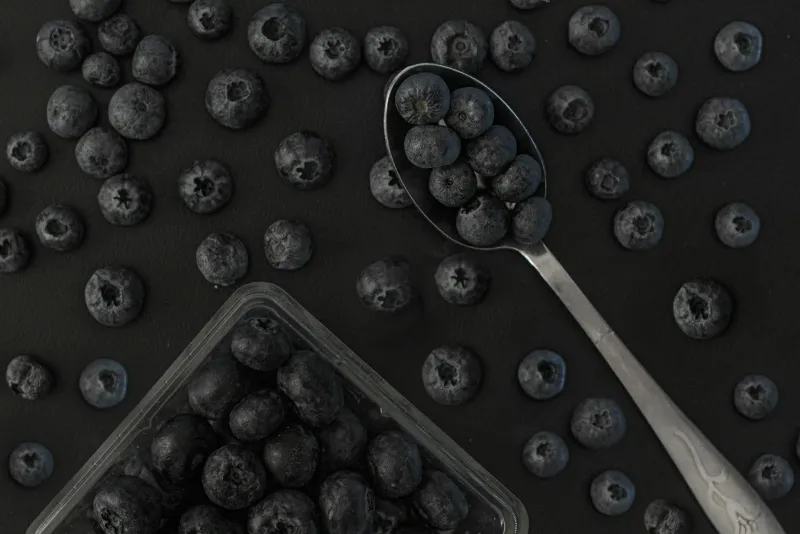
What Is Bilberry and Why Does Form Matter?
Bilberry (Vaccinium myrtillus) is a wild berry closely related to the blueberry, native to Europe and northern Asia. It is rich in anthocyanins, the pigments responsible for its deep blue-purple colour. These polyphenols have attracted research interest for their potential role in supporting vision, oxidative stress markers, and microcirculation. When shopping for bilberry supplements, the form you choose significantly influences how much active anthocyanin you actually receive per serving.
Forms Compared
Standardised Bilberry Extract
Standardised bilberry extracts are concentrated preparations, typically specifying the percentage of anthocyanins. A common standardisation is around 25% anthocyanins from dried extract. This form allows consistent dosing and is used in the majority of clinical research on bilberry.
Dried Bilberry Fruit or Powder
Dried whole bilberry or powdered fruit contains lower anthocyanin concentrations compared with extracts. Servings must be proportionally larger to match the active content of a concentrated extract. These forms are used in food products and loose supplements.
Bilberry Juice Concentrate
Juice concentrates provide anthocyanins in liquid form but are less common as dietary supplement products. The anthocyanin content per millilitre varies depending on processing method and concentration factor.
Bioavailability Differences
Anthocyanins from berries are absorbed in the small intestine and colon. Human studies have shown that bilberry anthocyanins appear in plasma relatively quickly after consumption, with significant inter-individual variation in absorption. A pharmacokinetic study in healthy volunteers found that bilberry anthocyanins were detectable in plasma within hours of a single dose (Ichiyanagi et al., 2004). Standardised extract forms, by delivering a known anthocyanin load, allow more reliable comparisons across studies and products.
Cost Per Effective Dose
Standardised extracts provide far more anthocyanins per capsule than dried fruit powder, meaning fewer capsules are needed for the same effect. Dried bilberry products can appear cheaper per gram on the label but may require substantially more product to deliver equivalent anthocyanin amounts.
| Form | Anthocyanin content | Dosing clarity | Typical use |
|---|---|---|---|
| Standardised extract (25%) | High per capsule | Clear, cited in studies | Vision and antioxidant |
| Dried fruit powder | Lower per gram | Less predictable | Food/smoothie addition |
| Juice concentrate | Variable | Liquid, less convenient | Functional foods |
Which Form for Which Goal?
For anyone seeking the specific bilberry benefits documented in clinical research, a standardised extract with a stated anthocyanin percentage is the most reliable choice. This form is used in studies examining visual fatigue, microcirculation, and antioxidant parameters. Dried fruit powder is a reasonable addition to smoothies or foods when culinary variety is the goal rather than therapeutic consistency. Bilberry supplements are available at maxfit.ee.
What to Look for on the Label
- Look for standardised bilberry extract with the anthocyanin percentage stated (commonly 25-36%).
- Check that the label distinguishes extract weight from fresh equivalent weight.
- Prefer products that specify the part of the plant used (fruit only for high anthocyanins).
- Avoid products with only vague descriptions such as "bilberry blend" without stating active content.
FAQ
Is standardised bilberry extract really better than eating dried bilberries?
For a supplement purpose, standardised extract provides a known, consistent anthocyanin dose per capsule, which is what clinical studies use. Dried bilberries are excellent as food, but the active content per gram is much lower and variable.
Can bilberry supplements support eye health?
Bilberry anthocyanins have been studied in relation to visual fatigue and retinal microcirculation. Research shows associations with reduced eye fatigue markers in some populations (Muth et al., 2000). Bilberry is not a treatment for eye disease and should not replace medical care.
Are there interactions between bilberry and medications?
Bilberry has mild antioxidant and potentially antiplatelet properties. Individuals taking blood-thinning medications should consult a healthcare professional before using high-dose bilberry supplements.
References
Ichiyanagi, T., Kashiwada, Y., Shida, Y., Ikeshiro, Y., Kaneyuki, T., & Konishi, T. (2004). Nasunin from eggplant consists of cis-trans isomers of delphinidin 3-[4-(p-coumaroyl)-L-rhamnosyl(1-->6)glucopyranoside]-5-glucopyranoside. Journal of Agricultural and Food Chemistry, 52(18), 5859-5863.
Muth, E. R., Laurent, J. M., & Jasper, P. (2000). The effect of bilberry nutritional supplementation on night visual acuity and contrast sensitivity. Alternative Medicine Review, 5(2), 164-173. https://pubmed.ncbi.nlm.nih.gov/10767671/
Cho, E., Hung, S., Willett, W. C., Spiegelman, D., Rimm, E. B., Seddon, J. M., Colditz, G. A., & Hankinson, S. E. (2001). Prospective study of dietary fat and the risk of age-related macular degeneration. American Journal of Clinical Nutrition, 73(2), 209-218. https://pubmed.ncbi.nlm.nih.gov/11157315/



