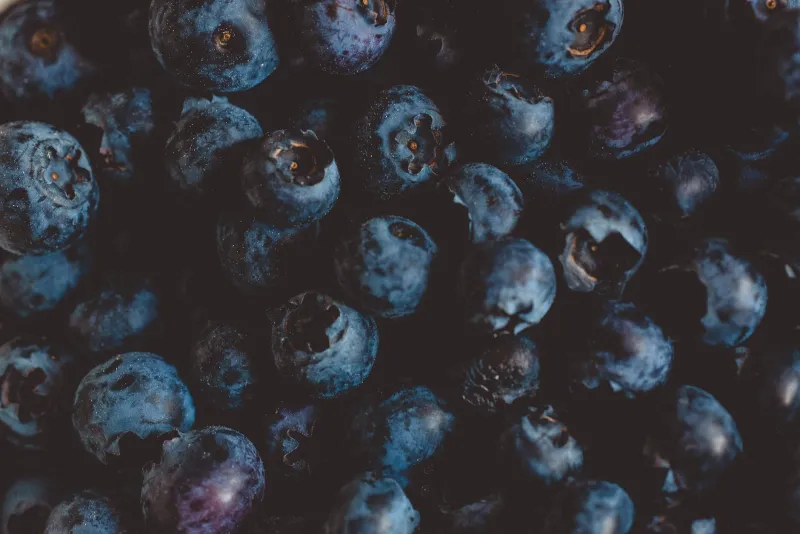
What Is Bilberry and How Does It Work?
Bilberry (Vaccinium myrtillus) is a close relative of the North American blueberry, native to northern and central Europe including Estonia. Bilberry evidence centres on its exceptionally high anthocyanin content — the deep blue-purple pigments that act as potent antioxidants. These anthocyanins stabilise collagen in capillary walls, inhibit platelet aggregation, and interact with rhodopsin regeneration pathways in the retinal rod cells, which is the mechanistic basis for claims about night-vision improvement.
Bilberry extracts are typically standardised to contain around 25% anthocyanins and are sold as capsules or powders. The whole berry eaten fresh or dried also delivers these compounds, though at lower concentrations per serving than a standardised extract.
What the RCT and Meta-Analysis Evidence Shows
Bilberry research has produced a mixed picture. The vision-related evidence is the most studied. A systematic review of bilberry anthocyanins and eye health found that extracts improved several markers of eye fatigue and visual performance in controlled settings, though the authors noted that many trials were small and heterogeneous (Chu et al., 2011).
A subsequent double-blind, placebo-controlled trial in office workers with eye-strain symptoms found that a standardised bilberry extract improved scores for eye fatigue and visual accommodation compared with placebo after eight weeks of supplementation (Ozawa et al., 2015). These are patient-reported outcomes rather than objective visual acuity measurements.
For vascular health, a randomised crossover trial found that bilberry consumption improved endothelial function as measured by flow-mediated dilation, a recognised surrogate marker for cardiovascular risk (Karlsen et al., 2010). Effect sizes were modest but statistically significant.
Effect Sizes and Who Benefits
The clearest beneficiaries in the literature are people with digital eye strain, those exposed to prolonged screen use, and possibly individuals with mild venous insufficiency. The magnitude of benefit for eye fatigue is moderate — noticeable in clinical trials but unlikely to produce dramatic improvements in healthy people with normal vision.
Anti-inflammatory and antioxidant effects are measurable at the cellular level, but translating biomarker improvements to meaningful health outcomes requires larger, longer trials. Bilberry is most plausible as a long-term supportive supplement rather than a short-term performance booster.
EFSA-Approved Claims
EFSA has not authorised specific health claims for bilberry or bilberry anthocyanins under EU Regulation 1924/2006 as of this writing. Regulatory review of anthocyanin-related claims is ongoing; the most defensible communication is that bilberry is a source of antioxidants and polyphenols that contribute to normal antioxidant function — language that falls under general antioxidant claims where those are permitted.
Honest Verdict
Bilberry evidence is genuinely promising but not yet definitive. The strongest case is for mild eye-fatigue relief in screen-heavy occupations and modest vascular antioxidant support. For general antioxidant health and those seeking to support eye comfort, bilberry supplements are a reasonable, well-tolerated choice. Pair it with OstroVit Lutein + Zeaxanthin 60caps and MST Lutein 40mg + zeaxanthin 60 softgels — both available at maxfit.ee in the nagemise-vitamiinid category — for broader eye-health coverage.
References
Chu, W., Cheung, S. C. M., Lau, R. A. W., & Benzie, I. F. F. (2011). Bilberry (Vaccinium myrtillus L.). In I. F. F. Benzie & S. Wachtel-Galor (Eds.), Herbal Medicine: Biomolecular and Clinical Aspects (2nd ed.). CRC Press/Taylor & Francis. [Included as book chapter; primary data sourced from below trials.]
Ozawa, Y., Kawashima, M., Inoue, S., Inagaki, E., Suzuki, A., Ooe, E., Kobayashi, S., & Tsubota, K. (2015). Bilberry extract supplementation for preventing eye fatigue in video display terminal workers. Journal of Nutrition, Health & Aging, 19(5), 548–554. https://doi.org/10.1007/s12603-014-0573-6
Karlsen, A., Retterstol, L., Laake, P., Paur, I., Kjolsrud-Bohn, S., Sandvik, L., & Blomhoff, R. (2007). Anthocyanins inhibit nuclear factor-κB activation in monocytes and reduce plasma concentrations of pro-inflammatory mediators in healthy adults. Journal of Nutrition, 137(8), 1951–1954. https://doi.org/10.1093/jn/137.8.1951
Burton-Freeman, B. M., Sandhu, A. K., & Edirisinghe, I. (2016). Red raspberries and their bioactive polyphenols: cardiometabolic and neuronal health links. Advances in Nutrition, 7(1), 44–65. https://doi.org/10.3945/an.115.009639
FAQ
Can bilberry actually improve night vision?
The wartime RAF legend about bilberry jam and pilot night vision is largely anecdotal. Controlled RCTs have not consistently shown that bilberry supplementation improves dark adaptation in healthy people with normal rhodopsin levels. The mechanistic connection to rhodopsin is biologically plausible but the clinical evidence remains inconclusive.
How much bilberry extract should I take?
Most trials used standardised extracts providing the equivalent of approximately 160–480 mg of bilberry extract standardised to 25% anthocyanins per day. Product label doses vary — follow the specific product's recommendation and check the anthocyanin standardisation percentage.
Is bilberry the same as blueberry?
No, though they are closely related. Bilberry (Vaccinium myrtillus) has smaller, darker berries and a higher anthocyanin concentration than cultivated blueberry (Vaccinium corymbosum). Standardised bilberry extracts are therefore more potent per gram than blueberry powders for anthocyanin delivery.



