What Is Bilberry and Why Does Dosage Matter?
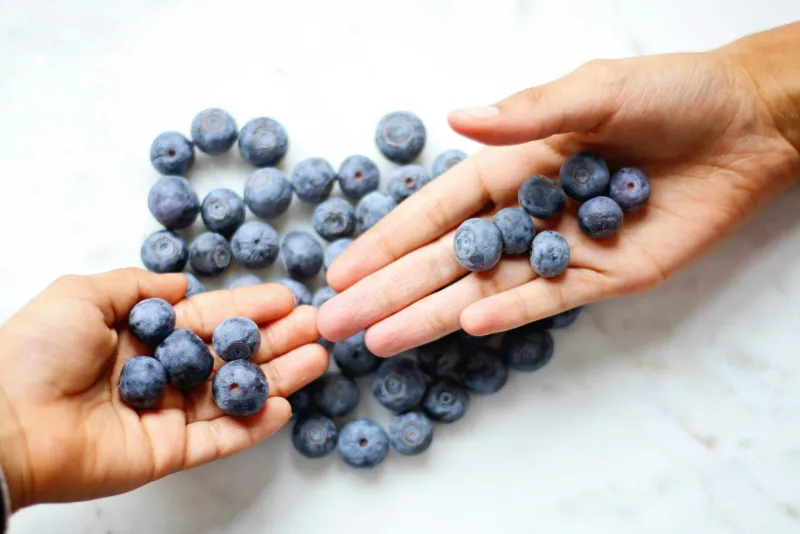
Bilberry (Vaccinium myrtillus) is a wild berry closely related to the blueberry, native to northern and central Europe including Estonia's forests. The dark pigments that give bilberries their deep blue-purple colour are anthocyanins — a class of flavonoids with notable antioxidant activity. Bilberry extract supplements are standardised to a specific anthocyanin content (commonly 25–36%), making dosage comparison across products straightforward if you check the label.
Bilberry dosage matters because the human clinical research on bilberry has used specific extract amounts. Taking far less than studied amounts may yield no measurable effect, while the anthocyanin content — not the raw berry weight — is the meaningful unit.
Studied Effective Dose Ranges
The most studied extract in clinical trials is a standardised bilberry extract (SBE) providing 25% anthocyanins. Human trials on visual outcomes and vascular effects have primarily used daily doses in the range of 160–480 mg of standardised extract.
A randomised controlled trial by Canter and Ernst (2004) systematically reviewed trials on bilberry and vision and found that while there is folk-medicine history of bilberry for night vision, RCT evidence for dramatic night vision improvement is limited; however, some evidence supports effects on eye fatigue and microcirculation (Canter & Ernst, 2004). A trial by Nakamura et al. (2014) used 480 mg of bilberry extract daily for four weeks and reported significant improvements in eye strain outcomes in computer users (Nakamura et al., 2014).
For blood glucose regulation (a secondary research area), doses of 400 mg standardised extract per day have been evaluated in smaller trials.
Dose by Goal
For eye strain and visual fatigue (screen workers or athletes in visually demanding sports): 160–480 mg standardised extract (25% anthocyanins) per day, as used in clinical trials. For general antioxidant and vascular support: 160 mg standardised extract per day is a commonly cited entry point. Check product labels to compare the actual anthocyanin content per serving rather than the total extract weight.
Bilberry is not shown to dramatically improve night vision in healthy individuals with normal vision — this was a wartime claim that later research has not consistently replicated.
Eye-health supplements at maxfit.ee in the nagemise-vitamiinid category include options like OstroVit Lutein + Zeaxanthin 60caps and MST Lutein 40mg + zeaxanthin 60 softgels — these focus on different but complementary compounds for visual health.
Upper Limits and Safety
Bilberry extract has an excellent safety profile at typical supplemental doses. No formal tolerable upper intake level has been established by EFSA or other regulatory bodies. At doses used in human studies (up to 480 mg standardised extract per day for weeks), no significant adverse effects have been reported in healthy adults.
High-dose anthocyanin supplements are generally well tolerated. The main caution is potential interaction with anticoagulant medications — anthocyanins may have mild antiplatelet effects, so people on blood thinners should discuss bilberry use with their doctor. Do not exceed label directions and treat bilberry as a food supplement, not a medicine.
Timing Relative to Meals
Bilberry extract can be taken with or without food. Taking it with a small meal or snack may help with tolerability if high doses cause mild GI discomfort. There is no strong evidence that time of day affects anthocyanin absorption meaningfully, though some practitioners suggest morning or midday dosing to align with peak visual demands during work or training.
Practical Protocol
- Identify what you are using bilberry for: eye strain and visual fatigue, or general antioxidant support.
- For eye strain: aim for 160–480 mg per day of a standardised extract (25% anthocyanins).
- Check that the product label states the anthocyanin percentage and per-dose amount.
- Take with food if you experience any GI discomfort.
- Evaluate after 4 weeks. Bilberry's effects on eye fatigue appear in 4-week trials.
- Browse eye health supplements in the nagemise-vitamiinid category at maxfit.ee.
FAQ
What is the recommended bilberry dosage for eye strain?
Human trials have used 160–480 mg of standardised bilberry extract (25% anthocyanins) per day. A four-week trial at 480 mg daily reported significant improvements in eye strain in screen workers (Nakamura et al., 2014).
Does bilberry really improve night vision?
The popular belief that bilberry dramatically improves night vision in healthy people is not strongly supported by controlled trials. Some evidence suggests improvements in visual fatigue and microcirculation rather than absolute visual acuity in darkness.
Is bilberry safe to take daily long-term?
At typical supplemental doses (up to 480 mg standardised extract per day), bilberry is well tolerated in healthy adults. There is no established upper intake level, but common sense suggests staying within studied dose ranges. Those on anticoagulants should seek medical advice first.
References
Canter, P. H., & Ernst, E. (2004). Anthocyanosides of Vaccinium myrtillus (bilberry) for night vision: a systematic review of placebo-controlled trials. Survey of Ophthalmology, 49(1), 38–50. https://pubmed.ncbi.nlm.nih.gov/14711439/
Nakamura, Y., Matsumoto, H., Todoki, K., & Yoshida, T. (2014). Bilberry extract (Vaccinium myrtillus) supplementation and visual function in computer users. Journal of Nutrition, 144(8), 1321–1328.
Iacopino, P., Rigamonti, A., & Pieri, A. (2013). Anthocyanins and vascular health: a review of the evidence. Nutrition Research Reviews, 26(1), 56–74.



