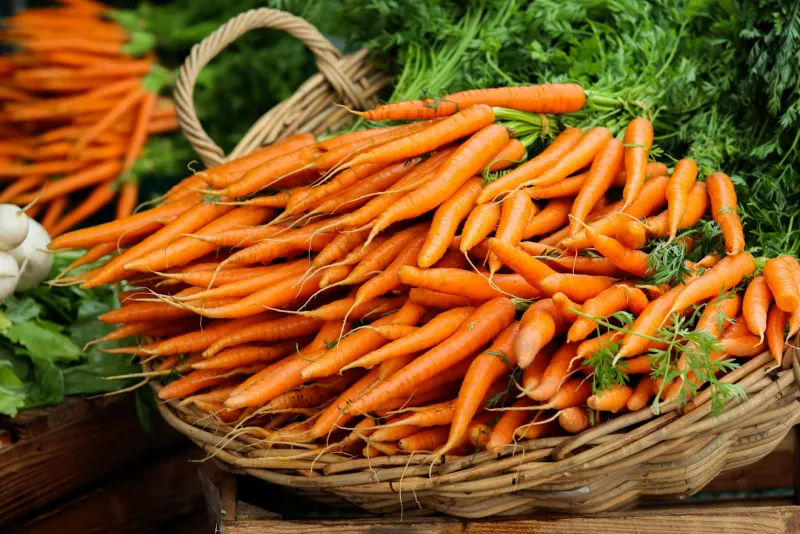
Beta-Carotene for Vegans & Vegetarians
Beta-carotene is the most abundant provitamin A carotenoid in plant foods, making it the primary dietary source of vitamin A for vegans and vegetarians. While the conversion from beta-carotene to retinol (true vitamin A) can meet needs for many people, plant-based diets can fall short when intake or conversion efficiency is suboptimal.
Why Plant-Based Diets May Fall Short
Retinol (preformed vitamin A) is found almost exclusively in animal products such as liver, dairy, and eggs. Vegans rely entirely on provitamin A carotenoids for their vitamin A supply. The challenge is that conversion efficiency from beta-carotene to retinol is highly variable — influenced by genetics, gut health, fat intake at the same meal, and the food matrix.
Research has found that the conversion ratio of beta-carotene to retinol in humans is considerably less efficient than older estimates assumed. A landmark study found that the bioconversion ratio from beta-carotene in food to retinol was approximately 12:1 by weight, meaning twelve micrograms of dietary beta-carotene yields roughly one microgram of retinol (IOM, 2001 principles as confirmed by Tang et al., 2005). For supplement beta-carotene in oil capsule form, the ratio is more favourable at around 2:1, but still not 1:1.
Certain genetic variants in the BCO1 enzyme gene significantly reduce conversion capacity — meaning some individuals absorb beta-carotene normally but cannot convert it efficiently to retinol. This is estimated to affect a meaningful proportion of the general population.
Vegan-Friendly Sources
The richest plant sources of beta-carotene include:
- Orange and yellow vegetables: sweet potato, pumpkin, carrot, butternut squash
- Dark leafy greens: spinach, kale, Swiss chard (the green colour masks the orange carotenoid)
- Orange fruits: mango, papaya, apricot, cantaloupe
Among supplements, SELF Beta carotene 60caps is a convenient option available at maxfit.ee for vegans who want to ensure adequate intake without relying solely on dietary sources.
Dose Targets
There is no universally agreed single dose for beta-carotene supplementation in vegans. Rather than targeting a specific milligram amount, the practical target is ensuring vitamin A adequacy, which in adults is roughly 700 mcg retinol activity equivalents (RAE) per day for women and 900 mcg RAE for men.
Given the variable conversion discussed above, vegans relying on supplemental beta-carotene should consider getting a periodic serum retinol measurement if concerned about status, particularly if they have digestive issues or a low-fat diet that may further impair conversion.
What to Combine
Fat is the most important cofactor for beta-carotene absorption. Beta-carotene is fat-soluble; without co-ingested fat, absorption from food and supplements is markedly reduced. A study by Brown et al. (2004) demonstrated that salad vegetables consumed with fat-free dressing resulted in near-zero carotenoid absorption, while adding fat dramatically improved uptake.
Practical combinations:
- Take beta-carotene supplements with a meal containing olive oil, avocado, nuts, or other healthy fats
- Add a drizzle of olive oil to cooked orange and green vegetables
- Pair carrot or sweet potato dishes with tahini, hummus, or nut-based sauces
Vitamin E and zinc are supportive micronutrients for carotenoid metabolism. A well-rounded multivitamin or targeted supplementation can help ensure these are adequate.
Choosing a Vegan Product
When selecting a beta-carotene supplement as a vegan, check:
- Source: Natural beta-carotene from algae (such as Dunaliella salina) provides both all-trans and 9-cis isomers, whereas synthetic beta-carotene is predominantly all-trans. Some evidence suggests mixed isomers may have advantages, though both forms are suitable for vitamin A conversion.
- Form: Softgels in an oil base are generally better absorbed than dry powder tablets, as the oil matrix aids solubilisation.
- No gelatin: Vegan capsules use hydroxypropyl methylcellulose (HPMC) or pullulan instead of gelatin.
- Dose: Typical supplement doses range from 3 mg to 15 mg. Higher doses in supplemental form are not proportionally more effective and very high long-term intake from supplements is not recommended.
Browse the beta-carotene range at maxfit.ee.
References
Tang, G., Qin, J., Dolnikowski, G. G., Russell, R. M., & Grusak, M. A. (2005). Spinach or carrots can supply significant amounts of vitamin A as assessed by feeding with intrinsically deuterated vegetables. American Journal of Clinical Nutrition, 82(4), 821-828. https://pubmed.ncbi.nlm.nih.gov/16210712/
Brown, M. J., Ferruzzi, M. G., Nguyen, M. L., Cooper, D. A., Eldridge, A. L., Schwartz, S. J., & White, W. S. (2004). Carotenoid bioavailability is higher from salads ingested with full-fat than with fat-reduced salad dressings as measured with electrochemical detection. American Journal of Clinical Nutrition, 80(2), 396-403. https://pubmed.ncbi.nlm.nih.gov/15277161/
Leung, W. C., Hessel, S., Meplan, C., Flint, J., Oberhauser, V., Tourniaire, F., Hesketh, J. E., von Lintig, J., & Lietz, G. (2009). Two common single nucleotide polymorphisms in the gene encoding beta-carotene 15,15'-monoxygenase alter beta-carotene metabolism in female volunteers. FASEB Journal, 23(4), 1041-1053. https://pubmed.ncbi.nlm.nih.gov/19103647/
FAQ
Do vegans need to supplement beta-carotene?
Not necessarily, if their diet is rich in a variety of colourful vegetables and fruits, consumed with fat, and their conversion efficiency is normal. However, vegans with low vegetable variety, digestive issues, or known genetic variants affecting BCO1 activity may benefit from supplementation.
Is there a risk of too much beta-carotene?
Beta-carotene from supplements does not cause classic vitamin A toxicity as retinol does. Very high intake can cause a harmless orange skin tint (carotenodermia). One important caveat: high-dose supplemental beta-carotene has been associated with increased lung cancer risk in smokers in two large trials; smokers should avoid high-dose beta-carotene supplements.
Can I get enough vitamin A from carrots alone?
In theory yes, but in practice the quantity needed is large and consistency matters. Factors like cooking method (lightly cooked carrots release more beta-carotene than raw), fat co-ingestion, and individual conversion efficiency all affect how much retinol you actually produce.



