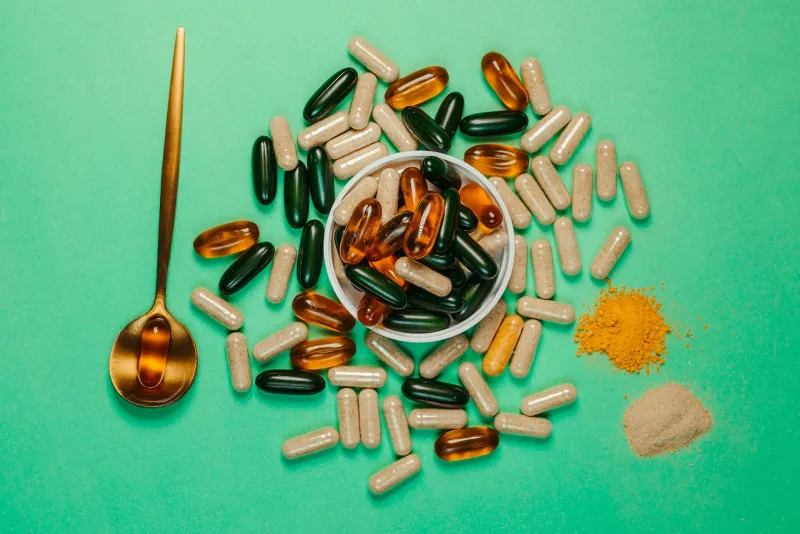
Where to Start With Supplements?
For someone just starting out at the gym, the world of sports supplements can feel overwhelming: dozens of different products, marketing claims, and contradictory advice. The truth is simple: most beginners don't need complex stacks. Start with the three most important supplements and build from there.
Step 1: Whey Protein — The Most Important First Supplement
Adequate protein intake is absolutely essential for muscle growth. Most people don't get enough protein (1.6–2.2 g/kg bodyweight) through regular food alone, especially when they're new to training. Whey protein is a convenient and cost-effective way to meet protein targets.
Scitec 100% Whey Protein Professional 500g Peanut Butter is a budget-friendly, great-tasting option for beginners. BioTechUSA Iso Whey Zero 1816g Chocolate is ideal for those who want a low-fat isolate with minimal carbohydrates per serving.
How Much and When?
Consume 25–30 g of whey protein within 30–60 minutes post-workout. You can spread total daily intake across 2–3 servings. Don't stress too much about precise timing — total daily protein intake matters more than timing windows.
Step 2: Creatine — The Simplest Strength and Size Booster
Creatine monohydrate is the most evidence-backed ergogenic supplement available. For beginners, it's especially beneficial because it helps accelerate adaptation — strength gains in early training months are amplified with creatine (Lanhers et al., 2017).
ICONFIT Creatine Monohydrate Unflavored 300g is a clean Estonian-brand product with no fillers. MuscleTech Platinum 100% Creatine Monohydrate 200g is another popular choice with a well-established international track record.
For beginners, 3–5 g per day is sufficient. Mix it into water or your protein shake. No loading phase is necessary.
Step 3: Vitamin D — Essential in Estonia's Climate
In Estonia, vitamin D deficiency is highly prevalent during autumn and winter — up to 73% of the population may be affected (Lips et al., 2019). Vitamin D supports immune function, muscle function, and overall wellbeing. Athletes need it for bone health too.
Find vitamin D in the vitamin D category at maxfit.ee. A daily dose of 1000–4000 IU is the commonly recommended range for most adults.
What Beginners Don't Need Right Away
Skip for Now:
- Expensive pre-workouts (caffeine from coffee works just as well)
- HMB, CLA, glutamine (marginal effect for beginners)
- Mass gainers (excessive calories if diet isn't controlled)
Common Beginner Mistakes:
- Buying too many products at once
- Prioritising supplements over whole-food nutrition
- Inconsistent usage
- Unrealistic expectations from supplements
Multivitamins — A Useful Safety Net
If your diet is not varied enough, a multivitamin provides useful insurance. OstroVit 100% VIT&MIN 30 tabs is a compact daily vitamin and mineral complex. These are particularly helpful in winter months in Estonia when fresh produce variety is limited.
The golden rule: never spend more on supplements than on food. Quality whole-food nutrition is always the priority.
Beginner Supplement Priority Table
| Priority | Supplement | Rating |
|---|---|---|
| 1 | Whey Protein | Essential |
| 2 | Creatine | Highly recommended |
| 3 | Vitamin D | Especially important in Estonia |
| 4 | Multivitamin | Useful |
| 5+ | Everything else | Later |
All of these products are available at maxfit.ee.
How to Read a Supplement Label
Always check:
- Serving size vs. total servings per container
- Protein amount per serving
- Sugar and additive content
- Third-party certifications (Informed Sport, NSF, etc.)
FAQ
Are supplements safe for beginners?
Yes — the recommended beginner supplements (whey protein, creatine, vitamins) are safe for healthy adults. Start with one product at a time to monitor your response before adding more.
When should I start taking supplements?
Spend the first 2–3 months focusing on training consistency and diet fundamentals. Then add whey protein and creatine once your routine is established. There's no rush.
How much should a beginner spend on supplements?
A starting budget of €20–40 per month is sufficient: whey protein and creatine cover the key bases. Don't spend more than you're confident you'll train consistently.
References
- Lanhers, C., Pereira, B., Naughton, G., Trousselard, M., Lesage, F. X., & Dutheil, F. (2017). Creatine supplementation and upper limb strength performance. Sports Medicine, 47(1), 163–173.
- Lips, P., Cashman, K. D., Lamberg-Allardt, C., Bischoff-Ferrari, H. A., Obermayer-Pietsch, B., Bianchi, M. L., ... & Bouillon, R. (2019). Current vitamin D status in European and Middle East countries and strategies to prevent vitamin D deficiency. European Journal of Endocrinology, 180(4), P23–P54.
- Morton, R. W., Murphy, K. T., McKellar, S. R., Schoenfeld, B. J., Henselmans, M., Helms, E., ... & Phillips, S. M. (2018). A systematic review, meta-analysis and meta-regression of the effect of protein supplementation on resistance training-induced gains in muscle mass and strength. British Journal of Sports Medicine, 52(6), 376–384.
- Kerksick, C. M., Wilborn, C. D., Roberts, M. D., Smith-Ryan, A., Kleiner, S. M., Jäger, R., ... & Kreider, R. B. (2018). ISSN exercise & sports nutrition review update: research & recommendations. Journal of the International Society of Sports Nutrition, 15(1), 38.
- Stear, S. J., Castell, L. M., Burke, L. M., & Gramlich, L. (2010). BJSM reviews: A–Z of nutritional supplements: dietary supplements, sports nutrition foods and ergogenic aids for health and performance. British Journal of Sports Medicine, 44(14), 1048–1049.