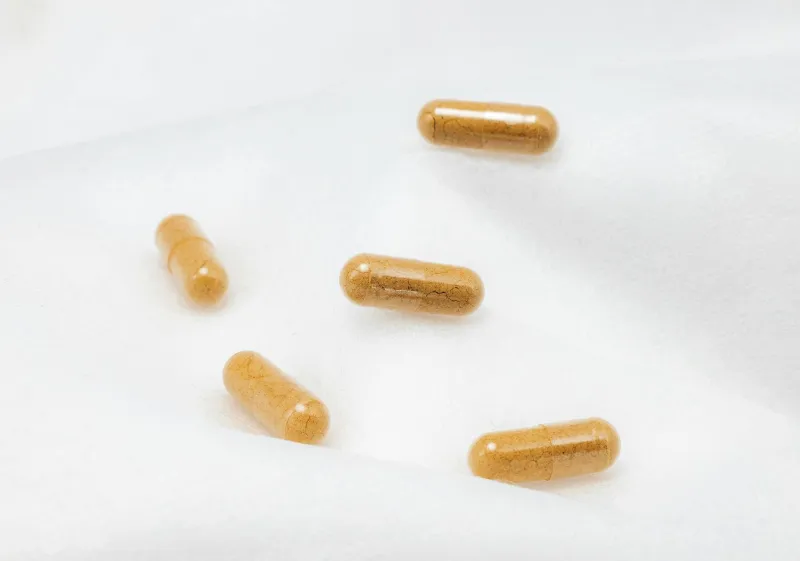
Berberine for Women: Benefits & Considerations
Berberine is a plant alkaloid extracted from herbs such as barberry, goldenseal, and Oregon grape. It has a long history in traditional Chinese and Ayurvedic medicine, and over the past two decades a substantial body of peer-reviewed research has examined its effects on metabolism. Berberine for women is increasingly discussed because it intersects directly with health challenges common in female physiology — insulin resistance, PCOS, weight regulation, and cardiovascular risk.
Why Women May Benefit from Berberine
Blood Sugar and Insulin Sensitivity
Berberine activates AMP-activated protein kinase (AMPK), a cellular energy sensor that improves glucose uptake and reduces hepatic glucose output. A landmark meta-analysis by Dong et al. (2013) pooled data from 14 randomised controlled trials and found that berberine significantly lowered fasting blood glucose compared to placebo or lifestyle control. Women with insulin resistance — whether from metabolic syndrome, prediabetes, or polycystic ovary syndrome — represent a group where this mechanism is especially relevant.
PCOS Management
Polycystic ovary syndrome affects a substantial proportion of women of reproductive age and is characterised by hyperinsulinaemia, androgen excess, and irregular cycles. A randomised trial by Wei et al. (2012) found that berberine was as effective as metformin in reducing waist circumference, improving insulin sensitivity, and lowering testosterone levels in women with PCOS. While berberine is not a prescription drug and must not be positioned as medical treatment, these findings are relevant for women exploring evidence-based lifestyle support.
Weight and Body Composition
Multiple studies have examined berberine's effects on body weight. The AMPK-activating mechanism inhibits lipogenesis and promotes fatty acid oxidation. A meta-analysis by Hu et al. (2012) found that berberine supplementation produced modest reductions in BMI compared to control in metabolic syndrome patients. Effects are modest and work best alongside dietary changes — berberine is not a stand-alone weight-loss solution.
Cardiovascular Risk Markers
Berberine has been shown to modestly lower LDL cholesterol and triglycerides in several RCTs. Women post-menopause face increasing cardiovascular risk, and preliminary evidence suggests berberine may support healthier lipid profiles alongside diet and exercise.
Hormonal and Life-Stage Notes
Berberine's effect on androgens in PCOS (reducing free testosterone) makes it relevant for women experiencing hirsutism or acne associated with high androgens. However, the hormonal effects are modulating rather than suppressive — berberine lowers excess androgens rather than reducing normal levels.
For women in perimenopause and menopause, berberine may indirectly support hormonal balance by improving insulin sensitivity, since insulin resistance worsens during menopause. There are no RCTs specifically examining berberine in menopausal hormone shifts, so claims in this area should remain appropriately qualified.
Dose Considerations
Most clinical studies used doses of 500 mg taken two to three times daily with meals, for a total of 1000–1500 mg per day. This schedule mirrors how AMPK activation works — berberine has a short half-life and benefits from divided dosing. OstroVit Berberine 90tabs (available at maxfit.ee) provides a convenient single-ingredient option in this range.
Effects typically take 4–8 weeks of consistent use to become apparent. Starting at a lower dose (500 mg once daily) and titrating up can help minimise initial gastrointestinal discomfort, which is the most common side effect.
Pregnancy and Safety Notes
Berberine is contraindicated in pregnancy. Animal studies and mechanistic evidence suggest it may cross the placenta and affect fetal development. It should also be avoided while breastfeeding. This is a firm, non-negotiable safety boundary.
Berberine inhibits cytochrome P450 enzymes (particularly CYP3A4 and CYP2D6), which means it can interact with many prescription drugs metabolised by those pathways — including some antidepressants, statins, and immunosuppressants. Women on any long-term medications should discuss berberine with their prescriber before starting.
Bottom Line
The evidence for berberine for women is most robust in the contexts of blood sugar regulation and PCOS management, where several well-designed RCTs show meaningful effects. Cardiovascular and weight benefits are real but modest and complement rather than replace lifestyle measures.
Berberine is not a supplement to take lightly — its drug-like potency means interactions and contraindications (especially pregnancy) must be taken seriously. For women without the relevant metabolic concerns, it offers fewer clear-cut benefits than for those with insulin resistance or PCOS.
Browse the full berberiin category at MaxFit.
References
- Dong, H., Wang, N., Zhao, L., & Lu, F. (2013). Berberine in the treatment of type 2 diabetes mellitus: a systematic review and meta-analysis. Evidence-Based Complementary and Alternative Medicine, 2012, 591654.
- Wei, W., Zhao, H., Wang, A., Sui, M., Liang, K., Deng, H., Ma, Y., Zhang, Y., Zhang, H., & Guan, Y. (2012). A clinical study on the short-term effect of berberine in comparison to metformin on the metabolic characteristics of women with polycystic ovary syndrome. European Journal of Endocrinology, 166(1), 99-105. https://pubmed.ncbi.nlm.nih.gov/22019891/
- Hu, Y., Ehli, E. A., Kittelsrud, J., Ronan, P. J., Perham, K., Sendber, T., Kittelsrud, M., Mulder, H., Amos, G., & Davies, G. E. (2012). Lipid-lowering effect of berberine in human subjects and rats. Phytomedicine, 19(10), 861-867. https://pubmed.ncbi.nlm.nih.gov/22739410/
FAQ
How long does it take for berberine to work in women?
Most clinical studies show meaningful changes in blood sugar and hormonal markers after 4–8 weeks of consistent use at 1000–1500 mg per day in divided doses. Weight changes, if any, typically emerge over 8–12 weeks.
Can women with PCOS take berberine instead of metformin?
A randomised trial found similar metabolic outcomes between berberine and metformin in PCOS (Wei et al., 2012), but berberine is not a prescription medication and should not be used as a substitute without discussing it with your doctor. It may be a supportive option alongside, or instead of, metformin for some women — under medical guidance.
Is berberine safe to take during pregnancy?
No. Berberine is contraindicated during pregnancy and breastfeeding. Animal studies suggest it may cross the placenta and affect fetal development. Discontinue use if you are pregnant or planning to become pregnant.



