
Common and Rare Side Effects of B Vitamins
The eight B vitamins (B1/thiamine, B2/riboflavin, B3/niacin, B5/pantothenic acid, B6/pyridoxine, B7/biotin, B9/folate, B12/cobalamin) share the distinction of being water-soluble — meaning excess amounts are generally excreted in urine rather than stored. This property makes B vitamin toxicity far less common than, for example, fat-soluble vitamin D. However, "generally excreted" does not mean "unlimited with no consequences," and several B vitamins have dose-dependent adverse effects.
B3 (Niacin) flush: The most immediately noticeable side effect associated with B vitamins is niacin flushing — a transient redness, warmth, and tingling of the skin, typically beginning 15–30 minutes after ingestion. This is a prostaglandin-mediated vascular response, not a true allergic reaction. It occurs primarily with nicotinic acid form and is mostly absent with nicotinamide (niacinamide). At high therapeutic doses, niacin can also cause hepatotoxicity — a concern for pharmaceutical doses, not typical supplement amounts.
B6 (Pyridoxine) neuropathy: B6 is the most clinically significant safety concern among B vitamins. Prolonged intake of high doses of pyridoxine has been associated with sensory peripheral neuropathy — numbness, tingling, and loss of proprioception in the extremities. A systematic review confirmed a dose-response relationship, with clear cases documented at daily intakes above the EFSA UL (Vrolijk et al., 2017). Importantly, the active coenzyme form pyridoxal-5-phosphate (P5P) appears to carry a lower risk of neuropathy than synthetic pyridoxine HCl at equivalent doses.
Upper Safe Limits for B Vitamins
EFSA has established tolerable upper intake levels (UL) for those B vitamins where sufficient data exist:
| B Vitamin | EFSA UL (adults) |
|---|---|
| B3 Niacin (nicotinic acid) | 10 mg/day (as nicotinic acid); 900 mg/day as nicotinamide |
| B6 (pyridoxine) | 25 mg/day |
| B9 (folic acid, synthetic) | 1,000 µg/day |
For B1, B2, B5, B7, and B12, EFSA has not established formal ULs because no adverse effects from high intakes have been reliably documented. B12 in particular has no established UL — even intakes thousands of times the recommended daily value appear to be safe for most healthy adults, as absorption is tightly regulated.
Many B-complex supplements sold in Estonia and across Europe contain doses well within these ULs. Products should be evaluated individually — check the label for the B6 dose in particular.
Drug and Nutrient Interactions
B vitamins have several clinically relevant interactions:
- Metformin and B12: Long-term metformin use (a common diabetes medication) reduces B12 absorption by interfering with intrinsic factor in the gut. Monitoring B12 status is recommended for people on metformin.
- Folate and methotrexate: Methotrexate (used in rheumatoid arthritis and some cancers) acts as a folate antagonist. Folate supplementation is often co-prescribed, but doses should be medically supervised.
- B6 and levodopa: High-dose B6 (pyridoxine) can reduce the effectiveness of levodopa (used for Parkinson's disease) by accelerating its peripheral metabolism. Patients on levodopa should avoid high-dose B6 unless specifically advised otherwise by their physician.
- B9 and undiagnosed B12 deficiency: Supplementing folate without addressing B12 deficiency can correct the haematological signs of B12 deficiency (megaloblastic anaemia) while allowing the neurological damage to progress undetected. This is a genuine safety concern, particularly for older adults and vegans.
Who Should Be Cautious
- People with kidney disease: Impaired kidneys may not efficiently excrete excess B vitamins, particularly B6 and B12 in very large doses.
- Pregnant women and folate: Adequate folate (ideally 400 µg/day of supplemental folic acid) before and in early pregnancy is strongly recommended to reduce neural tube defect risk. However, synthetic folic acid above the 1,000 µg UL is not recommended without medical supervision.
- Older adults: B12 absorption declines with age due to reduced gastric acid production. Oral high-dose B12 or sublingual B12 supplements may be needed to maintain adequate status.
- People with MTHFR polymorphisms: Some individuals have genetic variants that reduce their ability to convert synthetic folic acid to its active form. Methylfolate (5-MTHF) is a practical alternative.
Quality Considerations
The form of B vitamins matters more than often recognised. Active, coenzyme forms (pyridoxal-5-phosphate for B6, methylcobalamin for B12, methylfolate for B9, riboflavin-5-phosphate for B2) are already metabolically active and may be preferable for people with absorption or conversion issues. In-stock options at maxfit.ee include BIOTECHUSA B-Complex 60tab, ICONFIT Capsules B-Vitamin Complex N90, and 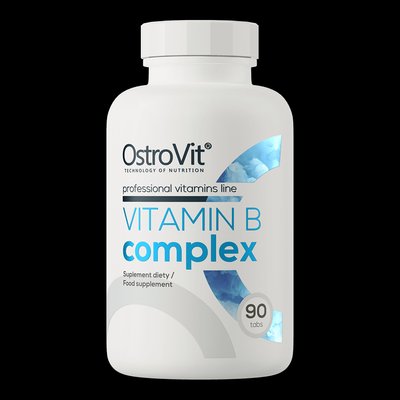 OstroVit Vitamin B Complex€6.90 In stock 90tabs. Browse the full range in the B vitamin category.
References
Vrolijk, M. F., Opperhuizen, A., Jansen, E. H. J. M., Hageman, G. J., Bast, A., & Haenen, G. R. M. M. (2017). The vitamin B6 paradox: supplementation with high concentrations of pyridoxine leads to decreased vitamin B6 function. Toxicology in Vitro, 44, 206–212. https://pubmed.ncbi.nlm.nih.gov/28716455/
EFSA Panel on Dietetic Products, Nutrition and Allergies. (2006). Tolerable Upper Intake Levels for vitamins and minerals. European Food Safety Authority.
Aroda, V. R., Edelstein, S. L., Goldberg, R. B., Knowler, W. C., Marcovina, S. M., Orchard, T. J., Bray, G. A., Mathews, D. R., Kitabchi, A. E., Nathan, D. M., & Diabetes Prevention Program Research Group. (2016). Long-term metformin use and vitamin B12 deficiency in the Diabetes Prevention Program Outcomes Study. Journal of Clinical Endocrinology & Metabolism, 101(4), 1754–1761. https://pubmed.ncbi.nlm.nih.gov/26900641/
FAQ
Can I take a B-complex supplement every day?
For most healthy adults, daily B-complex supplementation at standard doses found in typical supplements is safe. The main concern is the B6 dose — check that it is below 25 mg/day. At label-typical doses in reputable supplements, B-complex is well-tolerated long-term.
Why does my urine turn yellow after taking B vitamins?
This is caused by riboflavin (B2), which is naturally bright yellow. Excess riboflavin from supplements is excreted in urine, giving it a vivid yellow or neon colour. This is harmless and simply indicates that the supplement has been absorbed and the excess excreted normally.
Do B vitamins actually boost energy?
B vitamins are co-factors in energy metabolism pathways, but they do not generate energy on their own. If you are deficient in B vitamins, supplementation can restore normal energy metabolism. If your B vitamin status is already sufficient, additional supplementation beyond needs does not produce extra energy — the excess is simply excreted.



