When to Take Ashwagandha: Optimal Timing
Ashwagandha (Withania somnifera) is one of the most researched adaptogens in sports nutrition and general wellness. Its primary documented effects are cortisol modulation, stress reduction, and — in some studies — improvements in sleep quality and strength. Ashwagandha timing matters because its mechanisms of action are not fully instantaneous: the adaptogenic effects accumulate over weeks, while its mild sedative properties may be more relevant around sleep.
With Food or Without?
Ashwagandha root extracts — particularly the standardised KSM-66 and Sensoril forms used in most clinical research — are generally better tolerated when taken with food. The withanolides in ashwagandha can cause mild gastric irritation in some people, especially at higher doses, when taken on an empty stomach. A small meal or a glass of milk (a traditional Ayurvedic preparation method) significantly reduces this issue. Clinical trials typically dose ashwagandha with meals without noting this as a methodological concern (Chandrasekhar et al., 2012), suggesting food co-administration is the practical standard.
Time of Day and Training
Morning Dosing
For athletes focused primarily on the cortisol-modulating and stress-adaptation aspects of ashwagandha, morning dosing is logical. Cortisol follows a diurnal pattern, peaking in the morning (the cortisol awakening response). Taking ashwagandha with breakfast aligns supplementation with this peak, and regular morning use may help blunt excessive cortisol reactivity over time. Morning dosing works particularly well for those who do not want any sedation risk interfering with daytime productivity.
Evening or Pre-Sleep Dosing
For those using ashwagandha primarily for sleep quality or recovery, an evening dose taken 30–60 minutes before bed is supported by the evidence. A double-blind RCT found that ashwagandha root extract supplementation significantly improved sleep quality, sleep onset latency, total sleep time, and subjective well-being in both healthy adults and those with insomnia (Langade et al., 2019). The mild GABAergic and sedative withanolide activity likely underlies this effect.
Around Training
Some athletes take ashwagandha as part of a pre-workout or post-workout protocol based on research showing improvements in resistance training performance. A randomised controlled trial found that KSM-66 ashwagandha supplementation was associated with significantly greater gains in muscle strength and recovery after resistance training over an 8-week period (Wankhede et al., 2015). Pre-workout timing (with a small meal 30–60 minutes before training) or post-workout dosing with a recovery meal are both reasonable approaches for this goal.
Split Versus Single Dose
Most clinical trials use a split-dose protocol — two doses per day (typically morning and evening) — rather than a single large dose. This is likely because the bioactive withanolides have a plasma half-life that benefits from sustained exposure. If your total daily dose is moderate (equivalent to 300–600 mg KSM-66 extract), a single dose once daily is also practical for adherence. The choice depends on your primary goal: for sleep, a single evening dose; for general stress adaptation, morning and evening split.
Interactions Affecting Timing
Several interactions are worth noting:
- Sedatives and sleep medications — ashwagandha has mild sedative properties; combining with other sedatives may potentiate effects. Take evening doses several hours apart from any prescription sleep aid.
- Thyroid medications — ashwagandha may modulate thyroid hormones in some individuals. Those on thyroid medication should monitor and discuss with their physician.
- Immunosuppressants — ashwagandha has immunomodulatory effects; this is a theoretical concern for immunocompromised individuals.
Practical Schedule
A sensible ashwagandha timing protocol:
- General stress and cortisol support — 300 mg KSM-66 equivalent with breakfast and 300 mg with dinner
- Sleep focus — 300–600 mg with a small meal or warm milk 30–60 minutes before bed
- Athletic performance — 300–600 mg with a meal 30–60 minutes pre-training, or post-training with recovery food
At maxfit.ee you will find ICONFIT Capsules Ashwagandha N90, OstroVit KSM-66 Ashwagandha VEGE 120caps, 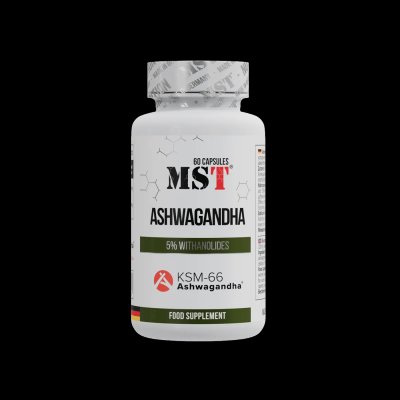 MST Ashwagandha KSM66€16.90 In stock 60caps, and
 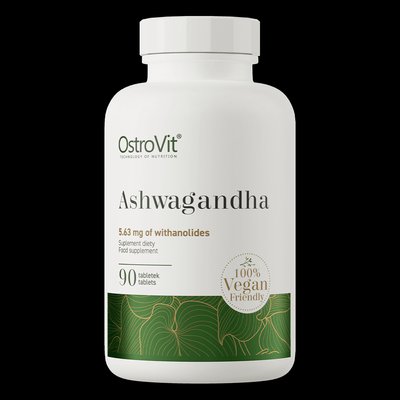 OstroVit Ashwagandha VEGE€7.90 In stock 90tabs — all using standardised extracts suitable for consistent timing protocols.
FAQ
Should I take ashwagandha in the morning or evening?
Both work. Morning is better for cortisol-focus and those who want no daytime sedation. Evening is better for sleep quality and recovery. Many people split the dose between morning and evening for combined benefits.
How long does ashwagandha take to work?
Adaptogenic effects — cortisol reduction, stress resilience — typically require 4–8 weeks of daily use to become apparent. Sleep improvements may be noticed sooner, within 1–2 weeks, due to the more direct GABAergic mechanism.
Can I take ashwagandha with caffeine?
Yes. Ashwagandha does not directly antagonise caffeine. However, if you take ashwagandha pre-workout and use a caffeinated pre-workout, the combined stimulant load and adaptogen support are complementary rather than conflicting.
References
Chandrasekhar, K., Kapoor, J., & Anishetty, S. (2012). A prospective, randomized double-blind, placebo-controlled study of safety and efficacy of a high-concentration full-spectrum extract of Ashwagandha root in reducing stress and anxiety in adults. Indian Journal of Psychological Medicine, 34(3), 255-262. https://pubmed.ncbi.nlm.nih.gov/23439798/
Langade, D., Kanchi, S., Salve, J., Debnath, K., & Ambegaokar, D. (2019). Efficacy and safety of Ashwagandha (Withania somnifera) root extract in insomnia and anxiety: A double-blind, randomized, placebo-controlled study. Cureus, 11(9), e5797. https://pubmed.ncbi.nlm.nih.gov/31728244/
Wankhede, S., Langade, D., Joshi, K., Sinha, S. R., & Bhattacharyya, S. (2015). Examining the effect of Withania somnifera supplementation on muscle strength and recovery: a randomized controlled trial. Journal of the International Society of Sports Nutrition, 12, 43. https://pubmed.ncbi.nlm.nih.gov/26609282/



