
Is Long-Term Ashwagandha Use Safe?
Ashwagandha (Withania somnifera) has moved from traditional Ayurvedic medicine into mainstream sports and wellness supplementation remarkably quickly. Short-term studies on stress reduction, cortisol modulation, and sleep quality have generated enthusiasm. But a question that receives less attention is: what happens with long-term use? Is it safe to take ashwagandha for months or years? And do you need to cycle off?
What Long-Term Studies Show
Most clinical trials of ashwagandha have been short — typically 8 to 12 weeks. The longest well-designed trials extending beyond this are relatively rare. A 12-week randomized, double-blind trial by Chandrasekhar et al. (2012) showed significant reductions in serum cortisol and self-reported stress scores, establishing a credible short-term safety and efficacy profile.
Evidence for safety beyond 12 weeks is more limited. Some traditional use data suggest prolonged consumption at reasonable doses in healthy adults has not been associated with systematic toxicological concerns, but this is population observation, not controlled clinical data.
A small number of case reports have associated ashwagandha with liver injury — which appears rare but real (Björnsson et al., 2020). These cases involved varying doses and durations, and causality is difficult to establish definitively from case reports, but it is a signal worth acknowledging.
Upper Safe Limits Over Time
There is no formally established tolerable upper intake level for ashwagandha from regulatory bodies in the EU. Most studied doses in clinical trials range from 300 mg to 600 mg per day of standardized root extract (such as KSM-66 or Sensoril). Some trials used higher doses for short periods, but evidence for the safety of higher doses over extended periods is thin.
The conservative approach is to stay within the range studied in trials (300–600 mg/day of a standardized extract), not to escalate doses based on tolerance, and to monitor for any signs of liver discomfort.
Do You Need to Cycle?
No published controlled study has specifically evaluated cycling protocols for ashwagandha. The concept of cycling — using a supplement for a period, then taking a break — comes primarily from traditional use recommendations and precautionary reasoning, not from controlled human data.
Given the limited long-term safety data and the rare but real hepatotoxicity signal, periodic breaks (for example, using for 8–12 weeks and then taking 4 weeks off) are a reasonable precautionary approach. This is precaution, not confirmed necessity.
Monitoring
For most healthy adults taking ashwagandha at normal doses for periods within studied timeframes, no specific monitoring is required. However, in people with pre-existing liver conditions, those taking hepatotoxic medications, or individuals using other supplements with potential liver burden, baseline liver enzyme monitoring is a sensible precaution.
Symptoms to watch for include unexplained fatigue, jaundice, dark urine, or upper-right abdominal discomfort — these warrant stopping the supplement and seeking medical advice.
Honest Verdict
Ashwagandha has a credible short-term safety and efficacy profile for stress, cortisol, and sleep-related outcomes. The long-term data are genuinely thin. The hepatotoxicity signal, while rare, is important to acknowledge. At reasonable doses within studied ranges, the risk appears low for healthy adults using it cyclically. It is not a supplement that should be taken indefinitely at escalating doses without medical supervision.
Products available at maxfit.ee include ICONFIT Capsules Ashwagandha N90, OstroVit KSM-66 Ashwagandha VEGE 120caps, 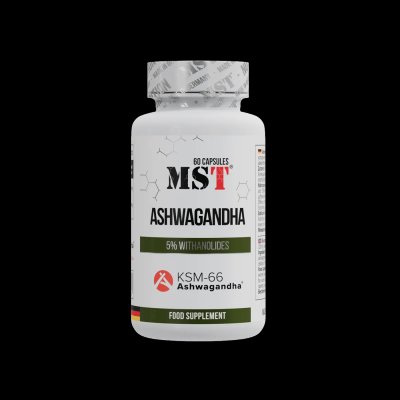 MST Ashwagandha KSM66€16.90 In stock 60caps, and
 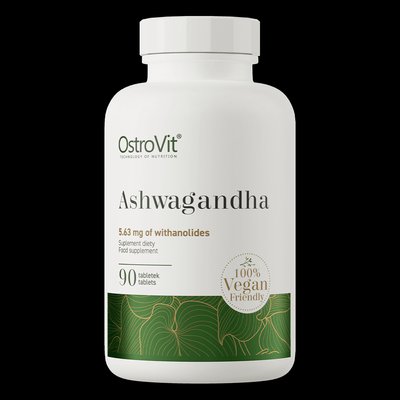 OstroVit Ashwagandha VEGE€7.90 In stock 90tabs. KSM-66 is a root extract with the most clinical trial data behind it, which is worth considering when selecting a product.
FAQ
How long can you safely take ashwagandha?
Based on clinical trial evidence, 8–12 weeks of use at standard doses has a well-characterized safety profile. For longer periods, the evidence thins significantly. Periodic breaks are a reasonable precaution given limited long-term data and a rare hepatotoxicity signal.
Does ashwagandha affect the thyroid?
Some small studies suggest ashwagandha may modestly increase thyroid hormone levels. This could be relevant for people with thyroid conditions or those on thyroid medication. Anyone in this situation should consult a healthcare provider before using ashwagandha.
Is KSM-66 better than other ashwagandha extracts?
KSM-66 is among the most studied standardized root extracts and appears in multiple well-designed clinical trials. This does not mean other extracts are ineffective, but KSM-66 has more published human trial data behind specific efficacy claims (Chandrasekhar et al., 2012).
References
Chandrasekhar, K., Kapoor, J., & Anishetty, S. (2012). A prospective, randomized double-blind, placebo-controlled study of safety and efficacy of a high-concentration full-spectrum extract of Ashwagandha root in reducing stress and anxiety in adults. Indian Journal of Psychological Medicine, 34(3), 255-262. https://pubmed.ncbi.nlm.nih.gov/23439798/
Bjornsson, H. K., Bjornsson, E. S., Avula, B., Khan, I. A., & Navarro, V. J. (2020). Ashwagandha-induced liver injury: A case series from Iceland and the US Drug-Induced Liver Injury Network. Liver International, 40(4), 825-829.
Wankhede, S., Langade, D., Joshi, K., Sinha, S. R., & Bhattacharyya, S. (2015). Examining the effect of Withania somnifera supplementation on muscle strength and recovery. Journal of the International Society of Sports Nutrition, 12, 43. https://pubmed.ncbi.nlm.nih.gov/26609282/



