
Ashwagandha for Women: Benefits & Considerations
Ashwagandha (Withania somnifera) is one of the best-known adaptogenic plants, and its use has grown explosively over the past decade. While studies often include both sexes, there are specific reasons why ashwagandha for women deserves particular attention. This article reviews the evidence and practical considerations.
Why Women May Need Ashwagandha
Women's lives include hormonal cycles — hot flushes, premenstrual tension, perimenopause — that create a context where an adaptogen may be useful. The primary studied mechanism is modulation of the hypothalamic-pituitary-adrenal (HPA) axis, which influences cortisol and the stress response.
A meta-analysis found that ashwagandha extract (KSM-66 or Sensoril) significantly reduced perceived stress and cortisol levels compared to placebo (Pratte et al., 2012).
Hormonal and Life-Stage Notes
Animal studies and a few small human trials suggest ashwagandha may support thyroid hormone levels. However, large-scale RCTs specifically examining women's hormones are lacking — caution is warranted in this area.
Perimenopause: one RCT found that ashwagandha extract significantly improved quality-of-life scores in perimenopausal women, including sleep and mood, compared to placebo (Gopal et al., 2021).
Libido: a small RCT showed ashwagandha's potential positive effect on women's sexual satisfaction, but the sample was small and the finding needs replication (Dongre et al., 2015).
ICONFIT Capsules Ashwagandha N90 and OstroVit KSM-66 Ashwagandha VEGE 120caps are KSM-66 standardised extracts available at maxfit.ee — the same form used in most major studies.
Dose Considerations for Women
Most studies use daily doses of 300–600 mg standardised extract. KSM-66 and Sensoril are the most thoroughly studied extract forms. Starting with a lower dose and observing the response is a sensible approach.
Study durations are typically 8–12 weeks — data on long-term use are more limited.
Pregnancy and Safety Notes
Ashwagandha is not recommended during pregnancy — animal studies suggest a uterine-stimulating effect and increased miscarriage risk. During breastfeeding, insufficient safety data are available. Pregnant and breastfeeding women should avoid ashwagandha.
Other safety notes: some users experience gastrointestinal discomfort. Those with thyroid conditions or taking thyroid medications should consult a doctor first.
Bottom Line
The evidence base for ashwagandha for women in stress reduction is moderately strong. Hormonal and libido effects are intriguing but need further confirmation. MST Ashwagandha KSM66 60caps and 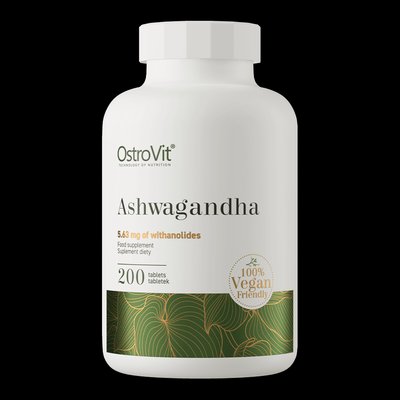 OstroVit Ashwagandha VEGE€10.90 In stock 200 tabs are available at maxfit.ee. Pregnancy is a clear contraindication.
FAQ
Does ashwagandha help with premenstrual syndrome (PMS)?
Some studies have found positive effects on mood and stress, which may indirectly ease PMS symptoms. Direct PMS-specific trials are sparse — the evidence is currently indirect.
Does ashwagandha affect oestrogen levels?
Current evidence does not confirm direct oestrogen elevation. Ashwagandha acts primarily through the HPA axis (stress hormones), not as a direct oestrogen agonist.
What is the best time to take ashwagandha?
Most studies administer it with food, either morning or evening. Given its calming properties, some users prefer an evening dose.
References
Pratte, M. A., Nanavati, K. B., Young, V., & Morley, C. P. (2012). An alternative treatment for anxiety: a systematic review of human trial results reported for the Ayurvedic herb ashwagandha. Journal of Alternative and Complementary Medicine, 18(12), 1153–1155.
Gopal, S., Ajgaonkar, A., Kanchi, M., Kaundinya, A., Thakare, V., Chauhan, S., & Langade, D. (2021). Effect of an ashwagandha (Withania somnifera) root extract on climacteric symptoms in women during perimenopause. Journal of Obstetrics and Gynaecology Research, 47(12), 4414–4425. https://pubmed.ncbi.nlm.nih.gov/34553463/
Dongre, S., Langade, D., & Bhattacharyya, S. (2015). Efficacy and safety of ashwagandha (Withania somnifera) root extract in improving sexual function in women. BioMed Research International, 2015, 284154. https://pubmed.ncbi.nlm.nih.gov/26504795/



