
Age-Related Need: Why Older Adults Consider Ashwagandha
Ashwagandha (Withania somnifera) is one of the most studied adaptogens in contemporary nutrition science. While it has a long history in Ayurvedic practice, it has attracted rigorous clinical research only in the past two decades. For adults over 50, the areas of greatest potential relevance are stress resilience, cognitive function, physical performance, and hormonal changes that accompany ageing.
After 50, several physiological shifts occur that create a plausible rationale for adaptogen use. Cortisol regulation becomes less precise, sleep architecture changes, muscle mass decline accelerates (sarcopenia), and sex hormone levels shift. Ashwagandha's primary bioactive compounds — withanolides — are thought to modulate HPA axis activity and reduce cortisol output under chronic stress, which addresses several of these age-related concerns simultaneously.
Absorption Changes With Age
The gastrointestinal tract changes with ageing in ways that can affect supplement bioavailability. Gastric acid secretion declines in some older adults, and intestinal motility may slow. Lipid-soluble compounds can be affected by changes in bile production.
The good news for ashwagandha is that its standardised root extracts are relatively well absorbed across age groups. Studies in older adult populations have used the same dose ranges as younger cohorts without reporting altered absorption concerns. The KSM-66 and Sensoril extract forms used in most contemporary supplements are standardised to withanolide content, which provides consistency regardless of age-related gastric changes.
Taking ashwagandha with a small meal or milk (as traditional Ayurvedic practice suggests) may marginally enhance absorption of the fat-soluble withanolides and also reduces the possibility of mild gastric discomfort.
Evidence-Backed Benefits After 50
Stress and cortisol: Chandrasekhar et al. (2012) conducted a randomised, double-blind, placebo-controlled trial and found that ashwagandha root extract significantly reduced scores on perceived stress scales and reduced serum cortisol levels compared with placebo over an eight-week period.
Physical performance and muscle: A study by Wankhede et al. (2015) in healthy adults using ashwagandha supplementation alongside resistance training found significantly greater gains in muscle strength and recovery compared with placebo. While the participant age range was broad, declining muscle mass in older adults makes this finding particularly relevant.
Cognitive function: A randomised trial by Choudhary et al. (2017) found that ashwagandha extract improved memory, executive function, sustained attention, and information-processing speed in healthy adults with self-reported cognitive issues.
For older adults at maxfit.ee, ICONFIT Capsules Ashwagandha N90 and OstroVit KSM-66 Ashwagandha VEGE 120caps represent well-standardised options using established extract forms.
Dose and Safety for Older Adults
The doses used in the clinical trials cited above generally ranged from around 300 mg to 600 mg of standardised root extract per day. There is no established reason for older adults to use substantially higher or lower doses unless guided by a healthcare professional.
Ashwagandha has a generally favourable safety profile in short- to medium-term use. The most commonly reported side effects are mild gastrointestinal discomfort and, in rare cases, drowsiness. These are typically dose-related and transient.
MST Ashwagandha KSM66 60caps is another standardised option available at maxfit.ee.
Interactions With Medication
This is the area where older adults must exercise the most caution. Ashwagandha's effects on cortisol and thyroid hormones can interact with:
- Thyroid medications: Ashwagandha may increase thyroid hormone levels in some individuals. Those taking levothyroxine or other thyroid drugs should monitor thyroid function when starting supplementation.
- Immunosuppressants: Ashwagandha has immune-modulating properties; those on immunosuppressant therapy should consult a physician before use.
- Sedatives and anxiolytics: Some evidence suggests mild GABAergic activity; combining with benzodiazepines or other CNS depressants warrants caution.
- Antidiabetic drugs: Ashwagandha may lower blood glucose in some users; people on diabetes medication should monitor glucose levels and discuss with a doctor.
When to Supplement
Ashwagandha is most rationally used in periods of sustained stress, during training programmes where recovery is a priority, or when cognitive sharpness is a concern. It is not a first-line intervention for any medical condition.
Older adults with polypharmacy (multiple medications) should ideally discuss ashwagandha with a pharmacist or physician before starting. For otherwise healthy adults over 50 without complex medication regimens, it represents a reasonably well-evidenced option for stress resilience and mild cognitive support.
FAQ
Is ashwagandha safe for people over 65?
The clinical trials to date include adults in their 50s and 60s. Very limited data exist for adults over 70. For this group, and for anyone with significant medical conditions or complex medication regimens, a conversation with a healthcare provider is warranted before starting.
Does ashwagandha affect blood pressure in older adults?
Some small studies have noted mild reductions in blood pressure. Adults on antihypertensive medication should monitor their levels when starting and report any changes to their doctor.
How long before I notice effects?
Most clinical trials report significant effects after four to eight weeks of consistent use. Expecting results in the first week is unrealistic.
References
Chandrasekhar, K., Kapoor, J., & Anishetty, S. (2012). A prospective, randomized double-blind, placebo-controlled study of safety and efficacy of a high-concentration full-spectrum extract of Ashwagandha root in reducing stress and anxiety in adults. Indian Journal of Psychological Medicine, 34(3), 255-262. https://pubmed.ncbi.nlm.nih.gov/23439798/
Wankhede, S., Langade, D., Joshi, K., Sinha, S. R., & Bhattacharyya, S. (2015). Examining the effect of Withania somnifera supplementation on muscle strength and recovery: a randomized controlled trial. Journal of the International Society of Sports Nutrition, 12, 43. https://pubmed.ncbi.nlm.nih.gov/26609282/
Choudhary, D., Bhattacharyya, S., & Bose, S. (2017). Efficacy and safety of Ashwagandha (Withania somnifera) root extract in improving memory and cognitive functions. Journal of Dietary Supplements, 14(6), 599-612. https://pubmed.ncbi.nlm.nih.gov/28471731/
Ashwagandha and Muscle Preservation in Ageing
One of the most clinically relevant applications of ashwagandha for adults over 50 is its potential to slow age-related muscle loss. Sarcopenia — the progressive loss of skeletal muscle mass and strength associated with ageing — accelerates from the mid-50s onward and is linked to frailty, falls, and reduced quality of life. The fact that Wankhede et al. (2015) found ashwagandha supplementation combined with resistance training produced significantly greater muscle strength gains than placebo is therefore particularly meaningful for this demographic.
The mechanism likely involves cortisol reduction — chronic high cortisol is catabolic to muscle tissue — and possibly direct anabolic signalling through testosterone support in some populations. For older adults who engage in regular strength training, ashwagandha may function as a recovery and adaptation support compound, not just a stress supplement.
Resistance training combined with adequate protein and ashwagandha represents a scientifically coherent multi-pronged approach to sarcopenia prevention in adults over 50.
Quality Markers to Look For
Not all ashwagandha products are equivalent. The key quality markers are:
- Standardised extract form: KSM-66 (standardised to withaferin A + withanolides from root only) and Sensoril (standardised from root and leaf) are the two most clinically studied extract types. Both appear in the clinical trials referenced in this article.
- Withanolide content: Typically expressed as a percentage; higher is not always better — what matters is that the percentage matches what was used in positive trials (generally 2.5% to 5% withanolides).
- Third-party testing: For older adults who may be taking medications, verifying that a product is free from contaminants is particularly important.
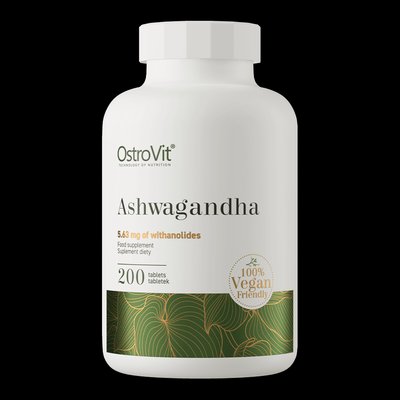 OstroVit Ashwagandha VEGE€10.90 In stock 90tabs and Olimp Ashwagandha 600 Sport 60caps are additional options available at maxfit.ee, offering different formats and dosing options for older adults to compare.
Practical Starting Protocol for Over-50s
Given the considerations above, a reasonable protocol for a healthy adult over 50 starting ashwagandha would be:
- Start with a lower dose for the first two weeks to assess tolerance.
- Take with a meal (ideally containing fat) to optimise absorption and minimise gastric sensitivity.
- If taking any medication, complete a 5-minute review with a pharmacist before starting.
- Assess perceived stress, sleep quality, and energy at the four-week and eight-week marks.
- Cycle off after twelve weeks and reassess whether continuation is warranted.
This structured approach is more clinically rational than indefinite supplementation without periodic reassessment.



