
What Is Ashwagandha and What Does It Do?
Ashwagandha (Withania somnifera) is an adaptogenic herb from Ayurvedic medicine. Adaptogens are plants that may help the body maintain balance under physical and psychological stress. The root extract is the most studied part of the plant, and most research focuses on a specific extract called KSM-66, which is standardised for withanolide content.
The primary areas where ashwagandha has been researched include stress and cortisol modulation, sleep quality, and physical performance. A randomised, double-blind trial found that adults taking a root extract reported significantly lower perceived stress scores compared with placebo (Chandrasekhar et al., 2012). Another study noted improvements in sleep quality and morning alertness with an ashwagandha root extract (Langade et al., 2019).
How to Start Taking Ashwagandha
For beginners, starting with a lower dose for the first few weeks is sensible. Most clinical trials have used doses in the range of 300–600 mg of a standardised extract per day. Products at maxfit.ee such as OstroVit KSM-66 Ashwagandha VEGE 120caps, ICONFIT Capsules Ashwagandha N90, and 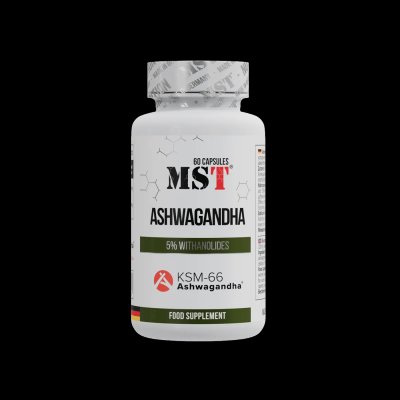 MST Ashwagandha KSM66€16.90 In stock 60caps supply standardised KSM-66 extract. Check the label for the per-serving amount and withanolide content.
Ashwagandha can be taken with or without food. Some people notice mild stomach discomfort if taken on an empty stomach, so a meal is often recommended. Consistent daily intake is more important than the exact time of day.
What to Expect and When
Ashwagandha is not a stimulant — you will not feel an immediate effect. Most studies measure outcomes after 4–12 weeks of consistent use. Sleep improvements are often reported first, typically within 2–4 weeks. Stress and mood benefits tend to emerge over 4–8 weeks. Physical performance changes, if any, appear later and are more variable across individuals.
Managing expectations matters. Ashwagandha is a supportive supplement, not a replacement for adequate sleep, nutrition, and exercise. If your stress levels are driven by lifestyle factors, address those alongside supplementation.
Common Mistakes Beginners Make
Expecting overnight results. Ashwagandha works gradually. Taking it for a few days and concluding it does not work is the most common error.
Picking an unstandardised product. Products that do not specify withanolide content or extract type may not match what was used in clinical trials. Look for KSM-66 or Sensoril on the label.
Taking it inconsistently. Skipping days disrupts the gradual accumulation of effects. Set a daily reminder.
Ignoring contraindications. Ashwagandha may interact with thyroid medications and immunosuppressants. Pregnant or breastfeeding individuals should avoid it. If you are on prescription medication, check with your doctor first.
Choosing the Right Product
When comparing options, look for:
- A named extract (KSM-66 or Sensoril) with a stated withanolide percentage
- A transparent dose per serving
- Third-party testing or certification where available
Additional products available at maxfit.ee include 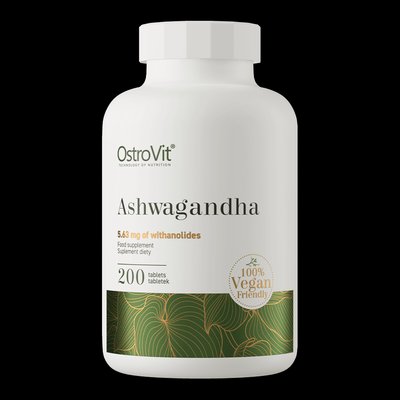 OstroVit Ashwagandha VEGE€10.90 In stock 90tabs, BIOTECHUSA Ashwagandha 60 caps, and NOW Ashwagandha 450mg 90 veg caps. Capsule and tablet forms are the most convenient for consistent daily dosing.
FAQ
Can I take ashwagandha every day?
Yes. Most clinical trials administering ashwagandha ran for 8–12 weeks of daily intake. Periodic breaks of a few weeks are sometimes recommended but are not supported by strong evidence as necessary.
Does ashwagandha cause drowsiness?
At standard doses, drowsiness is not commonly reported as a side effect in clinical studies. However, because it may support sleep quality, some people choose to take it in the evening.
How long before ashwagandha begins to work?
Most people notice effects after 4–8 weeks of consistent daily use. Research on sleep quality has recorded measurable improvements in as little as 2 weeks (Langade et al., 2019).
References
Chandrasekhar, K., Kapoor, J., & Anishetty, S. (2012). A prospective, randomized double-blind, placebo-controlled study of safety and efficacy of a high-concentration full-spectrum extract of ashwagandha root in reducing stress and anxiety in adults. Indian Journal of Psychological Medicine, 34(3), 255–262. https://pubmed.ncbi.nlm.nih.gov/23439798/
Langade, D., Kanchi, S., Salve, J., Debnath, K., & Ambegaokar, D. (2019). Efficacy and safety of ashwagandha (Withania somnifera) root extract in insomnia and anxiety: A double-blind, randomized, placebo-controlled study. Cureus, 11(9), e5797. https://pubmed.ncbi.nlm.nih.gov/31728244/
Wankhede, S., Langade, D., Joshi, K., Sinha, S. R., & Bhattacharyya, S. (2015). Examining the effect of Withania somnifera supplementation on muscle strength and recovery: A randomized controlled trial. Journal of the International Society of Sports Nutrition, 12, 43. https://pubmed.ncbi.nlm.nih.gov/26609282/



