What Is Alpha-Lipoic Acid (ALA) and How Does Stacking Work
Alpha-lipoic acid (ALA) is a natural compound that functions as both a water-soluble and fat-soluble antioxidant — a rare property distinguishing it from other antioxidants. ALA is synthesized in small quantities by the body and is present in food (primarily meat and green vegetables), but as a supplement it is primarily used at higher doses to support antioxidant protection, energy metabolism, and blood glucose balance.
"Stacking" means using multiple supplements together to achieve a synergistic effect. For ALA, stacking is particularly important because it:
- Regenerates other antioxidants (vitamins C and E, glutathione)
- Increases intracellular glutathione synthesis
- Influences insulin signaling pathways linked to glucose uptake
Evidence-Based Synergies
ALA + Vitamin C
Vitamin C and ALA complement each other in creating antioxidant protection. ALA can regenerate oxidized vitamin C, extending its activity (Packer et al., 2001). When taken together they have a stronger antioxidant effect than either alone.
ALA + Vitamin E
Vitamin E (tocopherol) is a fat-soluble antioxidant, while ALA operates on both sides. ALA can regenerate oxidized vitamin E, working synergistically. Combined, antioxidant protection against oxidative stress is more comprehensive (Packer et al., 2001).
ALA + B Vitamins (especially B1 and biotin)
ALA influences thiamine (vitamin B1) utilization in the body. B1 is needed for mitochondrial energy metabolism, which ALA also supports. The combination benefits energy production support. For biotin (B7), an important note: ALA at high doses may compete with biotin transport — if taking ALA at high doses, keep biotin supplementation timed separately.
ALA + Magnesium
Magnesium is essential for mitochondrial function. ALA and magnesium together support energy metabolism synergistically. ALA combined with magnesium may be particularly useful for athletes training intensively.
ALA + Creatine (indirect)
ALA may increase cellular insulin sensitivity, meaning improved creatine transport into muscle cells. This combination is popular during creatine loading phases (Burke et al., 2003).
Antagonistic Combinations
ALA + Biotin at high dose
ALA, particularly at doses above 600 mg per day, may inhibit biotin transport. If you use a biotin supplement for hair or nail health, keep ALA and biotin at least 2 hours apart.
ALA + Thyroid medications
ALA influences thyroid hormone metabolism. People taking levothyroxine (L-T4) should consult a doctor before starting ALA supplementation.
ALA + Ketogenic diet at high doses
ALA stimulates glucose transporters (GLUT4); on a ketogenic diet this may affect ketosis maintenance. Moderate doses (100-300 mg) are likely safe even on a ketogenic diet.
Timing Within a Stack
| Supplement | Optimal timing with ALA |
|---|---|
| Vitamin C | Together with ALA (reinforcing effect) |
| Vitamin E | With a fat-containing meal |
| Magnesium | Evening (ALA preferably morning) |
| Creatine | Simultaneously with elevated insulin |
| Biotin | At least 2 hours separate from ALA |
ALA absorbs better on an empty stomach (30 min before a meal). High doses (600+ mg) should be divided across multiple daily doses.
Sample Stacks by Goal
Antioxidant protection stack
- ALA 300 mg morning on empty stomach
- Vitamin C 500 mg with ALA
- Vitamin E 200 IU with dinner
- Omega-3 (EPA/DHA) with dinner
Athlete energy + recovery stack
- ALA 200-300 mg pre-workout
- Magnesium malate in the evening
- B-vitamin complex in the morning
Blood sugar regulation support
- ALA 300-600 mg with food
- Creatine 3-5 g with food
- Magnesium citrate 300 mg
What to Avoid
- Alcohol — alcohol increases oxidative stress and weakens ALA's antioxidant action
- Insufficient protein intake — ALA supports glutathione synthesis, which requires the amino acid cysteine; low protein intake limits this
- Biotin supplement at same time as high-dose ALA — separate the timing
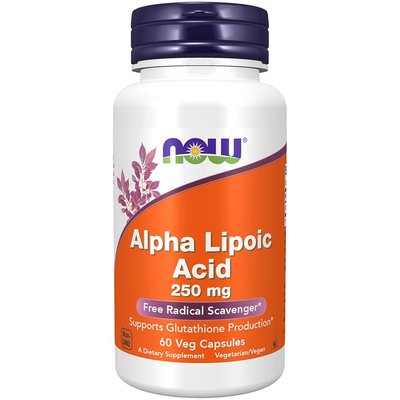 NOW Alpha Lipoic Acid€17.90 In stock 250mg 60 veg caps, NOW Alpha Lipoic Acid 100mg 60 veg caps, and MST Alpha Lipoic Acid 200mg + vitamin C 60caps are available at maxfit.ee. The MST product already combines ALA with vitamin C, making it a convenient synergistic option.
FAQ
What dose of ALA to use when stacking?
Studies have used doses from 100 to 600 mg per day. For general antioxidant support, 100-300 mg is effective. Higher doses (300-600 mg) have been studied for neurological and blood glucose support, but this requires medical consultation.
Is ALA safe for long-term use?
Yes, standard doses (up to 600 mg per day) are considered safe for healthy adults. Very high doses have shown peripheral neuropathy in rodent studies, but this has not manifested in human trials at typical supplement doses.
Does ALA work with creatine loading?
Yes, ALA may improve creatine transport into muscle cells by raising cellular insulin sensitivity. This is a studied combination that has shown positive results in muscle creatine storage (Burke et al., 2003).
References
Packer, L., Witt, E. H., & Tritschler, H. J. (2001). Alpha-lipoic acid as a biological antioxidant. Free Radical Biology and Medicine, 19(2), 227-250. https://doi.org/10.1016/0891-5849(95)00017-r
Burke, D. G., Chilibeck, P. D., Parise, G., Tarnopolsky, M. A., & Candow, D. G. (2003). Effect of alpha-lipoic acid combined with creatine monohydrate on human skeletal muscle creatine and phosphagen content. International Journal of Sport Nutrition and Exercise Metabolism, 13(3), 294-302. https://pubmed.ncbi.nlm.nih.gov/14669930/
Ziegler, D., Low, P. A., Litchy, W. J., Boulton, A. J., Vinik, A. I., Freeman, R., Samigullin, R., Tritschler, H., Munzel, U., Maus, J., Schutte, K., & Dyck, P. J. (2011). Efficacy and safety of antioxidant treatment with alpha-lipoic acid over 4 years in diabetic polyneuropathy: the NATHAN 1 trial. Diabetes Care, 34(9), 2054-2060. https://pubmed.ncbi.nlm.nih.gov/21775755/



