Alpha-Lipoic Acid (ALA) Side Effects & Safety
Alpha-lipoic acid (ALA) is a naturally occurring compound that functions as a cofactor for mitochondrial enzyme complexes and as a potent antioxidant. It has attracted interest for blood sugar regulation, neuroprotection, and general antioxidant support. However, as with any bioactive compound, understanding the alpha-lipoic acid safety profile before supplementing is essential.
Common Side Effects
At doses used in most human clinical trials, ALA is generally well tolerated. The most frequently reported side effects are gastrointestinal:
- Nausea, especially when taken on an empty stomach
- Stomach cramping or discomfort
- Diarrhoea at higher doses
- Skin rash or itching (less common)
A review of ALA in diabetic neuropathy trials found that adverse event rates were generally low and comparable to placebo groups when doses were in the range commonly studied (Ziegler et al., 2004). Taking ALA with a small amount of food reduces GI side effects for most people.
Rare but Serious Side Effects
A rare but clinically important concern is hypoglycaemia (low blood sugar). ALA can enhance insulin sensitivity and glucose uptake, which is part of its studied mechanism of action. In people taking antidiabetic medications, this can lead to blood glucose dropping lower than intended. Cases of symptomatic hypoglycaemia have been reported in individuals combining ALA with insulin or other glucose-lowering drugs.
Skin reactions, including a rare auto-immune condition called insulin autoimmune syndrome — where the body produces antibodies against insulin — have been reported with high-dose ALA, primarily in case reports from Japan. This appears to be rare and potentially related to specific HLA genotypes.
Upper Safe Limits
No formal tolerable upper intake level has been established for ALA by regulatory bodies. Clinical trials have used doses from around 300 mg up to 1800 mg per day without major safety signals in the study populations. However, the doses used in most supplement products are considerably lower. Long-term safety at very high doses in healthy populations without a clinical indication is not well characterised. Prudence suggests staying within the range studied in randomised trials unless under medical supervision.
Drug and Nutrient Interactions
Key interactions to be aware of:
| Interaction | Mechanism | Risk |
|---|---|---|
| Antidiabetic drugs (insulin, metformin) | Additive blood sugar lowering | Hypoglycaemia |
| Thyroid medications (levothyroxine) | Potential absorption interference | Reduced drug effectiveness |
| Chemotherapy agents | Antioxidant interference (theoretical) | Possible reduced efficacy |
| Biotin | Competition for cellular uptake | Possible biotin depletion at high ALA doses |
The interaction with levothyroxine is particularly relevant in Estonia and the Nordic region, where hypothyroidism is relatively common. Taking ALA at least two to four hours apart from thyroid medication is a common precaution.
Who Should Avoid or Use Caution
- Pregnant or breastfeeding individuals: Insufficient safety data; best avoided unless advised by a physician.
- People on insulin or hypoglycaemic medications: Requires blood glucose monitoring and medical supervision.
- Individuals on thyroid hormone replacement: Separate doses by at least two hours.
- People with thiamine (vitamin B1) deficiency: High-dose ALA may worsen thiamine deficiency in vulnerable populations.
Quality and Contamination
ALA supplements vary considerably in quality. Some products contain the R-form (natural) and S-form (synthetic) isomers mixed. The R-form is believed to be the biologically active isomer, though comparative clinical data in humans is limited. Third-party testing certification is worth looking for to ensure label accuracy.
Maxfit.ee stocks 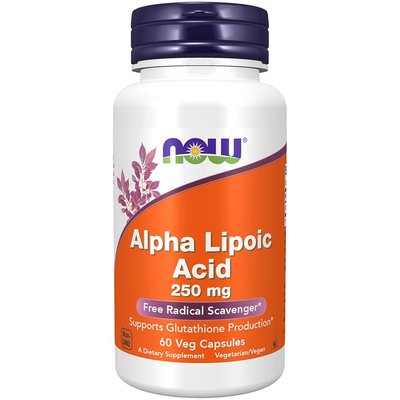 NOW Alpha Lipoic Acid€17.90 In stock 250mg 60 veg caps, NOW Alpha Lipoic Acid 100mg 60 veg caps, and MST Alpha Lipoic Acid 200mg + vitamin C 60caps. Browse the alpha-lipoic acid category for the full selection.
References
Ziegler, D., Nowak, H., Kempler, P., Vargha, P., & Low, P. A. (2004). Treatment of symptomatic diabetic polyneuropathy with the antioxidant alpha-lipoic acid: a meta-analysis. Diabetic Medicine, 21(2), 114-121. https://pubmed.ncbi.nlm.nih.gov/14984445/
Milton-Laskibar, I., Aguirre, L., Macarulla, M. T., Etxeberria, U., Milagro, F. I., Martinez, J. A., & Portillo, M. P. (2019). Comparative effects of resveratrol and its metabolite dihydroresveratrol on obesity and associated metabolic disorders in rats fed an obesogenic diet. Nutrients, 11(2), 233.
Evans, J. L., & Goldfine, I. D. (2000). Alpha-lipoic acid: a multifunctional antioxidant that improves insulin sensitivity in patients with type 2 diabetes. Diabetes Technology & Therapeutics, 2(3), 401-413. https://pubmed.ncbi.nlm.nih.gov/11467343/
FAQ
Is alpha-lipoic acid safe to take daily?
At doses found in most supplement products, daily use appears safe for healthy adults in the short to medium term. Long-term data at high doses is limited. People with diabetes, thyroid conditions, or those on medications should consult a healthcare provider before starting.
Can I take ALA if I am diabetic?
ALA may be beneficial in diabetic neuropathy, and there is clinical trial evidence for this application. However, it must be used carefully alongside antidiabetic medications due to the risk of hypoglycaemia. Medical supervision is strongly recommended.
Does the form of ALA (R vs S) matter?
The R-form is considered more biologically active as it mirrors the naturally occurring isomer. Some products offer R-ALA specifically. Whether this translates to meaningfully better clinical outcomes compared to racemic (mixed) ALA in humans has not been definitively established in large trials.



