What Is Alpha-Lipoic Acid and Why the Hype?
Alpha-lipoic acid (ALA) is a naturally occurring organosulfur compound synthesised in small amounts by the human body and found in foods such as spinach, broccoli, and organ meats. Because it is both fat- and water-soluble, ALA can act as an antioxidant in a wider range of cellular compartments than vitamins C or E alone. This biochemical versatility made it a darling of the supplement industry, and marketing claims have multiplied well beyond what peer-reviewed evidence supports.
Available at maxfit.ee, products such as 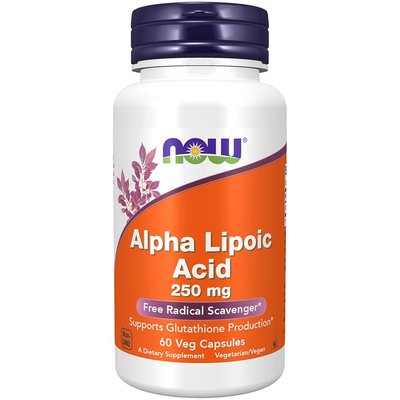 NOW Alpha Lipoic Acid€17.90 In stock 250mg 60 veg caps, NOW Alpha Lipoic Acid 100mg 60 veg caps, and MST Alpha Lipoic Acid 200mg + vitamin C 60caps are popular options. Before spending money on them, it is worth separating fact from fiction.
Common Myths About ALA
Myth 1: ALA Is a Powerful Fat Burner
This claim circulates widely in fitness communities. The reality is more nuanced. A meta-analysis of randomised controlled trials found that ALA supplementation produced a modest reduction in body weight, but the effect size was small and the clinical significance uncertain (Namazi et al., 2018). There is no evidence that ALA meaningfully accelerates fat oxidation during exercise in healthy, well-nourished people.
Myth 2: ALA Reverses Insulin Resistance in Everyone
ALA has been studied seriously in the context of diabetic peripheral neuropathy and insulin sensitivity. A randomised trial showed improvements in insulin-stimulated glucose disposal in patients with type 2 diabetes (Jacob et al., 1999). However, extrapolating these findings to healthy athletes looking for a performance edge is not justified. Most trials involved people with clinically impaired glucose metabolism, not healthy individuals.
Myth 3: Higher Doses Mean Better Antioxidant Protection
Antioxidant biology does not follow a simple dose-response curve. At high doses, ALA can paradoxically act as a pro-oxidant in certain cellular contexts. Additionally, very high doses are associated with gastrointestinal discomfort and, rarely, more serious adverse events. The principle of "more is better" does not apply here.
Myth 4: ALA Detoxifies Heavy Metals Rapidly
ALA does have metal-chelating properties, and animal studies have explored its role alongside other chelating agents. However, using ALA as a stand-alone heavy-metal detox supplement in humans lacks robust clinical evidence. Self-treating heavy-metal overload with supplements is not safe and is not what the evidence supports.
What the Evidence Actually Shows
The strongest evidence for ALA concerns diabetic peripheral neuropathy. A systematic review confirmed that intravenous ALA reduced neuropathy symptoms in diabetic patients (Ziegler et al., 2004). Oral supplementation shows weaker but still notable effects in this specific population.
For healthy people, ALA does contribute to the body's antioxidant network by regenerating vitamins C and E and boosting glutathione levels. Whether these biochemical effects translate into measurable performance or health benefits in the absence of deficiency is not clearly established.
Marketing Claims vs Reality
| Claim | Evidence Grade | Reality |
|---|---|---|
| Burns fat | Weak | Modest weight effect in clinical populations only |
| Reverses insulin resistance | Moderate (in diabetes patients) | Not shown in healthy individuals |
| Heavy-metal detox | Preclinical only | Insufficient human data |
| Neuropathy relief | Strong (IV route) | Oral evidence exists but weaker |
| Boosts glutathione | Mechanistic/moderate | Likely true, clinical impact unclear |
Grey Areas
Some researchers are interested in ALA's potential role in cognitive aging, mitochondrial function, and inflammation. Early findings are intriguing but should be regarded as hypothesis-generating rather than established. Studies in older adults and animal models cannot be directly applied to young, healthy athletes.
The question of whether R-ALA (the naturally occurring enantiomer) is meaningfully superior to the racemic mixture sold in most supplements also remains debated. R-ALA may have higher bioavailability, but head-to-head clinical comparisons in humans are limited.
Bottom Line
Alpha-lipoic acid (ALA) is not a miracle supplement, but it is not without merit either. The evidence supports a role in managing diabetic neuropathy and possibly improving insulin sensitivity in people with type 2 diabetes. For healthy athletes seeking a fat burner or universal detox agent, the evidence is thin. If you choose to supplement, standard doses appear safe and ALA fits well into a broader antioxidant strategy, particularly if your diet is low in ALA-rich vegetables.
FAQ
Is alpha-lipoic acid safe to take daily?
At commonly used doses, ALA appears well tolerated in healthy adults. Gastrointestinal side effects can occur, particularly on an empty stomach. Very high doses carry greater risk, and anyone on medications affecting blood sugar should consult a healthcare professional before supplementing.
Does ALA work better when taken with other antioxidants?
ALA participates in the body's antioxidant recycling network alongside vitamins C and E and glutathione. In principle, a combined approach may be complementary, but there is limited clinical evidence that stack combinations outperform individual antioxidants in healthy people.
What is the difference between R-ALA and S-ALA?
R-ALA is the form naturally produced in the body and may have greater bioavailability. S-ALA is the synthetic mirror image. Most supplements contain a racemic mixture of both. Whether R-ALA produces meaningfully different clinical outcomes in humans compared to the racemic form remains under investigation.
References
Namazi, N., Larijani, B., Azadbakht, L. (2018). Alpha-lipoic acid supplement in obesity treatment: A systematic review and meta-analysis of clinical trials. Clinical Nutrition, 37(2), 419-428. https://pubmed.ncbi.nlm.nih.gov/28629898/
Jacob, S., Ruus, P., Hermann, R., Tritschler, H. J., Maerker, E., Renn, W., Augustin, H. J., Dietze, G. J., Rett, K. (1999). Oral administration of RAC-alpha-lipoic acid modulates insulin sensitivity in patients with type-2 diabetes mellitus. Free Radical Biology and Medicine, 27(3-4), 309-314. https://pubmed.ncbi.nlm.nih.gov/10468203/
Ziegler, D., Nowak, H., Kempler, P., Vargha, P., Low, P. A. (2004). Treatment of symptomatic diabetic polyneuropathy with the antioxidant alpha-lipoic acid: a meta-analysis. Diabetic Medicine, 21(2), 114-121. https://pubmed.ncbi.nlm.nih.gov/14984445/



