
Alpha-Lipoic Acid (ALA) Interactions: Drugs, Nutrients & Foods
Alpha-lipoic acid (ALA) interactions matter more than those of many other supplements because ALA is both biologically potent and mechanistically active across multiple organ systems — it acts as an antioxidant, a metabolic cofactor, and a chelating agent. Each of these roles creates potential interactions that supplement users and clinicians should understand.
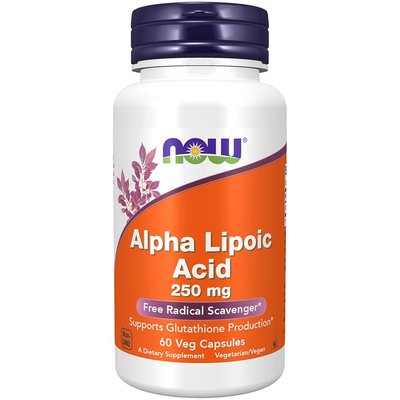 NOW Alpha Lipoic Acid€17.90 In stock 250mg 60 veg caps, NOW Alpha Lipoic Acid 100mg 60 veg caps, and MST Alpha Lipoic Acid 200mg + vitamin C 60caps are available at maxfit.ee.
Drug Interactions
Insulin and oral hypoglycaemics
ALA has insulin-sensitising effects. In clinical trials studying ALA for diabetic neuropathy, it was associated with improved insulin sensitivity and lower postprandial glucose (Ziegler et al., 2006). This is beneficial for many users but creates a practical risk for those already on insulin or sulfonylureas: hypoglycaemia. People with diabetes who add ALA should do so under medical supervision with blood glucose monitoring. This is ALA's most clinically significant interaction.
Chemotherapy agents
ALA is a potent antioxidant. Some chemotherapy drugs (such as platinum compounds and alkylating agents) rely partly on oxidative mechanisms to destroy cancer cells. There is theoretical concern that antioxidant supplements, including ALA, could reduce chemotherapy efficacy. This is not universally supported, but oncology patients should discuss any supplement with their treating physician.
Levothyroxine
ALA may reduce the absorption of levothyroxine (thyroid hormone replacement) when taken at the same time. Spacing them by at least four hours is a standard precaution.
Nutrient Competition and Synergy
Biotin competition
ALA and biotin share the same cellular transport proteins (SMVT — sodium-dependent multivitamin transporter). High-dose ALA supplementation can competitively inhibit biotin uptake (Zempleni et al., 2001). People taking both should consider staggering the doses by several hours or supplementing with additional biotin. This is particularly relevant for those using ALA chronically at doses above those from diet alone.
Vitamin C and E regeneration
ALA is often called the universal antioxidant because it regenerates other antioxidants — including vitamins C and E — from their oxidised forms. This is a true synergy: ALA expands the antioxidant network. Stacking ALA with vitamins C and E provides broader antioxidant coverage than any single compound alone.
B-vitamins (B1, B2)
ALA is structurally related to lipoamide, a cofactor in several B-vitamin-dependent enzyme complexes. Adequate B1 (thiamine) and B2 (riboflavin) status enhances ALA's function as a metabolic cofactor in mitochondrial energy pathways. This is relevant not as a direct interaction but as a reminder that ALA functions best in a nutritionally replete context.
Iron chelation
ALA is a metal chelator. It can bind iron and other heavy metals, which is part of how it may exert neuroprotective effects. However, regular high-dose ALA supplementation in individuals at risk of iron deficiency warrants monitoring of iron status.
Food Effects
ALA is best absorbed on an empty stomach — food reduces its peak plasma concentration significantly. A crossover study found that ALA taken with a high-fat meal resulted in substantially lower peak plasma ALA levels compared to the fasted state. For therapeutic purposes (neuropathy, insulin sensitisation), fasted dosing is therefore preferred; for general antioxidant use, the difference may be less critical.
Sulphur-containing foods (garlic, onions, cruciferous vegetables) do not meaningfully interact with supplemental ALA.
Who Must Be Cautious
- People with type 1 or 2 diabetes on insulin or sulfonylureas (hypoglycaemia risk)
- Cancer patients undergoing chemotherapy (discuss with oncologist)
- Anyone taking thyroid hormone replacement (separate by four hours)
- Those at risk of iron deficiency (monitor iron status with long-term use)
- Individuals with thiamine (B1) deficiency — ALA can worsen Wernicke's encephalopathy in severe deficiency states
Practical Rules
- Take ALA on an empty stomach, at least 30 minutes before eating, for best absorption.
- If combining with biotin, separate the doses by at least two hours.
- If diabetic or pre-diabetic, monitor blood glucose when starting ALA and adjust medications with medical guidance.
- Pair ALA with vitamins C and E for maximum antioxidant network effect.
- Take ALA away from levothyroxine by at least four hours.
FAQ
Should I take R-ALA or standard ALA?
R-alpha-lipoic acid (R-ALA) is the naturally occurring enantiomer and is believed to be more bioactive than the synthetic S-form. Standard racemic ALA supplements contain a 50:50 mix. R-ALA supplements are more expensive. For general antioxidant use, racemic ALA at typical doses is widely used. For specific clinical applications, R-ALA may offer advantages.
Is ALA safe for long-term daily use?
ALA at typical supplemental doses appears well-tolerated in studies up to two years. The main caution for long-term use is biotin depletion — consider supplementing with biotin alongside ALA if using it chronically.
Can ALA be taken with N-acetyl cysteine (NAC)?
Yes. ALA and NAC are complementary antioxidants — ALA works in both fat- and water-soluble compartments, while NAC is primarily a glutathione precursor in the aqueous phase. The combination is used in liver-support and antioxidant stacks.
References
Ziegler, D., Ametov, A., Barinov, A., Dyck, P. J., Gurieva, I., Low, P. A., Munzel, U., Yakhno, N., Raz, I., Novosadova, M., Maus, J., & Samigullin, R. (2006). Oral treatment with alpha-lipoic acid improves symptomatic diabetic polyneuropathy: the SYDNEY 2 trial. Diabetes Care, 29(11), 2365-2370. https://pubmed.ncbi.nlm.nih.gov/17065669/
Zempleni, J., Trusty, T. A., & Mock, D. M. (2001). Biotin: an overview. Nutrition Reviews, 59(1), 1-10.
Shay, K. P., Moreau, R. F., Smith, E. J., Smith, A. R., & Hagen, T. M. (2009). Alpha-lipoic acid as a dietary supplement: molecular mechanisms and therapeutic potential. Biochimica et Biophysica Acta, 1790(10), 1149-1160. https://pubmed.ncbi.nlm.nih.gov/19664690/



