Alpha-Lipoic Acid (ALA) After 50: Benefits and Safety
Alpha-lipoic acid (ALA) is a naturally occurring compound that functions as both an antioxidant and a cofactor in mitochondrial energy metabolism. Unlike most antioxidants, ALA is soluble in both water and fat, allowing it to work across different cellular compartments. As we age, endogenous ALA synthesis declines, raising the question of whether supplementation becomes more relevant after 50. This guide reviews what people in this age group should know about alpha-lipoic acid supplementation.
Age-Related Need
ALA is synthesised in the body and is also found in small amounts in foods such as red meat, organ meats, spinach, and broccoli. Food-source ALA is generally protein-bound and less bioavailable than the free form in supplements. With advancing age, mitochondrial function tends to decline, and endogenous antioxidant capacity decreases. This has led to research interest in whether supplemental ALA can partially offset age-related oxidative burden.
Research in older adults has found that ALA supplementation may support markers of oxidative stress and mitochondrial function, though the clinical significance of these biomarker changes in healthy older adults is not fully established.
Absorption Changes
ALA absorption changes with age and is influenced by how it is taken. ALA is best absorbed on an empty stomach — food, particularly protein, reduces absorption. This is an important practical consideration for older adults who may be accustomed to taking supplements with meals. A study by Teichert et al. (2003) showed that co-administration of ALA with food significantly reduced peak plasma levels compared to the fasted state (Teichert et al., 2003). For people over 50, ensuring ALA is taken away from protein-rich meals optimises the dose actually reaching the bloodstream.
Dose and Safety
ALA supplements are available in standard doses. Products like 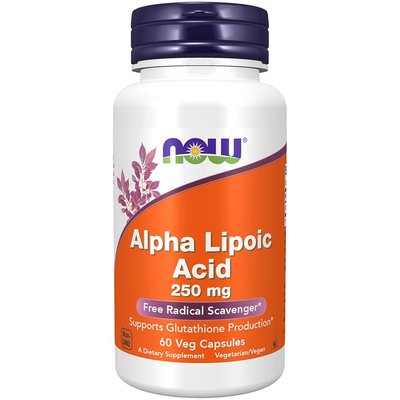 NOW Alpha Lipoic Acid€17.90 In stock 250mg 60 veg caps, NOW Alpha Lipoic Acid 100mg 60 veg caps, and MST Alpha Lipoic Acid 200mg + vitamin C 60caps represent typical doses studied in human trials and are available at maxfit.ee.
For older adults, ALA is generally well-tolerated at typical supplement doses. The most common side effects are gastrointestinal — nausea and stomach upset — which are more likely at higher doses and on an empty stomach. Starting at a lower dose and taking with a small, low-protein snack can reduce this.
Interactions With Medication
Alpha-lipoic acid has several clinically relevant interactions that are particularly important for older adults who are more likely to be on medications:
- Diabetes medications: ALA may enhance insulin sensitivity. People on medications for blood glucose control should monitor glucose levels carefully, as additive effects are possible.
- Thyroid medications: Some evidence suggests ALA may interfere with thyroid hormone levels. Those on levothyroxine or other thyroid treatments should discuss ALA supplementation with their prescriber.
- Chemotherapy: Some oncologists advise caution with antioxidant supplements during certain chemotherapy regimens. This requires individual medical assessment.
A review by Gorąca et al. (2011) summarised ALA's pharmacological properties and noted its potential for interaction with glucose-lowering agents and thyroid function (Gorąca et al., 2011).
When to Supplement
ALA supplementation may be worth considering for older adults who:
- Have a diet low in ALA-rich foods (red meat, organ meats, green vegetables)
- Are managing blood sugar with a goal of supporting insulin sensitivity alongside lifestyle changes
- Are seeking broad antioxidant support as part of a healthy ageing strategy
ALA is not a treatment for any age-related disease. Anyone with significant health conditions or who takes multiple medications should discuss supplementation with their doctor before starting.
Browse the alpha-lipoic acid category at maxfit.ee for in-stock options.
FAQ
Should ALA be taken on an empty stomach?
For maximum absorption, ALA is best taken 30 minutes before a meal or at least 2 hours after eating. This is especially relevant for people who take multiple supplements with breakfast.
Is R-ALA better than standard ALA?
Standard ALA supplements contain a 50/50 mixture of R-ALA and S-ALA. The R form is the naturally occurring enantiomer and is thought to be more biologically active. R-ALA supplements may achieve similar plasma levels at lower doses, but are typically more expensive. Both forms have been studied in humans.
Can ALA help with neuropathy?
ALA has been studied most extensively for diabetic peripheral neuropathy, with some positive trial data. This is a medical condition requiring medical assessment. Supplementation should not replace medical evaluation and treatment.
References
Teichert, J., Hermann, R., Ruus, P., & Preiss, R. (2003). Plasma kinetics, metabolism, and urinary excretion of alpha-lipoic acid following oral administration in healthy volunteers. Journal of Clinical Pharmacology, 43(11), 1257-1267. https://pubmed.ncbi.nlm.nih.gov/14551180/
Gorąca, A., Huk-Kolega, H., Piechota, A., Kleniewska, P., Ciejka, E., & Skibska, B. (2011). Lipoic acid — biological activity and therapeutic potential. Pharmacological Reports, 63(4), 849-858.



