What Is Alpha-Lipoic Acid and Why Does It Matter in Food?
Alpha-lipoic acid (ALA) is a naturally occurring organosulfur compound that functions as a cofactor for mitochondrial enzyme complexes and as a potent, both water- and fat-soluble antioxidant. The body synthesises small amounts of ALA endogenously, but dietary intake adds to the pool. Understanding the natural food sources of alpha-lipoic acid helps you assess whether your diet already provides meaningful amounts or whether supplementation is likely to be valuable.
Top Food Sources of Alpha-Lipoic Acid
ALA in food exists almost exclusively bound to proteins (lysine residues), which affects how it is digested and how much is ultimately absorbed. The richest known dietary sources include:
- Organ meats: Beef kidney and heart are among the densest sources, reflecting the high mitochondrial density in these tissues.
- Spinach: One of the most studied plant sources; provides ALA in protein-bound form.
- Broccoli and cruciferous vegetables: Moderate amounts; synergize with other antioxidants in these foods.
- Red meat (muscle): Lower concentration than organ meats but contributes to total intake.
- Tomatoes, Brussels sprouts, peas: Minor additional dietary sources.
Quantitative data on ALA in foods are limited compared with other micronutrients, partly because precise measurement of protein-bound ALA in complex food matrices is technically demanding.
Bioavailability from Food vs Supplement
The key difference between food-derived and supplemental ALA is the form and accompanying matrix. Protein-bound ALA in food must be digested and released before absorption. Supplemental ALA is typically provided as free-form (unbound) R-ALA, S-ALA, or the racemic RS-ALA mixture — forms that absorb more rapidly and at higher peak concentrations.
A pharmacokinetic study demonstrated that oral free-form ALA reached peak plasma concentrations rapidly, while food-derived ALA contributed to a lower, slower rise in circulating ALA (Breithaupt-Grogler et al., 1999). This means the absolute amount of ALA reaching tissues from a typical mixed diet is small relative to even a modest supplemental dose. Supplementation reliably raises plasma ALA to pharmacologically relevant levels that diet alone cannot match.
Daily Targets from Diet
No recommended dietary intake for ALA has been established because endogenous synthesis is considered the primary supply. Dietary intake from a mixed diet is estimated in the low microgram to low milligram range per day, depending on organ meat and vegetable consumption — substantially lower than the amounts used in studies examining its antioxidant and metabolic effects.
Cooking and Storage Effects
ALA in plant foods is sensitive to processing. Heat during cooking, extended storage, and oxygen exposure can degrade ALA content. Steaming or brief sauteing preserves more ALA than prolonged boiling, which leaches water-soluble compounds into cooking water. Consuming a variety of minimally processed vegetables and including organ meats when culturally appropriate will maximise dietary ALA intake, though this will still be modest.
When Food Is Not Enough
If your goal is to achieve the circulating ALA levels studied in clinical research on oxidative stress, glucose metabolism, or neuropathy — levels generally achievable only through supplementation — dietary sources alone will not suffice. Supplements provide free-form ALA at doses where measurable effects have been studied (Ziegler et al., 2004).
Groups who may particularly benefit from considering an ALA supplement include those with high oxidative stress, certain metabolic concerns, or those who simply eat few organ meats and vegetables.
At maxfit.ee the alfalipoehape-ala category includes products such as 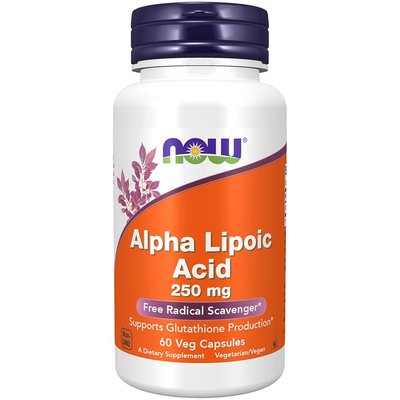 NOW Alpha Lipoic Acid€17.90 In stock 250mg 60 veg caps, NOW Alpha Lipoic Acid 100mg 60 veg caps, and MST Alpha Lipoic Acid 200mg + vitamin C 60caps.
FAQ
Does cooking destroy alpha-lipoic acid in vegetables?
Heat and prolonged cooking do reduce ALA content to some degree. Steaming is preferable to boiling. However, even raw vegetables provide only small dietary amounts of ALA relative to supplemental doses.
Is ALA from food or supplements the same molecule?
The molecule is the same (thioctic acid), but dietary ALA is protein-bound while supplemental ALA is free-form. Free-form ALA is absorbed faster and achieves higher peak blood levels (Breithaupt-Grogler et al., 1999).
Can I get enough ALA from spinach or broccoli alone?
Spinach and broccoli are among the better plant sources, but the total daily intake from even generous servings is estimated to be in a range far below the doses used in clinical ALA research. For metabolic or antioxidant support at studied levels, supplementation is the practical route.
References
Breithaupt-Grogler, K., Niebch, G., Schneider, E., Erb, K., Hermann, R., Blume, H. H., Schug, B. S., & Belz, G. G. (1999). Dose-proportionality of oral thioctic acid -- coincidence of assessments via pooled plasma and individual data. European Journal of Pharmaceutical Sciences, 8(1), 57-65.
Ziegler, D., Ametov, A., Barinov, A., Dyck, P. J., Gurieva, I., Low, P. A., Munzel, U., Yakhno, N., Raz, I., Novosadova, M., Maus, J., & Samigullin, R. (2006). Oral treatment with alpha-lipoic acid improves symptomatic diabetic polyneuropathy: the SYDNEY 2 trial. Diabetes Care, 29(11), 2365-2370. https://pubmed.ncbi.nlm.nih.gov/17065669/



