
What Is Alpha-Lipoic Acid (ALA) and Why Does It Matter?
Alpha-lipoic acid (ALA) is a naturally occurring compound that functions as both a water- and fat-soluble antioxidant — a rare dual solubility that allows it to protect cellular membranes and cytoplasm alike. The body synthesises small amounts from food, but supplemental doses are far higher than what diet alone provides. ALA also regenerates other antioxidants such as vitamins C and E and glutathione, making it a central player in the body's defence network.
ALA is found at maxfit.ee in several formulations, including 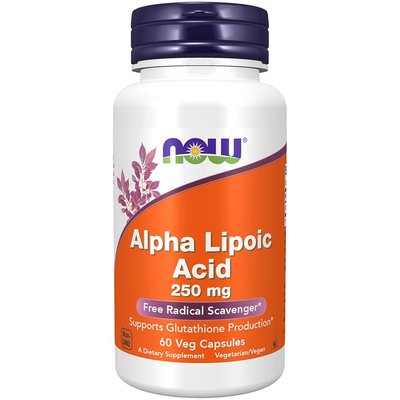 NOW Alpha Lipoic Acid€17.90 In stock 250mg 60 veg caps, NOW Alpha Lipoic Acid 100mg 60 veg caps, and MST Alpha Lipoic Acid 200mg + vitamin C 60caps.
Primary Evidenced Benefits
Antioxidant Activity and Oxidative Stress Reduction
ALA's most well-documented role is as an antioxidant. Both the R- and S-enantiomers scavenge reactive oxygen species and recycle glutathione, the body's master antioxidant. In individuals with metabolic disorders, supplementation has been associated with measurable reductions in markers of oxidative damage (Rochette et al., 2013).
Blood Sugar and Insulin Sensitivity
Several randomised controlled trials have examined ALA's effect on glucose metabolism. A meta-analysis of RCTs found that ALA supplementation significantly reduced fasting blood glucose and improved insulin sensitivity in adults with type 2 diabetes (Akbari et al., 2018). This effect appears linked to ALA's ability to activate GLUT4 transporters and modulate insulin signalling cascades.
Peripheral Neuropathy Support
The most clinically studied application of ALA is diabetic peripheral neuropathy. Intravenous and oral ALA have both been examined. The SYDNEY 2 trial showed that oral ALA at studied doses over five weeks improved neuropathy symptom scores compared with placebo (Ziegler et al., 2006). These findings have made ALA one of the most discussed supplements in neuropathy management.
Secondary and Emerging Effects
Weight Management Support
Some evidence suggests ALA may modestly reduce body weight and BMI. A systematic review found small but statistically significant reductions in body weight in overweight participants using ALA compared to placebo (Namazi et al., 2018). The effect size is modest, and ALA should not be positioned as a primary weight-loss agent.
Cognitive and Neuroprotective Properties
ALA crosses the blood-brain barrier, and preclinical data suggest it may protect neurons from oxidative damage. Human data remain limited, but the compound's antioxidant properties in the central nervous system are a topic of ongoing research. Claims of cognitive enhancement in healthy adults remain speculative at this stage.
Where Evidence Is Weak
ALA has been studied for conditions ranging from liver disease to skin ageing, but the evidence outside antioxidant activity, blood sugar management, and neuropathy is weak or based only on animal and in vitro models. Exercise performance enhancement, for example, lacks robust human RCT support. Marketing claims around ALA as an anti-ageing miracle are not backed by the same quality of evidence as the metabolic effects.
Who Gains Most from ALA Supplementation
The clearest beneficiaries are:
- Adults with elevated blood sugar or insulin resistance — supported by multiple RCTs
- Individuals with diabetic neuropathy — the most clinically documented use
- People with high oxidative stress loads — athletes in heavy training, smokers, individuals with metabolic disorders
Healthy adults with normal metabolic function will likely experience smaller measurable benefits, though antioxidant top-up is not harmful.
Realistic Expectations
ALA is a well-studied supplement with genuine, evidence-backed effects — particularly for metabolic and neurological support. It is not a cure-all. Improvements in blood sugar and neuropathy symptoms are real but modest and most pronounced in those who already have metabolic dysfunction. For antioxidant support more broadly, ALA complements a diet rich in vegetables and other antioxidant nutrients rather than replacing them. Consistency matters: most trials showing benefits used ALA for eight weeks or longer.
You can find quality ALA products in the ALA category at maxfit.ee.
References
Rochette, L., Ghibu, S., Richard, C., Zeller, M., Cottin, Y., & Vergely, C. (2013). Direct and indirect antioxidant properties of alpha-lipoic acid and therapeutic potential. Molecular Nutrition & Food Research, 57(1), 114–125. https://pubmed.ncbi.nlm.nih.gov/23293044/
Akbari, M., Ostadmohammadi, V., Lankarani, K. B., Tabrizi, R., Kolahdooz, F., Nouri, M., & Asemi, Z. (2018). The effects of alpha-lipoic acid supplementation on glucose control and lipid profiles among patients with metabolic diseases: A systematic review and meta-analysis of randomized controlled trials. Metabolism, 87, 56–69. https://pubmed.ncbi.nlm.nih.gov/29990473/
Ziegler, D., Ametov, A., Barinov, A., Dyck, P. J., Gurieva, I., Low, P. A., Munzel, U., Yakhno, N., Raz, I., Novosadova, M., Maus, J., & Samigullin, R. (2006). Oral treatment with alpha-lipoic acid improves symptomatic diabetic polyneuropathy: the SYDNEY 2 trial. Diabetes Care, 29(11), 2365–2370. https://pubmed.ncbi.nlm.nih.gov/17065669/
Namazi, N., Larijani, B., & Azadbakht, L. (2018). Alpha-lipoic acid supplement in obesity treatment: A systematic review and meta-analysis of clinical trials. Clinical Nutrition, 37(2), 419–428. https://pubmed.ncbi.nlm.nih.gov/28629898/
FAQ
What is the main benefit of alpha-lipoic acid (ALA)?
ALA's best-supported benefit is antioxidant protection combined with improved insulin sensitivity and blood sugar regulation, particularly in people with metabolic disorders. It also has solid evidence for reducing neuropathy symptoms in diabetic patients.
Can I take ALA every day?
Yes, daily supplementation is how most clinical studies have been conducted. Consistency over eight weeks or more tends to produce the most meaningful outcomes. Always follow the dosage guidance on your product label.
Does ALA help with weight loss?
Modest reductions in body weight have been observed in clinical trials, but the effect is small. ALA is not a standalone weight-loss supplement — it may support metabolic health as part of a broader lifestyle approach.



