
Alpha-Lipoic Acid (ALA) for Beginners: A Complete Guide
Alpha-lipoic acid (ALA) is a naturally occurring compound that functions as a cofactor for several mitochondrial enzymes involved in energy metabolism. Unlike most antioxidants, ALA is both water-soluble and fat-soluble, allowing it to act throughout the body. Small amounts are synthesised by the body; dietary sources (red meat, organ meats, leafy greens) contribute modest quantities. Supplemental doses are typically much higher than what food provides.
What It Does
ALA plays several roles in human physiology:
- Mitochondrial energy production: ALA is a cofactor for pyruvate dehydrogenase and alpha-ketoglutarate dehydrogenase, enzymes central to glucose metabolism.
- Antioxidant activity: ALA can regenerate other antioxidants including vitamins C and E, and glutathione.
- Insulin sensitivity: A meta-analysis of randomised controlled trials found that ALA supplementation significantly improved insulin sensitivity markers in people with metabolic conditions (Akbari et al., 2018).
- Glycaemic markers: The same meta-analysis observed improvements in fasting blood glucose and insulin levels (Akbari et al., 2018).
Note: ALA is not a treatment for diabetes or any other disease. These findings reflect effects in study populations and should not be extrapolated to disease management without medical guidance.
How to Start
Beginners often start with a lower dose and assess tolerance before increasing. ALA is commonly available in doses of 100 mg, 200 mg, and 250 mg per capsule. Taking it on an empty stomach improves absorption but can cause nausea in some individuals — a small snack can reduce this.
ALA exists as two mirror-image forms (R-ALA and S-ALA). The R-form is the naturally occurring enantiomer and is generally considered more bioavailable. Standard racemic (50/50 R+S) products are widely used and well tolerated.
What to Expect and When
ALA does not produce noticeable acute effects like caffeine does. Users who take it for antioxidant support or metabolic reasons typically notice nothing immediately. Effects visible in research — such as changes in glucose metabolism — emerge over weeks of consistent use. Do not expect dramatic short-term changes.
Common Mistakes
- Taking too much too soon: High doses on an empty stomach frequently cause nausea or a burning sensation in the stomach. Start conservatively.
- Taking it with thiamine-rich foods or large carbohydrate loads: ALA can theoretically compete with thiamine (vitamin B1) for transport; avoid very high single doses alongside B1-heavy meals.
- Combining with other antioxidants without rationale: Adding ALA to a stack already containing high-dose vitamin C, E, and selenium is redundant for most people.
- Expecting immediate results: ALA works through metabolic pathways that take weeks to show measurable changes.
Choosing a Product
At maxfit.ee you can find several options including 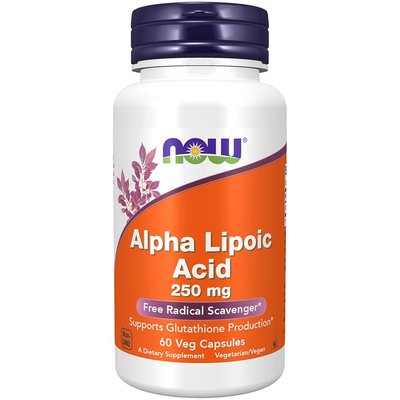 NOW Alpha Lipoic Acid€17.90 In stock 250mg 60 veg caps, NOW Alpha Lipoic Acid 100mg 60 veg caps, and MST Alpha Lipoic Acid 200mg + vitamin C 60caps. Browse the full alpha-lipoic acid category.
For beginners, a 100 mg or 200 mg capsule taken once daily with a small meal is a reasonable starting point. Increase gradually if well tolerated.
References
Akbari, M., Ostadmohammadi, V., Lankarani, K. B., Tabrizi, R., Kolahdooz, F., Khatibi, S. R., & Asemi, Z. (2018). The effects of alpha-lipoic acid supplementation on glucose control and lipid profiles among patients with metabolic diseases: a systematic review and meta-analysis of randomized controlled trials. Metabolism, 87, 56–69. https://pubmed.ncbi.nlm.nih.gov/29990473/
Shay, K. P., Moreau, R. F., Smith, E. J., Smith, A. R., & Hagen, T. M. (2009). Alpha-lipoic acid as a dietary supplement: molecular mechanisms and therapeutic potential. Biochimica et Biophysica Acta, 1790(10), 1149–1160. https://pubmed.ncbi.nlm.nih.gov/19664690/
Bast, A., & Haenen, G. R. (2003). Lipoic acid: a multifunctional antioxidant. Biomedical Pharmacotherapy, 57(Suppl 1), 37S–40S.
FAQ
Is alpha-lipoic acid safe for everyday use?
ALA has a well-established safety profile in adults at commonly used doses. People with diabetes using medication should consult a healthcare provider before supplementing, as ALA may influence blood glucose levels.
Should I take ALA with or without food?
Absorption is higher on an empty stomach, but nausea is more common. Taking it with a small low-fat snack is a practical compromise for most beginners.
How long before I notice any effect?
Effects seen in clinical studies — improved insulin sensitivity, better glycaemic markers — develop over several weeks of consistent use. Do not expect an immediate subjective sensation.



