
What Limits Alpha-Lipoic Acid (ALA) Absorption
Alpha-lipoic acid (ALA) is a naturally occurring compound that acts as both a fat-soluble and water-soluble antioxidant. Despite its popularity, oral ALA supplements suffer from notably poor and highly variable bioavailability. The two main barriers are first-pass hepatic metabolism and rapid plasma clearance — plasma levels typically peak within 30–60 minutes and return to baseline within a few hours (Shay et al., 2009).
Because ALA competes with dietary fatty acids and amino acids for intestinal transporters, taking it alongside a full meal significantly reduces how much reaches the bloodstream. Food — especially fat-rich or high-protein meals — can reduce peak plasma ALA by a meaningful margin, which is why timing matters more for this supplement than for many others.
Cofactors That Help
ALA does not work in isolation. Its antioxidant recycling depends on NADH and NADPH, which in turn rely on adequate B-vitamin status (particularly B2, B3, and B5). Ensuring you are not deficient in these cofactors creates a more receptive environment for ALA activity at the cellular level.
Vitamin C and vitamin E are also part of the antioxidant network that ALA participates in. When ALA regenerates oxidised glutathione and vitamins C and E, having sufficient baseline levels of these nutrients ensures the regeneration cycle runs efficiently.
Form and Timing Effects
Commercially available ALA comes as either a racemic mixture (equal parts R-ALA and S-ALA) or as pure R-ALA. The R-enantiomer is the form produced naturally in the body and is the biologically active isomer. Studies indicate that R-ALA achieves higher peak plasma concentrations than the equivalent dose of racemic ALA (Carlson et al., 2007). If you are using a racemic product, you are essentially getting half the active form per serving.
Timing is the most practical lever available. Taking ALA on an empty stomach — at least 30 minutes before a meal or 2 hours after — consistently produces higher and less variable plasma concentrations compared with fed-state dosing (Shay et al., 2009).
Some newer formulations use sodium salt (sodium R-lipoate) or sustained-release matrices to improve stability and absorption kinetics. Sodium R-lipoate is more water-soluble and may reduce the gastric irritation that some users report with standard free-acid forms.
Food Pairings
Although food in general blunts absorption, certain dietary choices at other times of day support ALA's effects. Sulphur-containing foods — eggs, garlic, cruciferous vegetables — provide cysteine precursors that support glutathione synthesis, the antioxidant pathway ALA feeds into.
Avoiding large high-fat meals immediately before or after dosing preserves the absorptive window. If you experience nausea on a strict empty stomach, a small quantity of plain water or a piece of fruit is usually sufficient to ease discomfort without meaningfully reducing uptake.
Practical Tips
- Dose on an empty stomach. Aim for at least 30 minutes before breakfast or your first meal of the day.
- Choose R-ALA or sodium R-lipoate if cost permits, for more predictable plasma levels.
- Store your product away from heat and light. ALA degrades rapidly in warm, humid conditions; degraded product means less active compound regardless of dosing strategy.
- Split your dose. Because plasma half-life is short, splitting a daily dose into two administrations maintains steadier tissue exposure.
- Products available at maxfit.ee such as
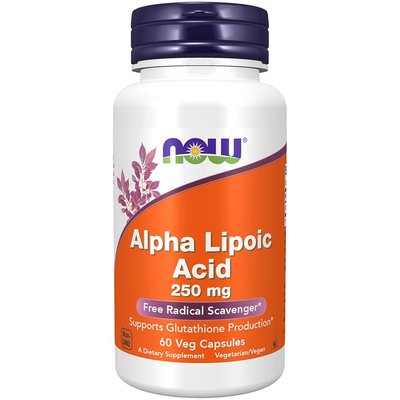 NOW Alpha Lipoic Acid€17.90 In stock 250mg 60 veg caps, NOW Alpha Lipoic Acid 100mg 60 veg caps, and MST Alpha Lipoic Acid 200mg + vitamin C 60caps offer straightforward racemic ALA options suited to the above strategy.
 - Pair with a B-complex and adequate vitamin C intake for best antioxidant synergy.
References
Shay, K. P., Moreau, R. F., Smith, E. J., Smith, A. R., & Hagen, T. M. (2009). Alpha-lipoic acid as a dietary supplement: Molecular mechanisms and therapeutic potential. Biochimica et Biophysica Acta, 1790(10), 1149-1160. https://pubmed.ncbi.nlm.nih.gov/19664690/
Carlson, D. A., Smith, A. R., Fischer, S. J., Young, K. L., & Packer, L. (2007). The plasma pharmacokinetics of R-(+)-lipoic acid administered as sodium R-(+)-lipoate to healthy human subjects. Alternative Medicine Review, 12(4), 343-351. https://pubmed.ncbi.nlm.nih.gov/18069903/
FAQ
Should I take alpha-lipoic acid with or without food?
Without food is preferable. Taking ALA at least 30 minutes before a meal gives the highest and most consistent plasma concentrations. If you experience stomach discomfort, a small amount of water or light fruit is usually enough to reduce irritation without significantly affecting absorption.
What is the difference between R-ALA and racemic ALA?
Racemic ALA is a 50/50 mix of R-ALA and S-ALA. The R-form is the biologically active isomer that your body produces naturally. R-ALA formulations reach higher peak plasma concentrations per milligram of active compound (Carlson et al., 2007), though they are typically more expensive.
How long does it take for ALA to start working?
ALA reaches peak plasma levels within 30–60 minutes of ingestion and is largely cleared within a few hours (Shay et al., 2009). Functional antioxidant effects at the tissue level build over days to weeks of consistent use, so patience is required.



