


Melatonin in the EU: What Consumers Need to Know
Melatonin is one of those food supplements whose regulation varies significantly across the European Union. This can create confusion for consumers who travel or purchase products online from different countries. This article provides a clear overview of melatonin's legal status in Europe.
The EU General Framework
The European Union lacks a unified melatonin regulation. Each member state decides whether melatonin is:
- A food supplement (freely available)
- A medicine (prescription required)
- An intermediate category (food supplement with dose limits)
This fragmentation stems from the fact that melatonin is simultaneously a hormone (suggesting medicine status) and a naturally occurring substance in food (supporting supplement status).
EFSA-Approved Health Claims
The European Food Safety Authority (EFSA) has approved two health claims for melatonin, included in the EU's official list of permitted health claims and valid across the entire EU (Commission Regulation (EU) No 432/2012, list of permitted health claims):
Claim 1: Jet lag
"Melatonin contributes to the alleviation of subjective feelings of jet lag."
- Approved at a dose of: 0.5mg
- Condition: consumed on the day of travel and a few days after arrival
- Minimum effective dose: 0.5mg before bedtime according to local time at the destination
This is further supported by a Cochrane systematic review of melatonin for the prevention and treatment of jet lag (Herxheimer & Petrie, 2002).
Claim 2: Sleep onset
"Melatonin contributes to the reduction of time taken to fall asleep."
- Approved at a dose of: 1mg
- Condition: consumed shortly before bedtime
These are the only two melatonin health claims that manufacturers may use in the EU. All other claims (e.g., "improves sleep quality", "helps achieve deeper sleep") are not regulatorily approved.
Country-by-Country Overview
Estonia
- Status: Food supplement
- Available doses: 1–2mg
- Availability: Pharmacies, health stores, online stores
- Prescription: Not required (for 1–2mg doses)
Estonia takes a relatively liberal approach — melatonin is widely available and popular.
Germany
- Status: Food supplement up to 1mg, medicine above 2mg
- Circadin (2mg prolonged-release): Prescription-only, approved for those over 55
- Availability: 1mg products freely in pharmacies; higher doses by prescription
Germany is one of the more strictly regulated EU countries for melatonin.
Italy
- Status: Food supplement up to 5mg
- Availability: Widely available in pharmacies and supermarkets
- Distinction: One of the most liberal approaches in the EU
Italy permits significantly higher doses than most EU countries.
United Kingdom (post-Brexit)
- Status: Prescription medicine at all doses
- Circadin (2mg): The most commonly prescribed form
- As supplement: Not officially permitted, though low-dose products are sold in a grey area
The UK approach is stricter than the EU's.
Novel Food Regulation
An important nuance: melatonin does not fall under the novel food regulation in the EU, as it is a naturally occurring substance that was used in food long before the regulation came into force (Regulation (EU) 2015/2283 on novel foods, Annex I). This means no novel food authorisation is needed to market melatonin as a food supplement.
Prolonged-Release vs Immediate-Release
Two main melatonin formulation types exist on the EU market:
Immediate-release
- Melatonin is released immediately after swallowing
- Reaches the bloodstream within 30–60 minutes
- Best use: For difficulty falling asleep — helps fall asleep faster
- Typically 1mg as a food supplement
Prolonged-release
- Melatonin is released gradually over 8–10 hours
- Mimics the body's natural melatonin release pattern
- Best use: For nighttime awakening issues
- Circadin (2mg, prescription) is the best-known example
- Some supplements also use prolonged-release technology
Travelling in the EU with Melatonin
What to know when travelling in the EU with melatonin:
- Supplements (1–2mg): Generally unproblematic when travelling within the EU, but remember that rules may vary by country
- Personal use: Small quantities for personal use are generally permitted
- Online shopping: You can buy from another EU country's e-store, but consumption falls under your country's regulation
Online Shopping Nuances
The internet has changed melatonin accessibility:
- US e-stores offer 5–10mg products not permitted as supplements in the EU
- Customs may seize such shipments
- Quality and purity may vary if the product is not manufactured under EU regulation
- Recommendation: Buy products intended for the EU market that meet local requirements
What to Do as a Consumer
- Choose an EU-market product — it meets quality and safety standards
- Watch the dose — 1–2mg is the permitted supplement range in Estonia
- Read the EFSA-approved claims — only two claims are scientifically confirmed
- Don't buy over-dosed products — a higher dose is not more effective
- Consult a pharmacist — they can advise on your specific situation
Common products sold in Estonia include simple melatonin supplements such as 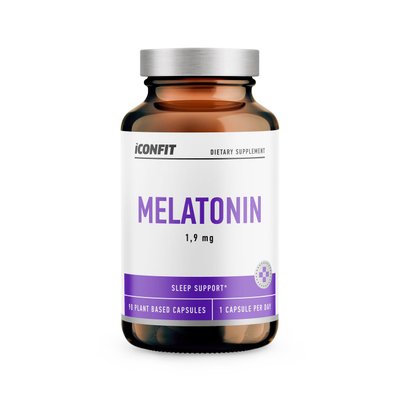 ICONFIT Capsules Melatonin N90€8.30 In stock (EUR 7.90 at the time of writing) and
 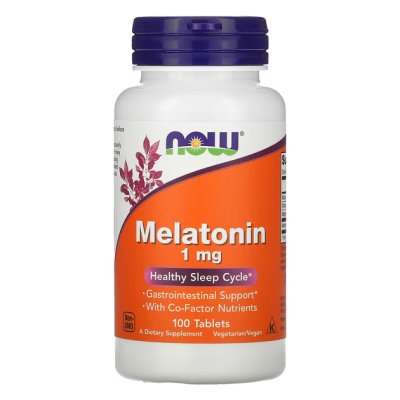 NOW Melatonin 1mg Complex€12.50 In stock 100tabs (EUR 11.90), which matches the EFSA-approved 1mg claim, as well as combined night-routine products such as BIOTECHUSA Night 60 caps (EUR 19.90).
Future Outlook
EU melatonin regulation may change in the near future:
- Growing pressure to harmonise rules across member states
- EFSA may consider evaluating new health claims
- Prolonged-release product availability may expand
- Personalised medicine developments may influence the regulatory framework
Summary
Melatonin regulation varies across the EU: in Estonia it is a food supplement (1–2mg), in Germany partially prescription-only, in Italy permitted up to 5mg. EFSA has approved two claims: jet lag (0.5mg) and sleep onset reduction (1mg). Melatonin does not fall under novel food regulation. Immediate-release and prolonged-release formulations serve different purposes.
Dietary supplements are not a substitute for a varied, balanced diet and healthy lifestyle.
Browse our melatonin selection at MaxFit.ee →
If you're looking for broader support for sleep and overall wellbeing, also check our vitamin complexes → selection.
Read more: Melatonin Dosage: How Much and When to Take It? → | Sleep Aids: From Melatonin to Magnesium — A Science-Based Guide → | Melatonin 3mg vs 5mg: What the Research Says About Optimal Dosing →
References
- Herxheimer, A. & Petrie, K.J. (2002). Melatonin for the prevention and treatment of jet lag. Cochrane Database of Systematic Reviews, (2), CD001520. https://pubmed.ncbi.nlm.nih.gov/12076414/
- Andersen, L.P. et al. (2016). The Safety of Melatonin in Humans. Clinical Drug Investigation, 36(3), 169–175. https://pubmed.ncbi.nlm.nih.gov/26692007/
- Auld, F. et al. (2017). Evidence for the efficacy of melatonin in the treatment of primary adult sleep disorders. Sleep Medicine Reviews, 34, 10–22. https://pubmed.ncbi.nlm.nih.gov/28648359/


